
AI news ·
AI helps South African insurers detect fraud earlier as organised crime costs industry billions
South African insurers lose billions annually to fraud, and AI is now their main line of defence. Machine learning flags suspicious claims in real time, while network analysis exposes organised syndicates behind staged accidents.
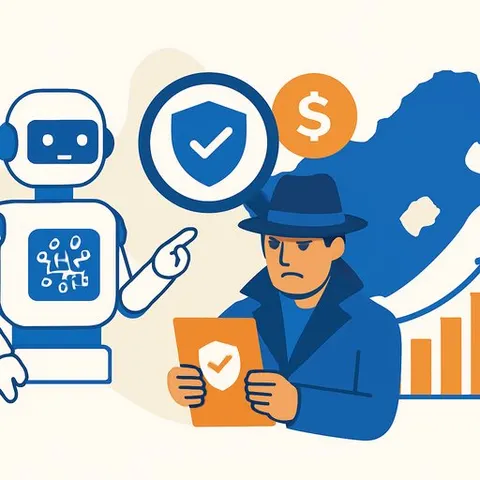
South African insurers turn to AI to counter organised fraud networks
Fraud costs South African insurers billions annually, according to the Insurance Crime Bureau's 2024 Annual Report. The financial toll extends beyond payouts-it drives premium increases, strains operations and erodes customer trust in the insurance system.
Artificial intelligence has become a primary tool for detecting fraud before claims are paid. Machine learning models now analyse thousands of variables simultaneously, spotting inconsistencies that manual review would miss.
From reactive to proactive detection
Insurers are shifting from investigating fraud after the fact to identifying red flags during the claims process. AI systems analyse behavioural trends, historical claims data and telematics information to flag suspicious activity early.
Pattern recognition has improved significantly. Advanced systems can identify unusual claims timing, repeated losses across linked identities and behavioural patterns that match known fraud methods. This includes detecting altered photographs, recycled accident images and manipulated audio footage through image and voice recognition tools.
Mapping fraud networks
Organised fraud rarely involves isolated claims. AI network analysis maps relationships between claimants, vehicles, properties and supporting documents, exposing syndicate activity and staged accidents that would otherwise go undetected.
Natural Language Processing tools now analyse written and spoken communication across claim forms, call centre recordings and statements, identifying contradictions that suggest misrepresentation.
The dual-edged challenge
The same technologies insurers use for detection are being weaponised by fraudsters. Criminals now create synthetic identities, falsified documents and cloned voices that convincingly mimic legitimate customers, raising the detection bar further.
This escalation has forced insurers to rethink their approach. Many are moving away from pure automation toward hybrid models that combine AI-driven detection with human oversight, governance controls and continuous model monitoring to reduce bias and false positives.
Human judgment remains essential
AI surfaces risk at scale, but experienced investigators and strong governance structures remain critical to ensure decisions are fair, accurate and defensible. The combination of intelligent systems and skilled people outperforms either approach alone.
Industry-wide intelligence sharing amplifies these efforts. When insurers, industry bodies and law enforcement share fraud intelligence responsibly, they strengthen defences across the entire system.
For professionals managing claims or fraud risk, understanding AI for Insurance and AI Data Analysis has become essential to effective decision-making.