
AI news ·
AI helps with finances, but can't replace human advisers, credit union CEO says
43% of Americans have used AI for personal financial planning, per a NerdWallet survey. The risk: AI offers instant answers but lacks the personal context and emotional judgment needed for major money decisions.
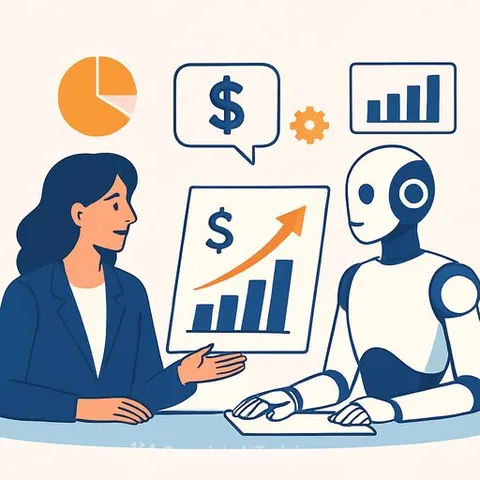
Nearly half of Americans - 43% - have used AI for personal financial planning, according to a NerdWallet survey conducted in October. For finance professionals, that shift raises a critical question: where does automated guidance end and human judgment begin?
The trend is especially pronounced among younger generations, who increasingly treat chatbots as a natural first stop for budgeting, investing, and retirement questions. AI offers round-the-clock availability, instant answers, and easier access to financial information than ever before. For people who have never worked with a financial professional, it lowers barriers that have kept them out of the conversation.
That's genuinely positive. But as AI tools grow more capable, there's a risk that users place too much confidence in their answers without understanding what they can't do. AI can be an outstanding financial assistant. It should not be mistaken for a financial adviser.
Where AI genuinely helps
AI excels at education and organization. Building a first budget, understanding compound interest, comparing traditional and Roth IRAs, or setting up an automatic savings plan - these are tasks where AI explains concepts clearly, never judges a basic question, and is available whenever needed.
It's equally strong at repetitive, data-driven work. Tracking spending, categorizing expenses, flagging unusual account activity, and reminding users when bills are due all require consistency and speed more than personal judgment. For households that never scheduled time with a financial professional, AI makes the fundamentals of investing and retirement planning accessible from home.
Finance professionals in particular can use AI to handle routine financial organization while focusing their expertise on higher-stakes decisions. Resources like AI for CFOs and AI for Finance offer pathways for understanding where automation fits in professional financial work.
Where misplaced confidence causes problems
The concern arises when people treat AI-generated answers as personalized financial advice. Most AI platforms are designed to provide an answer, even without the full picture. That answer may sound thoughtful and authoritative, but confidence is not the same as accuracy.
Researchers studying AI in personal finance have found that its recommendations often remain generic because they lack the personal context that drives good financial decisions. Financial planning rarely comes down to numbers alone. AI doesn't know that someone is helping an aging parent who could soon require long-term care, that a business partner is preparing to retire, or that a client is considering leaving a stressful career earlier than planned.
Consider two people, both 58, each with $900,000 in a 401(k), a paid-off home, and a goal to retire at 65. On paper, they look identical. But one has a government pension and retiree health benefits. The other is self-employed, has no pension, and expects significant healthcare expenses because of a spouse's chronic illness. The numbers are nearly the same. The advice should not be.
The emotional dimension of money decisions
AI cannot recognize emotion the way a person can. The costliest financial mistakes often happen during periods of fear or overconfidence. When markets turn volatile, investors feel an urge to sell everything and move to cash. During strong markets, others convince themselves they've found a winning strategy that can't fail.
"A trusted financial professional can hear hesitation in your voice, ask follow-up questions and help separate temporary emotions from long-term goals," the CEO said. "AI can generate information, but it can't understand the personal circumstances behind a difficult decision or recognize when someone simply needs reassurance before making a life-changing move."
This isn't a choice between AI and human guidance. The smartest approach uses each where it adds the most value. Let AI organize finances, answer basic questions, automate routine tasks, and prepare for conversations about the future. Rely on a trusted professional for decisions involving taxes, retirement income, estate planning, insurance, major investments, or anything difficult to undo.
Why this matters for finance professionals
Clients will increasingly arrive with AI-generated recommendations in hand. Finance professionals who can quickly assess those suggestions, account for the personal context AI lacks, and provide the emotional grounding that automated tools cannot will become more valuable, not less. The practical rule to share with clients: if an AI recommendation leads to moving significant money, signing legal paperwork, claiming Social Security, retiring, or making a major investment decision, pause before acting - and have a conversation with someone who understands the full picture.