
AI news ·
AI improves efficiency in communications but risks diluting creativity and brand voice, industry voices warn
AI cuts hours from communications tasks but struggles with tone, nuance, and authenticity. Over-reliance risks generic messaging that audiences notice and distrust.
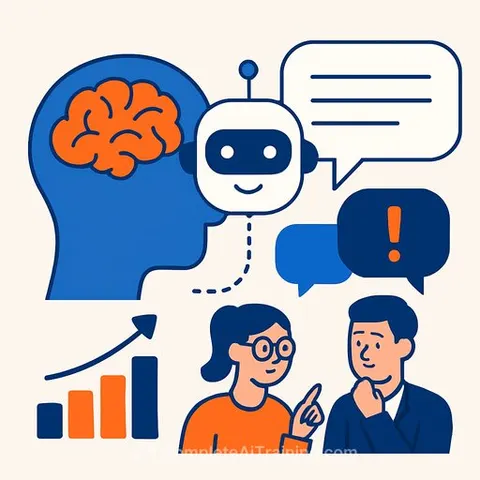
AI in Communications: Speed Gains Come With Hidden Costs
AI has made communications professionals faster. Tasks that once consumed hours-content drafting, sentiment analysis, media monitoring-now take minutes. But efficiency alone does not guarantee effectiveness, and the industry is discovering the difference matters.
The technology excels at pattern recognition and rapid output. It struggles with context, tone, and the cultural nuance that separates generic messaging from resonant communication. When organizations depend on AI-generated responses for press statements or brand messaging around sensitive issues, the results often feel disconnected from the actual situation.
Where AI Falls Short
Communication requires understanding audience sentiment, stakeholder expectations, and timing. These are interpretive tasks that still demand human judgment. AI can miss emotional weight entirely. A polished statement generated by an algorithm may sound professional without sounding authentic.
The risk extends beyond individual campaigns. When multiple organizations rely on similar AI outputs, messaging becomes uniform. Audiences notice. They expect originality and authenticity-qualities that automation dilutes.
There is also an impact on thinking itself. Communications have always been driven by ideas that are insightful, bold, or unconventional. Over-reliance on AI, which bases outputs on existing data patterns, can limit that kind of original thinking.
The Strategic Middle Ground
Rejecting AI is neither practical nor necessary. The question is how to use it. AI should support the process, not define it. It should be an enabler, not a decision-maker.
Organizations need clear guidelines for AI deployment. Teams should be trained not just in using tools, but in questioning their outputs. A strong editorial lens-applied by humans-remains essential to ensure communication stays aligned with its purpose.
When applied thoughtfully, AI can free up time for strategy and creative development. It can generate insights and support sharper targeting. The difference lies in treatment: tool versus replacement.
For marketing professionals managing multiple narratives across platforms, the practical path forward is clear. Use AI to handle routine work and surface insights. Preserve human judgment for decisions about tone, intent, and resonance. Let technology amplify human creativity, not substitute for it.
Learn more about AI for Marketing and AI for PR & Communications to develop a more strategic approach to AI deployment in your organization.