
AI news ·
AI improves supply chain forecasting, inventory and logistics for North American manufacturers
AI is shifting supply chain planning from periodic, history-based cycles to continuous decisions driven by real-time data. Forecasting, inventory, logistics, and supplier coordination all improve when AI connects inputs across the operation.
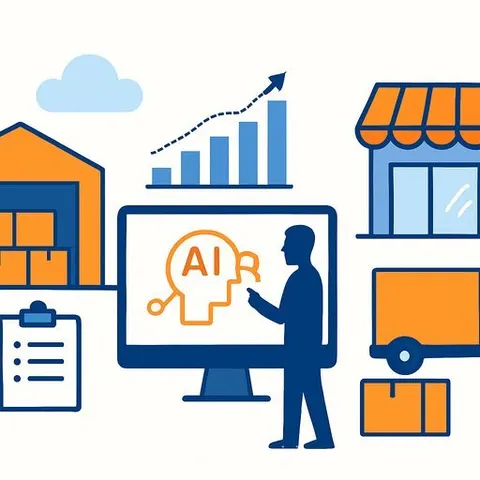
AI Moves Supply Chain Planning From Reactive to Data-Informed
Manufacturing operations leaders face constant pressure: demand shifts unpredictably, costs rise, and customers expect faster, more reliable delivery. Traditional planning methods built on historical data and periodic cycles struggle to keep pace. AI addresses this by enabling organizations to make decisions based on real-time information rather than rearview-mirror analysis.
The shift is not about replacing existing systems. Instead, AI supports better use of data across forecasting, inventory, logistics, and supplier coordination. When implemented with clear business objectives, the approach produces measurable improvements in operational performance.
Demand Forecasting Expands Beyond Historical Data
Conventional forecasting relies heavily on past sales figures. AI-based models incorporate broader data sources: market trends, seasonal patterns, weather, and economic signals. This wider perspective reduces forecasting errors.
The practical result: more stable production schedules, less excess inventory sitting on shelves, and lower stockout risk. For manufacturers, tighter alignment between production and actual demand directly affects cash flow and operational cost.
Inventory Decisions Become Dynamic
Inventory management directly impacts both cost and service levels. Traditional approaches set stock levels at fixed intervals. AI enables continuous analysis of demand signals and stock levels across multiple locations, then recommends adjustments based on updated data.
Organizations typically see improvements in working capital utilization and reduced carrying costs when inventory responds to actual conditions rather than static formulas.
Logistics Efficiency Gains Compound Across Networks
Transportation represents a significant cost in supply chain operations. AI improves logistics by optimizing routes based on current conditions, planning loads and capacity more effectively, and flagging potential delays before they occur.
In North America's complex supply networks, even incremental improvements in transportation efficiency and delivery consistency translate to meaningful cost reductions.
Supplier Visibility Reduces Risk
AI-based tools monitor supplier performance continuously and provide early warnings of potential delays or quality issues. This visibility supports better procurement decisions and faster responses to disruptions. However, supplier relationships still require human judgment and oversight.
Manufacturing and Supply Chain Must Connect
Modern operations benefit when supply chain processes link directly to production environments. AI supports this integration by adjusting production schedules based on updated demand signals, improving equipment utilization through predictive insights, and supporting quality monitoring with data-based analysis.
When supply chain inputs connect to manufacturing outputs, the entire operation becomes more coordinated and responsive.
Implementation Requires Structure
AI adoption fails when organizations treat it as a standalone initiative. Common obstacles include data scattered across incompatible systems, inconsistent data quality, legacy infrastructure that resists integration, and unclear use cases.
Organizations that succeed typically start with focused applications such as forecasting or inventory optimization, align initiatives with specific business objectives, invest in data integration and governance, and build internal capabilities over time.
Relevance for North American Operations
Manufacturing leaders in North America face particular pressure from supply chain restructuring, labor constraints, customer expectations for faster delivery, and ongoing logistics costs. AI can improve resource utilization and operational responsiveness in this context, provided solutions integrate well into existing workflows.
Learn more about AI for Operations and explore the AI Learning Path for Supply Chain Managers to understand how these applications work in practice.