The Role of AI in Education: Insights from Byron Scaf
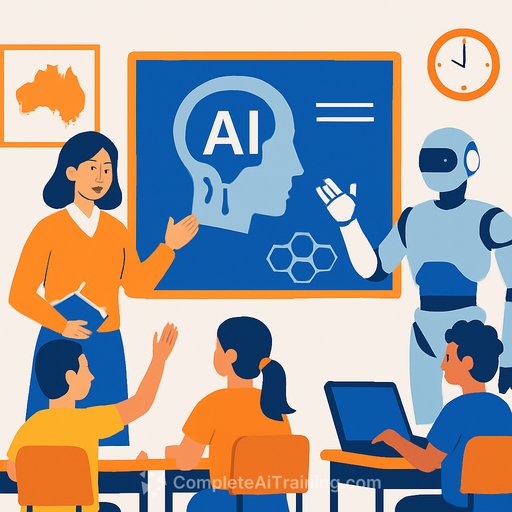
Generative AI has introduced new challenges and opportunities in education. Australian teachers have adapted quickly, integrating AI into lessons while addressing concerns about its impact on their roles. Despite AI’s ability to create impressive outputs, it still depends on human input, especially creative judgment. AI is a tool—not a replacement for teachers.
In 2025, the emphasis is on safe, responsible AI use that supports learning rather than undermines it. Byron Scaf, CEO and co-founder of Stile Education, has been instrumental in shaping discussions on AI in education. He stresses that technology should empower educators, not overshadow them. Below, we explore key insights from Scaf on AI myths, the supports schools need, and evolving science teaching methods to close the STEM skills gap.
Clearing Up AI Myths in Education
A common worry is that AI will replace teachers. This springs from a misunderstanding of what teaching really involves. Teaching goes far beyond delivering content. It’s about guiding students through emotional and social development—something AI cannot replicate or accelerate.
AI will change how assessments are designed. The era of “non-Googlable questions” is over; AI can now answer nearly any school-level question. This calls for more dynamic assessment methods like Socratic seminars and hands-on engineering challenges. AI’s real strength lies in reducing administrative tasks, freeing teachers to focus on meaningful interactions with students.
Non-Financial Support for STEM Engagement
While funding grabs headlines, non-financial support is crucial. Teachers often spend countless unpaid hours creating lessons and assessments from scratch. This wastes valuable time that could be spent connecting with students and responding to their needs.
High-quality curriculum resources that can be customized are key. Providers should act as partners, easing teacher workload and offering flexibility. For example, Stile Education develops tools to help teachers incorporate AI when desired, or opt out when preferred. Schools deserve collaborators that enhance STEM education quality and reduce redundant effort.
Nationally scalable STEM resources could drastically cut teacher workload. Currently, teachers spend about 50 hours creating resources for each hour of teaching. Providing ready-to-use, adaptable materials respects teachers’ expertise and time.
Shifting Approaches to Science Teaching
Science programs vary widely across Australia’s 10,000 schools, with most created individually by teachers after hours. New curriculum demands only add to the workload. This makes the quality of STEM education dependent on how much unpaid effort teachers can invest.
Stile Education addresses this by offering a comprehensive, customizable program covering Year 7 to Year 10 science. It includes practical activities, pre-tests, and flexible lesson plans. This approach supports new teachers while giving experienced educators the freedom to adapt content.
- Focus on timely, relevant content rather than traditional textbooks.
- Align closely with curriculum authorities to keep resources up-to-date.
- Use current events and contexts that resonate with students.
- Incorporate engaging formats, like short videos, to explain key concepts.
Preparing Students for the Future
Closing the STEM skills gap requires practical steps that go beyond exam preparation. School leaders should create opportunities for real-world, inquiry-based learning. Hands-on exploration and applying knowledge to authentic problems build skills exams can’t measure.
For instance, Stile Education partnered with Lunaria One, an Australian research initiative, on a curriculum involving a global mission to grow plants on the moon. Students collect and analyze data on plant growth and share findings with the research team ahead of a 2026 lunar mission. This project connects curriculum science with meaningful, real-world applications.
For educators interested in expanding their knowledge of AI tools and how to safely integrate them in the classroom, exploring practical AI training courses can be beneficial. Resources like Complete AI Training's latest courses offer actionable insights tailored for education professionals.
Your membership also unlocks: