AI In Cardiac Care: What's Working Now, What Still Needs Work
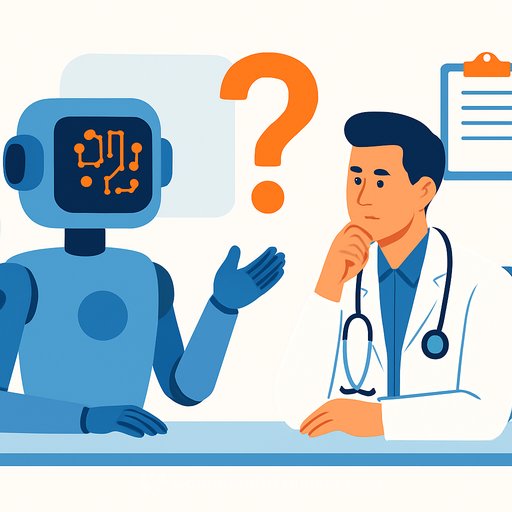
Artificial intelligence is moving from buzz to bedside in cardiology. We spoke with Faraz Ahmad, MD (Northwestern Medicine, associate editor for AI in JAMA Cardiology) and Marie-Noelle Langan, MD (former EP operations director at Mount Sinai, chief medical advisor at 91Life) to understand where AI is delivering value inside health systems and what it takes to deploy it well.
Here's the practical view: target real workflow pain, build strong guardrails, measure outcomes, and keep clinicians in control. Heart+ by 91Life offers a concrete example of how this looks in remote cardiac monitoring.
Where AI Shows Up In Cardiology Today
According to Dr Ahmad, ambient "listening" tools for clinical note generation have seen fast uptake. They help reduce clerical load, free up face time with patients, and can improve documentation quality.
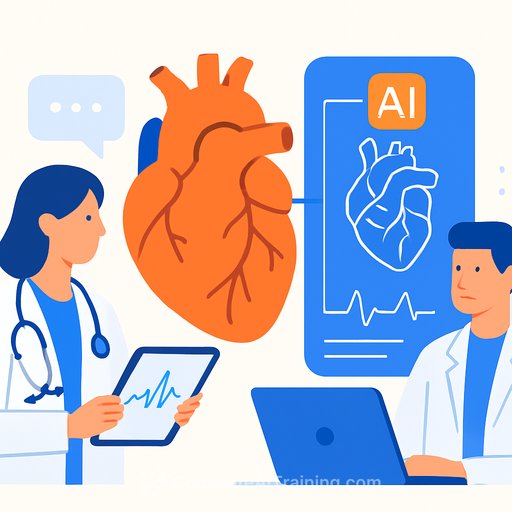
Across cardiovascular diagnostics, algorithms now support ECG, echocardiography, cardiac CT, and MRI. They improve measurements, draft structured notes, and can surface signals clinicians can't easily see on their own, such as patterns suggestive of cardiac amyloidosis on ECG or echo.
Clinicians are also using large language model tools for quick education and point-of-care decision support. When these tools are grounded in trusted medical sources, they become a useful supplement, not a replacement, for clinical judgment.
Benefits, Risks, And How Systems Are Managing Them
Potential wins include less administrative friction, better adherence to evidence, higher patient activation, and improved outcomes. But those gains aren't automatic.
Dr Ahmad notes the real costs: licenses, training time, change fatigue, and mixed ROI. There's also risk of widening disparities if models underperform in marginalized groups. Many systems now use formal AI governance, standardized evaluation, and post-deployment monitoring to reduce those risks, and to decide whether to buy, build, or co-develop solutions for a given use case.
Staying Current: Practical Options For Clinicians
Treat AI literacy like any other clinical skill. Read peer-reviewed work, tap society content, and follow credible newsletters and podcasts. The American Heart Association's scientific statement is a strong overview of where AI fits in cardiovascular care.
Read the AHA scientific statement on AI and heart disease.
Heart+: A Case Study In Remote Cardiac Monitoring
Heart+ (91Life) is a cloud-native platform used at Mount Sinai (~3 years) and Yale (>5 years) to centralize data from cardiac-implantable electronic devices, ambulatory ECGs, and wearables. The system triages alerts with machine learning, generates reports, pushes structured data into the EMR, and automates billing.
The goal: fewer manual steps, cleaner oversight, and faster action when something actionable shows up.
Rollout Lessons From Mount Sinai And Yale
Dr Langan reports a predictable arc: strong clinician interest during demos, anxiety at first deployment, then quick buy-in once teams see time savings and clarity. Staged rollouts and hands-on support during the first weeks shorten the learning curve.
Clinicians hold high standards and are quick to flag issues. 91Life built tight feedback loops so staff can log concerns in-flow, and the technical team can fix root causes quickly. Patients interact with the platform less directly, but they notice that their care teams have clearer answers and better visuals during visits. Select, physician-guided patient messaging has been well received.
Overcoming Operational Hurdles
Two pain points and how they were solved:
- Clinic-level oversight: Early on, it was hard to supervise transmission work across roles. New dashboards and graphics now allow easy spot-checks and end-to-end visibility.
- Patient connectivity: Keeping patients consistently connected to their device data was a challenge. Automated outreach plus KPI tracking helped teams sustain the volume and cadence needed for reliable monitoring.
Guardrails: Privacy, Security, And Bias
Security follows a finance-grade architecture with HIPAA controls layered on top. Case discussions are simplified with easy de-identification inside the platform.
On bias, Heart+ primarily collates commercially deployed device data and presents it consistently. The team pays attention to inclusive language, distribution, and accessibility, with simple teaching tools embedded for diverse patient groups.
What's Next For Heart+
Dr Langan notes the focus now is AI-driven suggestions delivered inside familiar workflows. Key principles: show the math behind recommendations, keep supervisory tools front and center, and prioritize accuracy and personalization.
Environmental Footprint
To limit compute and cost, the 91Life AI and Data team favors lean, narrowly scoped models over large general models. For example, they've shown that small datasets (around 1,000 patients) trained with efficient tree-based methods can separate relevant from not-relevant transmissions effectively.
For context on AI's environmental impact, see this overview in the policy literature: Journal of Environmental Management.
Key Questions To Ask Before Deploying AI In Cardiac Care
- What specific outcome are we improving (time to triage, documentation time, missed alerts, patient activation, readmissions)?
- How will we measure ROI and clinical impact at 30, 90, and 180 days?
- Is this a buy, build, or co-develop decision for our setting and data?
- What bias, privacy, and safety checks run before and after go-live?
- How do we monitor performance drift and inequities over time?
- What's the training plan for clinicians and staff? Who owns it?
- How does this integrate with our EMR, device vendors, and billing?
- What's the energy/compute footprint, and are there leaner options?
Action Steps For The Next 90 Days
- Map your current remote monitoring workflow and quantify bottlenecks.
- Pick one high-value pilot (eg, ambient scribe in clinic or ECG triage rules) with a clear success metric.
- Stand up AI governance: approval criteria, evaluation plan, and monitoring cadence.
- Run a staged rollout with super-users and weekly feedback loops.
- Baseline your KPIs (throughput, time-to-review, alert fatigue, patient connectivity, staff satisfaction) before go-live.
- Publish quick wins internally to maintain momentum; fix friction points fast.
Further Learning
- AHA scientific statement: AI in heart disease
- If your team needs structured AI upskilling, explore practical options by role: Complete AI Training - courses by job
The Bottom Line
AI in cardiology isn't magic. It's workflow, data quality, and change management. As Dr Ahmad and Dr Langan make clear, the wins come from clear goals, measured rollouts, and tools that make clinicians faster and more precise while keeping patients at the center.
Your membership also unlocks: