AI in Education: The 2025 U.S. Plan Sparks Major Changes
The United States has launched a national initiative to embed AI education throughout the K–12 system and extend into workforce training. This effort, kicked off by a presidential executive order on April 23, 2025, aims to equip students with practical AI skills that prepare them to create and innovate, not just consume technology.
The goal is clear: keep American students competitive by teaching them to use and develop AI across fields like healthcare, law, marketing, and creative industries. Teachers will receive support and training to integrate AI concepts effectively and enhance classroom outcomes.
White House Task Force on AI Education
A central piece of this plan is the White House Task Force on AI Education, led by the Director of the Office of Science and Technology Policy (OSTP). This group brings together cabinet secretaries and advisors from diverse departments such as Agriculture, Labor, Energy, and Education, ensuring a coordinated federal approach.
The Task Force is also responsible for launching the Presidential Artificial Intelligence Challenge—a competition encouraging students across all ages to explore AI applications, from new software to AI-driven art. The Challenge will be supported by partnerships with private companies and academic institutions, with planning to be completed within 90 days of the order.
Building AI Literacy from the Ground Up
AI literacy begins early. The Department of Education will roll out initiatives to develop inclusive, engaging AI curricula for K–12 students. A voluntary national framework will guide age-appropriate learning objectives covering foundational topics like what AI is, machine learning, data, algorithms, computational thinking, and data literacy.
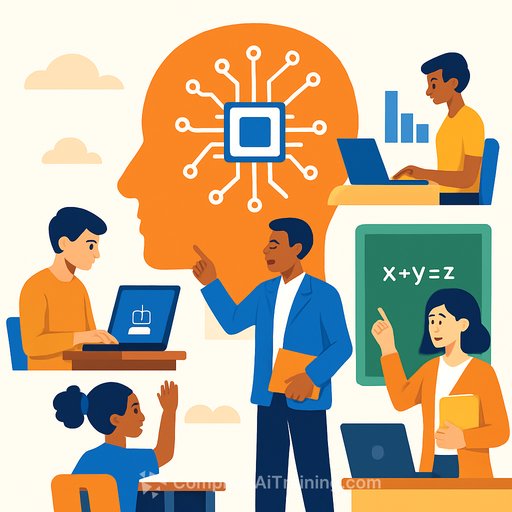
Rather than isolating AI as a separate subject, the plan encourages weaving AI concepts into existing courses. This helps students see AI as a versatile tool for creativity and problem-solving across disciplines.
Companies like LocoRobo are already crafting project-based AI courses suitable for classrooms, covering topics such as AI basics, AI tools, and prompt engineering. These courses emphasize responsible innovation and ethical AI use. LocoRobo also offers an AI Readiness Assessment to help schools gauge their current capabilities and plan accordingly.
Empowering Educators
Teachers are the key to this transformation. The initiative provides substantial training focused on using AI to improve teaching and reduce administrative burdens. Within 120 days, funding priorities will support teacher training on AI integration, including how to teach AI fundamentals and use AI tools effectively.
Federal Support and Partnerships
To scale AI education, the Task Force directs federal agencies to build partnerships with AI industry leaders, academia, and nonprofits. These collaborations will produce online resources, coding projects, and hands-on activities accessible to K–12 students nationwide.
Federal funding mechanisms, including discretionary grants, will prioritize these AI education efforts. The Department of Labor will promote AI apprenticeships and certifications, setting targets to expand AI workforce skills in various industries.
States and grantees are encouraged to use Workforce Innovation and Opportunity Act (WIOA) funds to foster AI skills and work-based learning. High school students will gain more opportunities to take AI courses, earn dual credits, and achieve industry-recognized certifications before graduation.
Ethics at the Core
Ethical considerations are embedded throughout AI education. Students will learn to recognize biases in AI systems, understand data privacy and security issues, and critically assess AI's impact on society, employment, democracy, and the environment.
The concept of “human in the loop” is emphasized, where human judgment remains central in AI-driven decisions. Efforts are underway to prevent algorithmic discrimination—systematic unfairness caused by biased AI—ensuring fairness and accountability.
Clear Objectives and Deadlines
- The Task Force formed in April 2025 to coordinate AI education efforts.
- The Presidential AI Challenge will be planned within 90 days (by late July 2025) and launched within 12 months.
- By late August 2025 (120 days), grant programs for teacher training, NSF AI research, 4-H AI education, and labor department consultations on apprenticeships will start.
- By late October 2025 (180 days), AI teaching tools developed through public-private partnerships will be available to educators.
This aggressive timeline shows the administration’s commitment to integrating AI education quickly and effectively across the nation.
For educators seeking to expand their AI knowledge or access practical training resources, platforms like Complete AI Training offer a variety of courses designed to build skills and confidence in AI concepts and applications.
Your membership also unlocks: