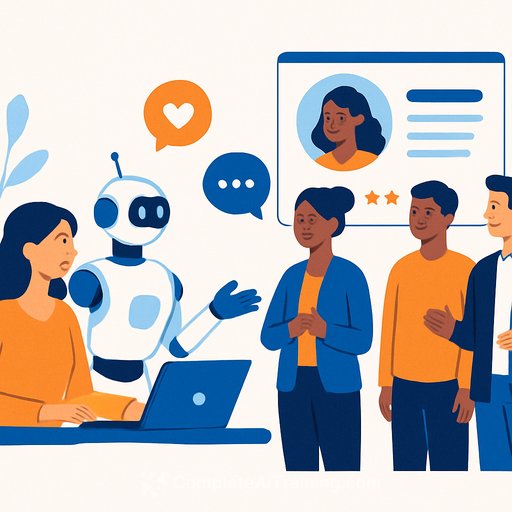
Artificial intelligence (AI) is changing how companies attract and develop talent, making hiring more efficient and data-driven. But this shift isn’t just about adopting new tools; it requires Chief Human Resource Officers (CHROs) to lead a human-focused approach that balances technology with real connection and trust.
Why the urgency?
AI adoption in HR is still in early stages. Recent data shows only about 25% of companies use AI for HR tasks. Meanwhile, investments in AI tools for recruitment, onboarding, and retention are surging. Many HR teams feel unprepared or uncertain about what AI means for their roles and their people. This makes leadership essential to ensure AI complements human judgment rather than replacing it.
The CHRO’s role as leader and culture guardian
AI is changing the workload for HR professionals. For example, automated cover letters and one-click applications flood hiring teams with resumes. Without AI to filter candidates, narrowing down applicants can consume hours. Companies using AI report benefits in writing job descriptions, screening resumes, and communicating with candidates.
However, AI tools must be used carefully. Screening questions should focus on relevant skills to avoid excluding qualified candidates. The CHRO must act not just as an HR manager, but as a strategic integrator of technology and a champion of the company culture.
Human oversight remains critical. AI can assess candidate qualifications, but only people can ensure the candidate pool is diverse and inclusive. HR professionals should craft AI prompts and review outputs to prevent bias and promote fair hiring practices.
Addressing fears and barriers
AI adoption isn’t just technical—it impacts workplace culture and employee confidence. Many worry AI will threaten jobs. With 60% of executives planning to increase AI use in the next five years, clear communication is vital.
CHROs must reassure employees that AI is a tool to enhance work, not replace people. Messaging should emphasize care, visibility, and support. Transparency builds trust and helps employees see AI as a way to free up time for higher-value tasks, like learning new skills.
For example, automating a repetitive task that takes three hours weekly gives employees time to develop new abilities that benefit the business. Leaders should help teams envision a future where AI handles routine work and humans focus on what they do best.
Four actions CHROs can take now
- Invest in AI education: Build your team’s AI understanding with training sessions, workshops, or online courses. Share your own learning experiences to encourage curiosity and confidence.
- Test AI tools carefully: Start with specific applications like AI-driven applicant tracking systems or onboarding platforms. Choose tools that solve clear problems and measure results.
- Create inclusive guidelines: Work with diversity and talent teams to ensure AI tools promote fairness. Define criteria for inclusive language and diverse candidate sourcing. Regularly audit AI outputs to prevent bias.
- Engage employees in the change: Be open about why AI is introduced and involve your HR teams in evaluating tools. Frame AI as a way to enhance the employee experience, not as a job threat.
The future of HR: innovative and people-first
Technology integration is no longer just IT’s responsibility. CHROs are uniquely positioned to align AI adoption with company values and inclusion goals. This alignment can improve employee engagement, foster innovation, and prepare organizations for future challenges.
Decisions made today will affect how companies attract and retain talent and build psychologically safe workplaces. Leading with empathy and clear direction will help CHROs guide their organizations through this change.
For HR professionals looking to deepen their AI knowledge and leadership skills, exploring targeted training can be a valuable step. Consider checking out resources like Complete AI Training’s courses for HR professionals to build practical AI skills that support this transition.
Your membership also unlocks: