AI in Middle East Oil & Gas Projects: A Management Brief
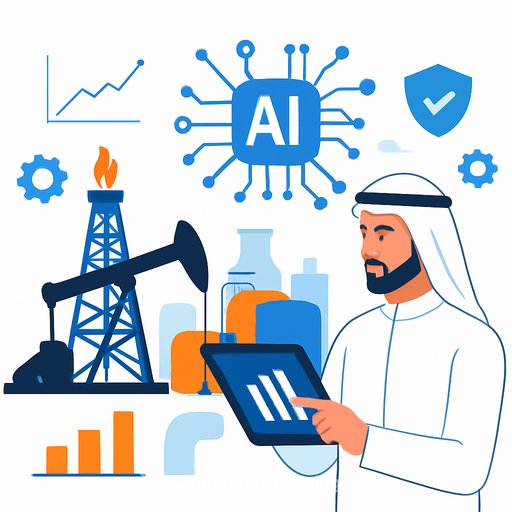
AI is changing how projects get delivered across the Middle East's oil and gas sector. The upside is clear-faster decisions, tighter control of costs, and safer operations. The catch: value depends on data quality, workforce readiness, and fit-for-purpose infrastructure.
As one industry leader put it: the potential is big, but it requires structural, cultural, and technological shifts to turn pilots into production.
Where AI Is Delivering Value Now
- Decision intelligence: Real-time analysis and predictive models flag delays, cost overruns, and equipment failures before they hit the schedule. Digital twins and predictive maintenance are extending asset lifecycles and cutting downtime.
- Efficiency and cost: Intelligent scheduling and resource allocation have reduced delays by up to 40% and accelerated returns by as much as 25%. Generative design and virtual prototyping reduce rework and keep planning-to-execution tight.
- Safety and compliance: Computer vision and smart PPE improve on-site monitoring. Automated documentation and risk modelling help with regulatory requirements. ADNOC's HSECockpit.ai platform has reportedly reduced incident frequency by 25%.
- Strategy fit: Adoption supports national agendas such as Saudi Vision 2030 and the UAE's Masdar City initiatives. AI is being applied across the value chain-from seismic interpretation and reservoir modelling to logistics-turning terabytes of project data into actionable insights.
Roadblocks Leaders Must Solve
- Data quality and integration: Legacy systems, fragmented documentation, and inconsistent formats limit model reliability. Accurate digital twins require validated, unified data across the full project lifecycle.
- Workforce readiness: Teams need skills in data, digital workflows, and AI tools. Resistance to change and low digital literacy slow adoption. Culture change matters as much as the tech budget.
- Infrastructure and security: Many facilities still run on aging systems. Reliable AI needs IoT sensors, modern data platforms, and cloud capacity-plus serious cybersecurity. Sovereign clouds are a regional priority to protect sensitive operational and financial data.
How the Region Is Responding
- Upskilling and partnerships: Saudi Aramco partners with Cloudera to train local talent. SAS has pledged $1 billion globally, with a focus on Saudi Arabia, to support AI education.
- From pilot to platform: Digital system integrators are embedding AI into existing workflows, ensuring models run on structured, validated data. Platforms such as ADNOC's Neuron 5 and ENERGY.ai are enabling predictive maintenance, anomaly detection, and automated decision-making in real time.
- Governance and privacy: UAE and Saudi frameworks (UAE Federal Decree-Law No. 45 of 2021 and Saudi PDPL) set clear standards for data handling. Secure architectures and, where relevant, blockchain improve integrity and traceability-especially in cross-border work.
Use Cases That Move the Needle
- Operational planning: Predictive models optimise drilling schedules, equipment usage, and workforce deployment-even in remote or offshore environments.
- Forecasting: Machine learning combines historical consumption, market trends, and geopolitical signals to improve demand and price forecasts.
- Risk management: AI shifts risk from reactive to predictive. It monitors equipment health, runs financial and operational simulations, and reduces human error in high-stakes decisions.
- Supply chain, sustainability, and compliance: Real-time logistics tracking, smarter contract pricing, emissions monitoring, energy optimisation, and automated reporting support initiatives such as the UAE's Net Zero 2050 and Saudi Vision 2030, strengthening trust with governments and investors.
Make AI Trustworthy
- Validated data: Digital twins and high-quality historians provide clean inputs.
- Strong governance: AI governance committees define standards, approval gates, and monitoring. Models are tested with historical and simulated scenarios before deployment.
- Human oversight: Cross-functional teams-data scientists, engineers, and project managers-review insights, manage exceptions, and keep accountability clear.
- Security by design: Identity controls, audit logging, and segmentation protect sensitive operational and financial data.
Management Playbook: Your First 90 Days
- Set 2-3 outcomes (e.g., safety incidents down, uptime up, cost predictability).
- Audit data readiness: systems, tags, historians, quality, ownership. Close gaps with data standards and a master data model.
- Form a cross-functional delivery squad and name a product owner with budget authority.
- Pick one high-signal pilot: predictive maintenance on top-critical assets or schedule risk prediction on megaprojects.
- Integrate the essentials: sensors/IoT, CMMS, ERP, and document control into a single data layer.
- Define governance: model approval, monitoring, retraining cadence, rollback plan, and human-in-the-loop checkpoints.
- Upskill the line: short courses for PMs, planners, and supervisors; certify champions; measure adoption.
- Harden security: threat model, access controls, vendor due diligence, and incident response runbooks.
- Plan to scale: component reuse, standard APIs, shared feature store, and reference architectures.
- Track value monthly: baseline KPIs, realised savings, avoided downtime, and reinvest where returns are strongest.
Build the Skills to Lead This
Upskilling isn't optional if you want predictable outcomes and a pipeline of production-ready use cases. For structured learning paths by role, see Complete AI Training - Courses by Job.
Bottom Line
AI is already improving decisions, costs, and safety across oil and gas projects in the Middle East. Sustainable results come from clean data, trained teams, modernised infrastructure, and clear governance. The tech can recommend; leaders still own the trust and accountability behind every decision.
Your membership also unlocks: