
AI news ·
AI in pharma moves from lab development to patient impact
AI cuts the hit-to-lead drug development phase from years to months. IT teams must now build GxP-compliant MLOps pipelines and secure architectures for clinical and genomic data.
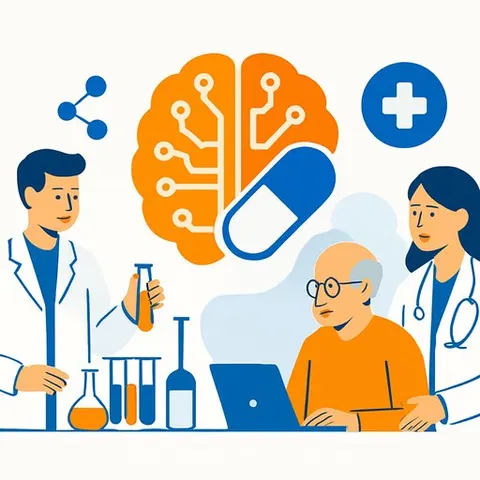
AI is compressing drug development timelines and reshaping how pharmaceutical companies approach everything from molecule design to post-market surveillance. For IT and development professionals, this shift translates into demand for new data pipelines, model validation frameworks, and infrastructure capable of handling sensitive patient data at scale.
Accelerating discovery and preclinical work
Machine learning models now predict molecular behavior and identify viable drug candidates far faster than traditional high-throughput screening. Generative AI takes this further by designing novel molecules against specific disease targets. These methods cut the hit-to-lead phase from years to months and reduce the financial weight of early-stage research.
Predictive models also simulate how a compound will interact with biological systems. Researchers flag potential toxicity or adverse effects before animal or human trials begin. AI-driven analysis of genomics, proteomics, and patient records helps teams identify biomarkers and stratify populations, so clinical trials enroll participants with the highest likelihood of response.
Clinical trials and real-world monitoring
During trials, AI optimizes protocols and monitors patient adherence in real time. Natural language processing tools mine electronic health records and trial documentation, while computer vision reads imaging data. The result is faster, more cost-effective trials with fewer failures tied to poorly targeted endpoints.
Post-approval, AI parses real-world evidence to continuously refine understanding of a drug's effectiveness and safety. This feedback loop informs dosing adjustments, label updates, and payer negotiations. The underlying systems must handle streaming data from wearables, claims databases, and electronic health records without compromising privacy or regulatory compliance.
Data quality, regulation, and workforce readiness
AI models are only as good as the data they're trained on. Interoperability gaps between legacy systems remain a persistent bottleneck. Regulatory frameworks are evolving, and ethical concerns around algorithmic bias and patient privacy demand rigorous governance. Integrating AI into existing workflows also means upskilling teams that may not have worked with machine learning operations before.
These aren't just policy problems. They're engineering challenges that fall squarely on IT and development teams. Building auditable pipelines, enforcing data lineage, and deploying explainable models are now core requirements in regulated environments.
Why this matters for IT and development professionals
The pharmaceutical industry's AI adoption creates concrete technical work: designing secure data architectures for clinical and genomic data, hardening MLOps pipelines for GxP-compliant environments, and building monitoring systems that detect model drift before it affects patient safety. Companies are hiring engineers who understand both cloud infrastructure and the regulatory constraints of life sciences. If you can bridge that gap, your skills will command a premium across biotech, CROs, and health-tech firms.