AI Integration in Process Manufacturing: Progress, Challenges, and Future Outlook
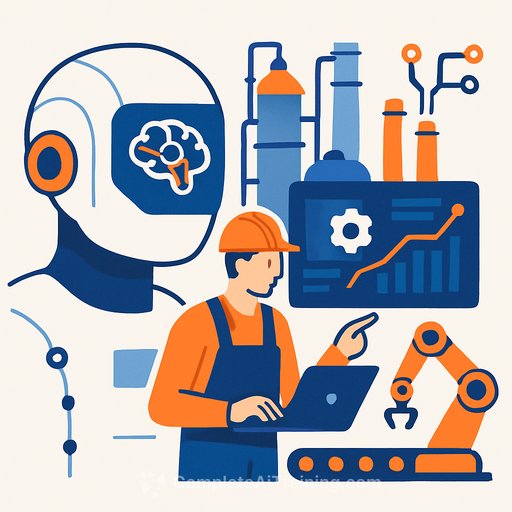
Process manufacturing (PM) is essential in chemical, biochemical, and related engineering fields, involving the transformation of raw materials into final products. This area deals with complex issues such as continuous or batch processing, quality control, and safety risks. Recently, artificial intelligence (AI) has emerged as a promising approach to tackle these challenges.
A recent perspective article in Engineering discusses how AI can be combined with process systems engineering (PSE) methods to improve various facets of PM. The focus is on hybrid AI—an approach that blends machine learning (ML) techniques with first-principles symbolic AI methods—to develop more effective tools for process design, control, and safety.
Key Areas of AI Application in Process Manufacturing
- Chemical Product Design: AI supports computer-aided molecular and mixture design, improving molecular structure representation and property prediction.
- Process Synthesis and Design: Hybrid AI aids in identifying optimal process routes and designs, factoring in sustainability and efficiency.
- Process Control and Monitoring: Neural networks and reinforcement learning (RL) help model and control processes, though maintaining system safety and stability remains challenging.
- Process Safety and Hazards: AI accelerates hazards analysis and risk identification, helping to prevent accidents and improve safety management.
Challenges and Opportunities Ahead
While AI shows significant potential, several areas need further development to maximize its impact in PM:
- Chemical Product Design: There’s a need for better use of chemical libraries, more efficient computational methods, and enhanced hybrid AI approaches to manage complexity.
- Process Synthesis and Design: Establishing unified databases of process flowsheets, integrating sustainability metrics, and improving optimization with hybrid AI are key goals.
- Process Control and Monitoring: Future work should focus on adapting to changing operations, managing limited feedback, incorporating diverse sensor data, and deploying AI-augmented control strategies.
- Process Safety and Hazards: Developing comprehensive databases of hazardous chemicals, advanced language models, and better integration of safety concerns into AI systems will be crucial.
Looking Forward
The success of AI in PM depends on creating AI-augmented PSE tools that can efficiently transfer data into model-based simulations and optimization workflows. This integration is vital for making reliable, failure-free decisions in process manufacturing.
For professionals in product development, staying informed about these advances offers a chance to improve product design cycles, optimize manufacturing processes, and enhance safety protocols. Exploring targeted AI training can provide practical skills to leverage these technologies effectively. Check out Complete AI Training's latest courses to deepen your expertise.
For those interested, the full open-access paper is available here.
Your membership also unlocks: