
AI news ·
AI investment in medical ventilators grows as healthcare systems expand respiratory care capacity
Hospitals are buying more AI-equipped ventilators as demand for critical care rises and budgets tighten. Major manufacturers now include machine learning, predictive analytics, and remote monitoring as standard features.
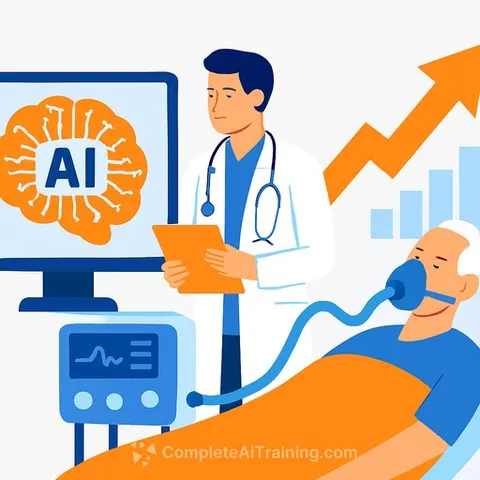
Healthcare Systems Boost Investment in AI-Enabled Ventilators
Healthcare organizations are accelerating purchases of ventilators equipped with artificial intelligence as respiratory care demands grow and hospitals face pressure to improve efficiency. Machine learning algorithms, predictive analytics, and cloud-based monitoring are now standard features on ventilators from major manufacturers including Philips Healthcare, Medtronic, ResMed, Draeger, GE HealthCare, and Siemens Healthineers.
AI-enabled ventilators improve patient monitoring, support clinical decision-making, and flag respiratory risks earlier than conventional devices. The technology addresses a practical problem: hospitals need better tools to manage critical care capacity while controlling costs.
How AI Changes Ventilator Management
Manufacturers are embedding AI algorithms that automate ventilator weaning protocols-the process of gradually reducing ventilator support as patients improve. The systems analyze real-time patient-ventilator interactions and predict when equipment needs maintenance before failures occur.
Cloud-based monitoring allows clinicians to oversee multiple patients remotely, extending ventilator management beyond traditional ICU settings. Hospitals can optimize operations across units and even manage patients in home care environments.
Emerging Applications
- Intelligent Volume-Assured Pressure Support (iVAPS) adjusts breathing support automatically based on patient needs
- Adaptive algorithms customize home ventilation settings for individual patients
- AI-driven safety monitoring tracks device performance and patient outcomes after deployment
These capabilities address the core challenge facing healthcare: rising demand for critical care with limited resources. Government and health system procurement decisions increasingly favor AI-enabled devices that can improve outcomes while reducing operational expenses.
For professionals working in healthcare operations, AI for Healthcare and AI Data Analysis skills are becoming relevant to understanding how these systems work and integrate into clinical workflows.