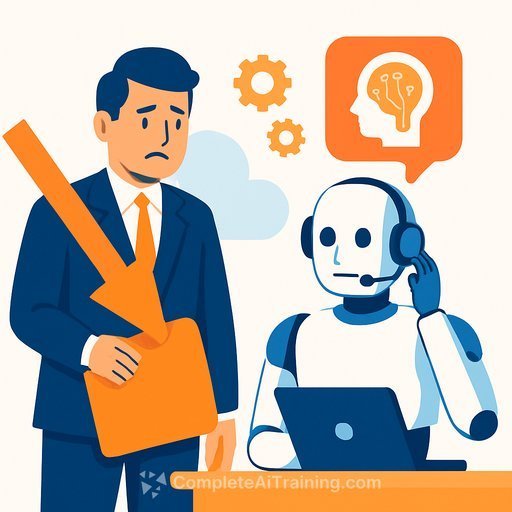
AI Is Cutting Support Jobs. Will Agentless Stick?
AI is moving into customer support faster than most teams expected. Some large companies have trimmed headcount, while new-age brands are testing support setups that run with minimal human intervention.
Salesforce reportedly reduced its support team by thousands after AI began handling nearly half of customer interactions. Amazon, Accenture, TCS, Zomato, and Paytm also restructured to lean on AI. One startup founder claimed their AI agents cut incoming workload by up to 80% for clients. The pressure is real: lower cost, faster replies, fewer escalations.
The hard math behind AI support
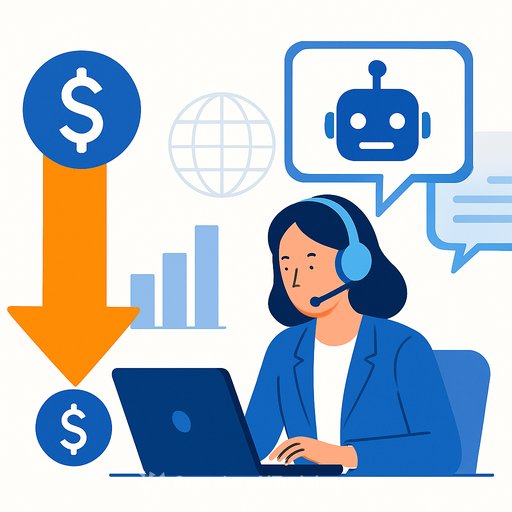
Cost is the blunt instrument. As one AI founder put it, a human agent can cost roughly INR 8-INR 12 per minute, while an AI agent ranges between INR 1-INR 4 per minute depending on quality and customization. That's a potential 50%-90% reduction.
AI also runs 24/7, answers in parallel, and keeps context across sessions. Memory-based systems learn from historical tickets, which cuts onboarding time and prevents knowledge loss when people leave. Integration with CRMs and data sources is getting easier, but giving the model proper business logic, tone, and guardrails still needs careful setup.
Will agentless support actually hold?
A recent analyst outlook was blunt: Fortune 500s won't fully remove humans from customer service in the next few years. Many companies that plan deep cuts will rethink them after failing to hit their goals.
The winning pattern isn't "no agents." It's fewer, better-deployed agents. Human teams focus on growth, complex resolutions, and relationships. AI does the repetitive work and triage. That balance is what protects CSAT while improving margins.
The limits: hallucinations, judgment, and emotion
LLMs still hallucinate and can be confidently wrong. One high-profile example: a lengthy report produced for a government client was criticized for fabricated citations, and the firm acknowledged parts were AI-written. Full automation in support is risky without tight controls.
AI is excellent for high-frequency, low-complexity issues like order tracking, password resets, policy lookups, and basic returns. But it struggles with emotionally charged conversations, nuanced negotiations, and unusual cases. Leaders who tried "pure AI" often rolled it back because edge cases and empathy gaps eroded trust.
Where AI shines vs. where humans stay critical
- AI, strong fit: status checks, FAQs, warranty terms, billing history, plan changes, appointment scheduling, form fills, basic troubleshooting.
- Human, strong fit: exceptions, high-value accounts, negotiations (e.g., loan rates or credits), multi-system failures, regulatory or legal risk, emotionally sensitive issues.
In B2C, 70%-90% of inbound can often be automated if you have rich historical data. In complex B2B SaaS, variance is higher and human expertise remains central. Think "AI-first with fast human fallback," not "AI-only."
A practical model: tiered intelligence, clear guardrails
- Tier 0: Help center, smart search, and in-product nudges reduce contact rate.
- Tier 1 (AI agent): Handles verified intents with policy-backed answers, forms, and workflows.
- Tier 2 (human specialist): Takes over on intent ambiguity, sentiment spikes, or policy exceptions.
- Tier 3 (expert/ops): Solves root causes, updates policies, trains AI with new patterns.
- Routing rules: Escalate on low model confidence, negative sentiment, compliance triggers, or repeated attempts.
- Guardrails: AI cannot invent policies, process refunds above threshold, or change terms without approval.
- Audit trail: Every AI action logged with source citations and versioning.
KPI targets that keep you honest
- Deflection: Set a realistic target by intent (e.g., 70%+ for tracking, 40%-60% for billing). Avoid vanity totals.
- CSAT/NPS floor: AI deflection should never push you below an agreed customer satisfaction threshold.
- Speed to resolution: Measure end-to-end, not just first response time.
- Escalation quality: Human handoffs include full context, suggested next steps, and visible reasoning.
- Error rate: Track hallucinations, policy violations, and correction loops.
Implementation checklist for support leaders
- Map your top intents: Start with the 10 most frequent and lowest risk. Write crisp policies and resolution paths.
- Ground the model: Connect the bot to trusted sources (policies, KB, order data). Disable open-ended answers where facts matter.
- Design prompts as procedures: Include tone, constraints, escalation rules, and examples. Treat prompts like SOPs.
- Human-in-the-loop: Real-time review for sensitive flows. Make it easy for agents to correct and teach the model.
- Sandbox, then ramp: Pilot on one channel, one region, and a few intents. Expand as metrics stabilize.
- Quality system: Random audits, red-team tests, and monthly policy refreshes based on new edge cases.
- Agent tooling: Give agents AI summaries, suggested replies, and unified context to speed escalations.
- Compliance and privacy: Mask PII, log access, and set retention rules that meet your standards.
- Change management: Communicate the plan, retrain roles, and show how AI reduces burnout work.
Roles that will grow for support pros
- Conversation designer: Scripts intents, tone, and flows.
- AI support operator: Tunes prompts, monitors metrics, manages rollouts.
- Quality and policy lead: Audits answers, updates rules, owns compliance.
- Workflow builder: Connects AI to CRMs, billing, and internal tools.
If your job is customer support, your work is not disappearing. It's moving up-stack. The people who thrive will be the ones who can teach, tune, and govern AI while handling the human moments that matter.
What to do this quarter
- Pick three intents to automate end-to-end. Write the policies. Ship a guarded pilot.
- Set a CSAT floor and escalation rules. Make it visible to leadership.
- Train agents on AI review and correction. Reward good escalations, not just speed.
- Build a feedback loop: every new edge case becomes a test and a policy update.
Upskill without guesswork
If you want a clear path into these roles, explore practical courses and certifications built for support teams.
- AI courses by job for support-focused learning paths.
- Popular AI certifications to validate your skills.
AI will keep taking the repetitive load. Humans will keep the trust. Build for both, and you'll have a support org that's faster, cheaper, and still deeply human where it counts.
Your membership also unlocks: