AI's Quiet Takeover of Logistics Back Offices
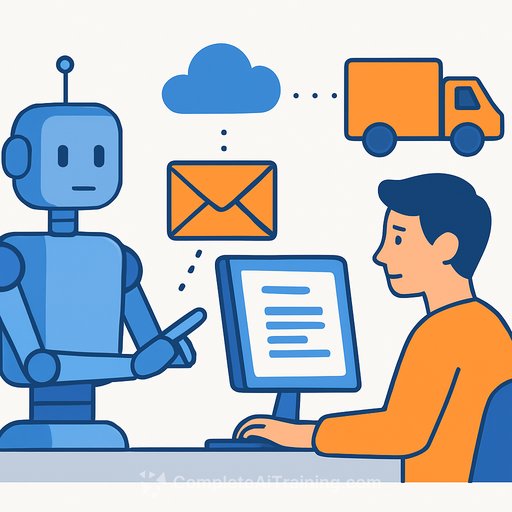
Everyone talks about driverless trucks and warehouse robots. The less flashy story is where your margins live: the back office. Pricing, billing, customer emails, paperwork, risk checks-AI is quietly taking the repetitive load off your team's desk.
We're early. These tools aren't fully autonomous, and they need clean data and guardrails. But they already deliver wins on tasks that tolerate imperfect inputs-quotes, invoice checks, ETA updates, and email triage.
Where AI Is Showing Up Now
- Email automation: Faster quoting and triage, with responses dropping to under three minutes in many setups. Generative models handle intent, context, and follow-ups without losing the thread.
- Document automation: OCR and NLP extract data from invoices, bills of lading, and PODs. The system flags missing fields, mismatched totals, and exceptions for quick review.
- Customer service: Chatbots handle tracking, delivery, and pricing questions 24/7. They escalate edge cases with full context for smooth handoffs.
- Carrier selection and risk: Algorithms compare rates, service levels, and performance data. They also spot weather, congestion, or compliance risks before they bite.
Real Examples in Play
Dow Chemical uses AI invoice agents to speed up processing and catch errors, cutting cycle time and cost. C.H. Robinson has layered AI into workflows, supporting profitability and workforce efficiency.
The Hidden Cost Center AI Is Trimming
A typical shipment can touch back-office steps twenty times. Quoting, order entry, tracking, carrier comms, paperwork, invoicing-it adds up to roughly 10% of revenue for many firms.
AI brings configurable workflows that mirror your SOPs. It remembers preferences, applies business logic, and flags incomplete details or special instructions so nothing slips.
What Ops and Support Teams Gain
- Scalability: Hundreds of parallel tasks without extra headcount.
- Speed: Instant answers for tracking and quotes, which lifts CSAT and conversions.
- Error reduction: Fewer fat-finger mistakes in data entry and invoicing.
- Human focus: More time for exceptions, relationships, and revenue.
Friction to Expect
- Less personal feel: Automation can flatten tone if you don't design for it.
- Talent shifts: Some roles shrink while new skills are needed.
- Upfront cost: Legacy systems may need upgrades; downtime risk is real.
How to Run a 30-Day Pilot
- Pick one use case: Quotes via email, invoice validation, or shipment status replies. Keep scope tight.
- Map SOPs and SLAs: Write the exact steps, approval rules, and thresholds. No ambiguity.
- Prep data: 200-500 recent examples with inputs and final outcomes. Clean enough to learn from.
- Set guardrails: Define what the AI can do autonomously vs. when to escalate. Require approvals for pricing changes or disputed charges.
- Human-in-the-loop: Start with review-before-send. Graduate to auto-send for low-risk cases.
- Measure: Quote cycle time, first-response time, resolution rate, invoice accuracy, cost per shipment, and deflection rate.
Governance Checklist
- Routing rules and escalations tied to SLAs.
- Approval thresholds for credits, accessorials, and re-rates.
- Audit logs for every automated action.
- PII handling and data retention controls.
- Fallbacks for model confidence drops or system outages.
- Monthly drift review with a sample of decisions.
The Next Five Years
Most back-office functions are on track to be nearly fully automated. Early adopters will quote faster, run leaner, and handle more shipments per employee. Chatbots are getting less robotic, and the line between "bot" and "rep" is starting to blur.
What This Means for Your Operation
For shippers and brokers, this means smoother handoffs, fewer errors, and clearer status at every step. Platforms like GetTransport.com can plug these gains into day-to-day work-streamlining global moves, bulky-item shipping, and standard freight without inflating the bill.
Book your ride at GetTransport.com and see how AI-assisted workflows cut busywork while keeping customers informed.
Upskill Your Team
If you're leading Customer Support or Operations, level up your crew on prompt design, automation, and QA. A practical next step: explore the AI Learning Path for Administrative Assistants or pursue an AI automation certification to standardize skills across the team.
Summary
AI is moving into the back office to handle email responses, document extraction, customer inquiries, carrier comparisons, and risk flags. The payoff is speed, fewer errors, and scale-so your people can focus on exceptions and relationships. The trade-offs are real, but manageable with clear SOPs, guardrails, and training.
As platforms and teams adopt these tools, logistics becomes more transparent, faster, and cost-effective from quote to invoice. Whether you're moving homes, shipping pallets, or booking containers, this quiet shift helps work get done with less friction and better outcomes.
Your membership also unlocks: