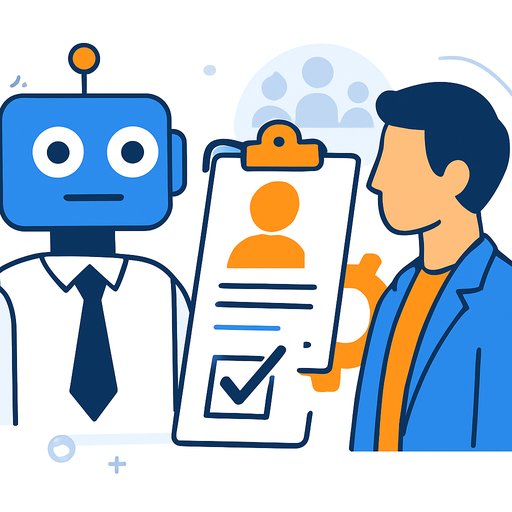
Is workplace AI moving into a managerial position?
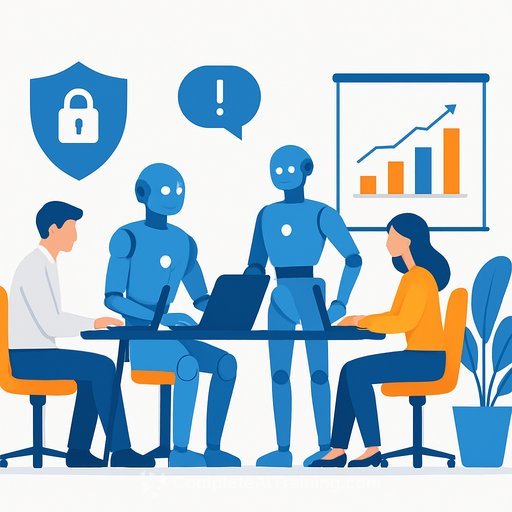
AI has moved from back office to front office. It drafts content, analyzes data, and supports complex operations. The next step is obvious: AI taking on managerial work that shapes people's day-to-day jobs.
As a manager, this isn't sci-fi. It's a shift in who (or what) handles decisions, workflows, and accountability. The smart move is to prepare your org chart, your processes, and your people.
What AI already does well
AI systems process information at scale, compare more variables than a human can, and keep decisions consistent. They run 24/7, don't tire, and never miss a deadline.
In practice, that means faster screening, cleaner forecasting, safer risk assessment, and tighter coordination across complex tasks. For repetitive or rules-based decisions, AI is already a strong performer.
Can AI manage people?
There's early proof it can handle parts of it. In one project, an AI system ran end-to-end hiring for an electronics plant in China: filtering candidates, running online interviews and questionnaires, making selections, and issuing contracts to more than 100 people.
That's a core managerial function executed without human bottlenecks. Expect similar systems to expand into scheduling, workload allocation, performance alerts, and compliance tasks-first in tech-heavy environments, then elsewhere.
Where AI "management" shows up first
- High-volume hiring and frontline staffing
- Contact centers and field ops (scheduling, coaching prompts, QA)
- Logistics and manufacturing (shift planning, maintenance windows)
- Finance ops (invoice triage, spend approvals under thresholds)
- IT and security (ticket routing, automated policy enforcement)
Senior finance leaders can explore the AI Learning Path for Vice Presidents of Finance for practical use cases and governance recommendations.
What humans still do better
Managers set direction, build trust, and rally teams. They carry vision, emotion, and context across stakeholders. AI doesn't originate purpose or values, and it doesn't earn credibility the way a person does.
AI also needs oversight. It follows objectives; it doesn't create them. It executes policy; it doesn't handle grey areas with empathy or nuance.
A practical playbook for managers
- Map the work: list managerial tasks by type-judgment-heavy vs. rules-based. Target the rules-based bucket first.
- Pilot small: choose one use case (e.g., interview scheduling, contract generation, or shift planning). Define success metrics upfront.
- Keep a human in the loop: set approval checkpoints for hiring, promotions, performance interventions, and terminations.
- Create policy: document data sources, model use, access rights, and escalation paths. Log decisions for audits.
- Bias checks: test outcomes by demographics, set acceptable thresholds, and retest after updates.
- Redesign roles: free managers from admin to focus on coaching, strategy, and cross-functional alignment.
- Upskill the team: train managers in data literacy and prompt skills; set standards for AI-assisted decisions. See the AI Learning Path for Project Managers.
- Communicate clearly: tell employees where AI is used, how it's evaluated, and how to appeal decisions.
- Vendor due diligence: assess reliability, security, model updates, and explainability before rollout.
Guardrails and compliance
Treat AI like a junior manager with perfect memory and zero context. Give it narrow mandates, explicit guardrails, and regular reviews.
- Adopt a risk framework (see the NIST AI Risk Management Framework).
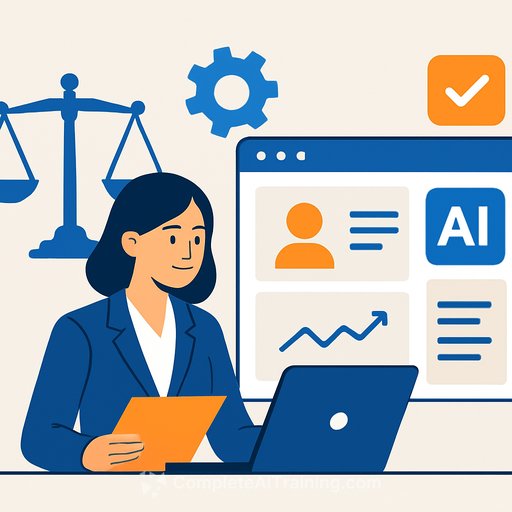
- Align hiring tools with anti-discrimination rules (see the U.S. EEOC guidance on AI in hiring).
- Protect privacy: minimize personal data, set retention limits, and control access.
- Stress test failure modes: bad training data, concept drift, prompt injection, and automation bias.
Metrics that matter
- Hiring: time-to-hire, quality of hire, offer acceptance rate, adverse impact ratios
- Operations: SLA adherence, schedule adherence, cost per task, exception rate
- People: eNPS, manager span of control, turnover in critical roles
- Governance: percentage of AI decisions reviewed, audit closure time
The takeaway for leaders
AI won't replace great managers, but it will manage parts of the job. The leaders who win will pair AI's consistency and speed with human judgment and trust.
Start with one process, publish your rules, measure outcomes, and iterate. Treat AI as a co-manager you supervise-clear goals, clear limits, clear accountability. For guidance on leadership, governance, and oversight of AI initiatives, consider the AI Learning Path for CIOs.
Your membership also unlocks: