
AI news ·
AI learning tools mirror human cognitive biases and amplify existing gender and cultural stereotypes in healthcare
AI medical tools scale human gender stereotypes from training data. This bias creates inequitable performance and worsens health outcomes for women and minoritized groups.
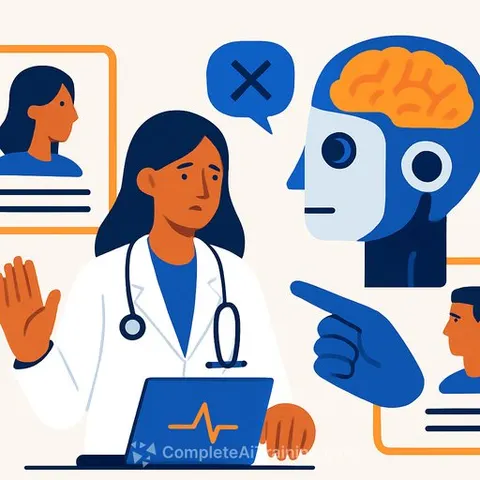
Artificial intelligence is often pitched as a neutral, data-driven tool that will make healthcare faster and more accurate. But a growing body of research shows that AI does not simply learn facts from medical datasets. It absorbs the same cognitive shortcuts, gender stereotypes, and cultural biases that shape human decision-making, and then scales them across clinical systems. The result is a technology that can deepen existing healthcare inequalities for women and other minoritized groups rather than reduce them.
Women's health issues remain under-researched and under-represented in published literature. Women from marginalized communities are especially absent from the datasets that train AI models. When these systems draw on incomplete or skewed data, their outputs become less reliable for the populations missing from the training material. An AI-driven diagnostic or treatment recommendation tool that works well for one demographic group may perform poorly for another, creating what researchers describe as inequitable performance across patient populations.
The myth of AI neutrality
AI is often described as a neutral categorizer of information, with any inequality blamed solely on flawed input data. Research increasingly challenges that assumption. Studies find that machine-learning models mirror the same psychological biases and stereotypes found in human cognition, because they are built from data produced and interpreted by people. As one review put it, AI systems may not be learning "facts," but rather how recorded events have been interpreted by the humans who reported them. In healthcare, where decisions carry high stakes despite considerable uncertainty, this means AI can end up reinforcing what most people already believe, embedding familiar patterns of inequality deeper into clinical practice.
Human beings rely on mental shortcuts-heuristics-to process complex information quickly. These shortcuts produce systematic biases, and among the most powerful are gender stereotypes. When certain illnesses become repeatedly associated with women while others are overlooked for that population, it shapes which diagnoses clinicians consider likely and how symptoms are interpreted. Gender stereotypes that link women with emotionality can lead to physical symptoms being taken less seriously or dismissed as psychological in origin. AI systems that reproduce these patterns perpetuate a long history in medicine where women's pain has been minimized or attributed to psychosocial causes despite being physically real.
How design choices reinforce gender roles
A scoping review of gender stereotypes in AI found biased patterns across chatbots, robots, and virtual assistants. Digital assistants are frequently given female names and voices, positioning them as helpful, supportive, and deferential. Roles associated with authority or technical expertise tend to be coded as masculine. These design choices shape user expectations. People expect female-coded AI to be warm and emotionally intelligent, while male-coded AI is perceived as more competent and authoritative. Even when designers attempt to create gender-neutral systems, users infer gender from subtle cues such as tone of voice or the type of tasks the AI performs. The strength of gender schemas in human cognition means people categorize and interpret the world in gendered ways, and AI systems become part of that same process.
This matters because images and design signals have a powerful influence on understanding. They shape expectations, guide attention, and influence memory, often more than text alone. When AI-generated images present narrow, biased views of healthcare roles, they reinforce stereotypes about who provides care, who is taken seriously, and what counts as "typical" in medicine. Patients who encounter these signals can feel misunderstood or marginalized, which undermines trust. Perceived healthcare bias makes people less likely to seek help, follow advice, or engage with professionals.
Stereotype threat and patient outcomes
A related psychological effect is stereotype threat. When individuals become aware that they belong to a negatively stereotyped group, they can experience anxiety and reduced confidence that impairs communication and decision-making. This leads to poorer healthcare interactions, delayed care, and worse health outcomes. AI systems that signal or reinforce stereotypes intensify these effects, creating a feedback loop where biased technology worsens the very disparities it was supposed to help close.
These findings point to a conclusion that goes beyond technical fixes. AI is not an impartial observer of reality. It is a mirror of human cognition, reflecting how people categorize, simplify, and stereotype. Because it operates at scale, it can amplify these patterns far beyond individual interactions. Improving AI in healthcare requires understanding the complex psychological processes that shape both human thinking and its machine reflections. For professionals working in clinical settings, this means evaluating AI tools not just for accuracy metrics but for the ways they might reproduce the same biases that have historically excluded certain patient groups from equitable care. Resources on AI for Healthcare can help practitioners build the literacy needed to assess these systems critically before they reach the bedside.
Why this matters for healthcare professionals
Clinicians, administrators, and digital health teams make procurement and deployment decisions that determine which AI tools enter patient care. The research makes clear that a system's performance on aggregate metrics can hide substantial failures for specific populations. Before adopting any AI-driven diagnostic aid, triage tool, or patient-facing chatbot, healthcare professionals should ask whether the training data reflects the full diversity of the patient population they serve. They should also examine how the tool's design-its voice, its imagery, its interaction patterns-might activate or reinforce stereotypes that affect patient trust and communication. Ignoring these questions risks embedding a new layer of structural bias into care delivery, one that is harder to audit because it operates at machine speed and scale.