AI Is Turning Workforce Mobility into a Strategic Lever
Workforce mobility used to mean travel requests and reimbursements. Today, it's a lever for productivity, experience, and cost discipline. In a recent fireside chat moderated by Apeksha Kaushik, leaders including Manish Kumar (VP - Corporate Channel, myBiz by MakeMyTrip), Ruchi Mago (CHRO, Orange Business), and Ganapathi Subramanian (CHRO, Sundaram Home Finance) explained how AI is changing the playbook.
Here's what stood out-and what to do next.
From Manual Approvals to AI-Driven Simplicity
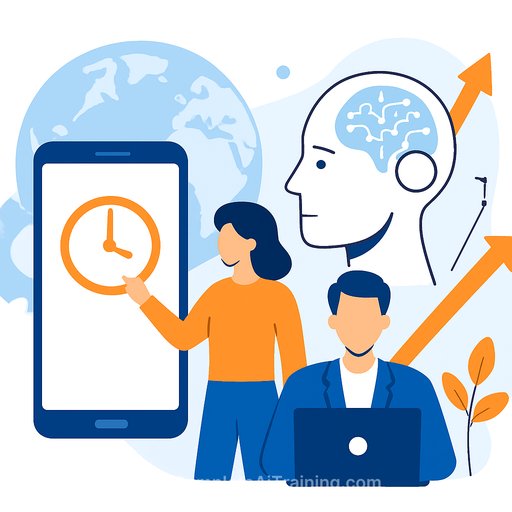
Legacy travel stacks ran on emails, vendor back-and-forth, and manual reimbursement checks. Too many touchpoints. Too much drag. Manish Kumar noted that with AI-enabled platforms, policy checks and approvals run in the background. Employees can plan and book in under a minute while the organization keeps cost and compliance guardrails intact.
The upside is clear: mobility spend remains one of the largest controllable cost lines. AI doesn't just shave time; it optimizes choices against policy, price, and context without degrading the employee experience.
Internal Mobility Gets a Data Upgrade
Mobility now spans more than flights and hotels. It's about moving skills where they're needed. Ruchi Mago shared how Orange Business connected mobility with performance data, skills mapping, learning systems, and talent marketplaces. Result: internal mobility closed at 41% through structured programs such as job rotations and transparent marketplaces.
The shift is real-away from policy-driven transfers and toward skills-driven career moves. With AI-enabled visibility into skills and role requirements, employees see options across functions and geographies, and managers see qualified matches faster.
Compliance and Productivity Must Coexist
In regulated sectors, speed without governance is a risk. Ganapathi Subramanian emphasized compliance as non-negotiable-yet automation can do the heavy lifting. AI applies policy at the point of booking, reduces manual errors, and tightens audit trails.
Internally, technology has also reduced overreliance on managerial discretion. Standardized, tech-enabled application flows increase fairness, traceability, and access to roles.
Measuring the Return
The ROI of AI-powered mobility goes beyond cost-out.
- Improved retention through internal career moves
- Faster skill deployment to high-priority work
- Reduced administrative overhead
- Enhanced workforce agility and faster decision cycles
As one panelist put it, "Mobility today influences productivity as much as it influences experience."
A Practical Playbook for HR
You don't need a full rebuild to get moving. Start with these steps and stack wins.
- Unify the data layer: Connect travel, expense, HCM, performance, learning, and skills taxonomy. Your AI is only as good as your data fabric.
- Automate the guardrails: Encode policy at the point of action (booking, approvals, transfers). Block out-of-policy choices rather than chasing exceptions after the fact.
- Light up skills visibility: Maintain a living skills inventory. Use AI to infer skills from projects, certifications, and outcomes-not just job titles.
- Run an internal talent marketplace: Publish roles, gigs, and rotations with clear skill requirements. Let employees self-serve and apply; keep managers in the loop but not as gatekeepers.
- Design for experience speed: One-minute travel booking. One-screen approvals. Fewer clicks, fewer handoffs.
- Instrument the metrics: Track internal mobility rate, time-to-fill (internal vs. external), skill match quality, policy compliance rate at booking, cost per trip, booking-to-travel lead time, and admin hours saved.
- Close the learning loop: When a role can't be filled internally, capture the skills gap and auto-recommend learning paths or gigs to build that capability.
- Embed governance: Add audit logs, SoD checks, and explainability for AI recommendations. Build trust with clear policy rationale and transparent decision trails.
Implementation Tips That Reduce Friction
- Start where spend and friction converge: Consolidate travel booking, approvals, and expense into one AI-aware flow. Then extend into internal mobility.
- Pilot with two functions: Run a 90-day test with Sales and Operations. Compare internal fill rates, time-to-book, and compliance before/after.
- Standardize role taxonomies: Align job architectures and skill definitions so matching isn't guesswork.
- Make wins visible: Publish transparent dashboards. Celebrate internal moves and policy-compliant savings.
Risk, Compliance, and Change Management
- Policy as code: Convert rules into machine-readable policies and keep them versioned. This shrinks exceptions and audit effort.
- Bias checks on recommendations: Review AI matches for fairness and outcome parity across groups. Retrain models if drift appears.
- Clear accountability: Define who owns the skills inventory, who signs off policy changes, and how often data quality is reviewed.
Signals You're on the Right Track
- Booking time under one minute with >90% first-time policy compliance
- Internal mobility rate trending toward 30-40% for eligible roles
- Time-to-fill for priority roles cut by 25-40% via internal moves
- Administrative hours per trip or transfer reduced by half
- Auditable logs covering >95% of transactions without manual intervention
What's Next
Expect hyper-personalized recommendations, tighter integration across HR stacks, and decision cycles that move at the pace of the business. Mobility will sit closer to strategy than to back-office operations.
The edge goes to organizations that treat mobility as a capability: policy encoded, skills visible, and movement easy. Start with one flow, prove outcomes, and scale.
For a broader view on internal mobility practices, see SHRM's overview of internal mobility programs here.
If you're building the strategy from the top seat, explore the AI Learning Path for CHROs for frameworks on analytics, mobility, and workforce design.
Your membership also unlocks: