
AI news ·
AI medical coding integrates with EHR systems using FHIR and HL7 standards
Direct EHR integration for AI tools cuts coding time by 60 percent. This pushes first-pass claim accuracy above 95 percent, beating the 85 percent industry average.
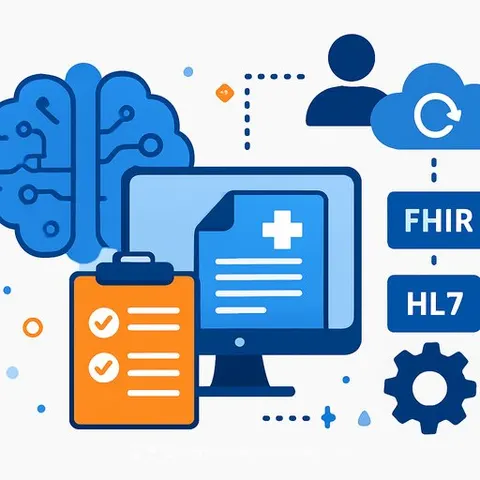
Healthcare organizations are increasingly connecting artificial intelligence medical coding tools directly to electronic health record systems to cut claim denials and speed up revenue cycles. Proper integration using modern data standards reduces coding time by up to 60 percent and pushes first-pass claim accuracy above 95 percent.
Building the integration architecture
Modern AI coding tools rely on FHIR R4 to pull structured clinical data directly from EHRs. Over 85 percent of top EHR vendors now support this standard, allowing algorithms to access encounter-level diagnoses and lab results in a standardized format. Hospitals still running older systems must also maintain HL7 v2 interfaces to handle admission and discharge messages. Integration engines like Mirth Connect normalize these legacy feeds so the AI models can process the full patient lifecycle.
Connecting to major EHR platforms
Each major EHR vendor requires a distinct approach for data exchange. Epic uses its App Orchard marketplace to surface AI suggestions directly inside SmartForms, while Oracle Cerner delivers decision support cards within PowerChart. For ambulatory clinics using athenahealth, AI models must be trained specifically on outpatient documentation. Healthcare facilities managing these electronic health records can find targeted training through the AI Learning Path for Medical Records Clerks to better understand system interoperability.
Choosing a workflow and tracking performance
Organizations typically choose between real-time embedded suggestions, overnight batch processing, or a hybrid model. The hybrid approach auto-applies high-confidence codes instantly while routing complex cases to human reviewers, balancing speed with accuracy. Any integration handling protected health information requires strict HIPAA compliance. Vendors must sign business associate agreements, encrypt data in transit and at rest, and limit data extraction to only the clinical elements required for coding.
Facilities should measure first-pass resolution rates, targeting above 95 percent compared to the industry average of 85 percent without AI. Tracking the discharge-to-bill lag and overall coding throughput reveals the actual operational speed gains. Monitoring the coder acceptance rate shows whether staff trust the AI suggestions enough to use them without modification. Revenue cycle teams evaluating these performance metrics can expand their technical knowledge through the AI Learning Path for Medical Billers.
Why this matters for healthcare professionals
Deep EHR integration determines whether an AI coding tool actually improves revenue cycle operations or just creates another disconnected dashboard. IT leaders and coding directors must prioritize bidirectional data flows and native FHIR support when selecting vendors. Getting the technical architecture right ensures coding teams spend less time fighting software and more time managing complex clinical documentation.