
AI news ·
AI model identifies melanoma risk with 73% accuracy using Swedish population health data
A University of Gothenburg AI model predicted melanoma risk within five years using routine health records, hitting 73% accuracy versus 64% with age and gender alone. The study drew on data from over 6 million Swedish adults.
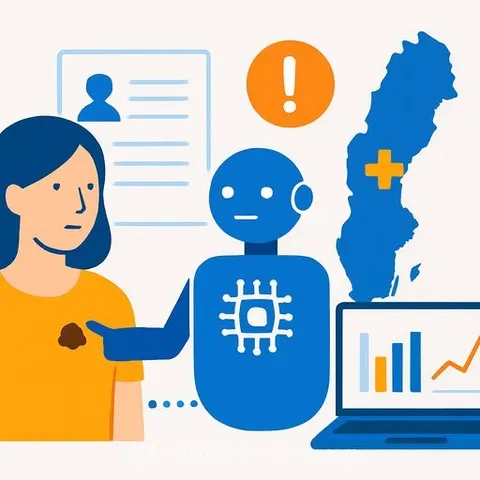
AI Model Identifies High-Risk Melanoma Patients Using Existing Health Records
Researchers at the University of Gothenburg developed an AI system that identifies individuals likely to develop melanoma within five years by analyzing routine healthcare data. The model achieved 73% accuracy in flagging future melanoma cases, compared to 64% when using only age and gender.
The study examined registry data from over 6 million Swedish adults over a five-year period. Approximately 38,582 people-0.64% of the population-received melanoma diagnoses during that window.
How the AI Model Works
The system processes information already stored in healthcare systems: age, gender, medical diagnoses, medication history, and socioeconomic factors. Researchers trained the model to recognize patterns that correlate with melanoma development.
The approach identified smaller population groups with substantially elevated risk. Those in the highest-risk category faced roughly a 33% chance of developing melanoma within five years.
Clinical Application
Targeted screening of high-risk groups could improve monitoring efficiency while reducing unnecessary screening in lower-risk populations. This approach aligns with precision medicine, where prevention strategies are tailored to individual risk profiles rather than applied uniformly.
Sam Polesie, an associate professor involved in the research, said the method could optimize healthcare resource allocation. The study does not yet represent standard clinical practice-further research and policy decisions are needed before implementation.
What This Means for Healthcare Professionals
The findings demonstrate that data already present in electronic health records contains predictive value. Healthcare organizations may eventually use similar models to stratify patients and direct screening efforts where they matter most.
For professionals working in cancer screening, oncology, or population health, this research suggests a path toward more efficient prevention strategies. Learn more about AI for Healthcare and how AI Data Analysis is reshaping clinical decision-making.