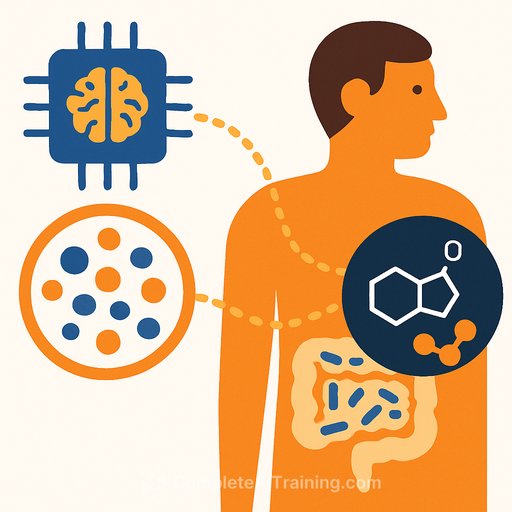
Scientists Uncover Hidden Relationships Between Gut Bacteria and Human Metabolites
Researchers at the University of Tokyo have developed an innovative artificial intelligence model that reveals previously unknown connections between gut bacteria and human metabolites. This model, a Bayesian neural network named VBayesMM, was created by the Tsunoda Lab and tested on complex datasets involving sleep disorders, obesity, and cancer.
Unlike traditional statistical tools, VBayesMM can differentiate bacteria that have meaningful effects on human biochemistry from those that do not. It also incorporates uncertainty into its predictions, improving reliability when analyzing high-dimensional microbiome data.
Why This Matters
The human gut contains about 100 trillion bacteria, outnumbering human cells by nearly three to one. These microbes influence many aspects of health, but pinpointing which bacteria produce specific metabolites has been a significant challenge. Traditional methods often produce overfitted or biologically irrelevant results.
VBayesMM addresses these issues by managing uncertainty and complex data with greater precision. When validated, the model consistently matched known biological processes, avoiding false leads that many other models generate.
Implications for Health and Research
Mapping the precise relationships between gut microbes and metabolites opens new pathways for personalized medicine. Treatments could be developed to encourage the growth of beneficial bacteria or modify microbial communities to improve health outcomes.
The research team plans to expand their work to larger and more diverse chemical datasets. They aim to distinguish whether detected chemicals originate from bacteria, human cells, or external sources like diet. These insights could lead to more accurate diagnostics and targeted therapies based on the microbiome.
The findings appeared in the journal Briefings in Bioinformatics, marking a significant step forward in microbiome research.
Technical Challenges and Future Directions
- VBayesMM requires substantial computing resources, which currently limits its accessibility.
- Advances in computational technology are expected to reduce these barriers over time.
- Ongoing studies will focus on integrating larger datasets and refining the model's predictive capabilities.
For researchers interested in the intersection of AI and biology, models like VBayesMM demonstrate how advanced machine learning techniques can extract meaningful insights from complex biological data. This approach holds promise for a range of applications, from disease research to therapeutic development.
To explore more about AI applications in scientific research, visit Complete AI Training.
Your membership also unlocks: