Business AI Is Rewriting IP Priorities - Here's What Leaders, Lawyers, and Writers Need To Do Now
Artificial intelligence is changing what counts as intellectual property. It's not just inventions and logos anymore. Your likeness, your voice, your signature writing style - all are assets that can be copied at scale.
Heather Kliebenstein, managing director at Merchant & Gould, puts it plainly: the law hasn't fully caught up, but the core tools still matter - copyrights, trademarks, and patents. The twist is where they overlap with rights of publicity and name, image, and likeness. That's where things get messy.
The IP stack still matters - it just has new edges
Patents protect technical ideas. Trademarks protect brand signals. Copyrights protect original expression. Those foundations are still the playbook.
What's new: AI blurs categories. Ask a model to "write like a famous author," generate a singer's voice, or mimic an athlete's signature move for an ad - you've crossed into right-of-publicity territory alongside copyright. Expect more conflicts at these seams.
What this means for leaders, counsel, and creators
- Legal teams: Build an AI use policy. Require documentation of who did what (dates, drafts, prompts, model versions). Lock down confidential data. Add clauses on training data, output ownership, indemnities, and right-of-publicity clearances in vendor contracts.
- Executives and product leaders: Decide what to patent, what to keep as a trade secret, and what to publish first. File early. Run diligence on any AI vendor touching core IP. Set up a monitoring program for impersonation, deepfakes, and brand misuse.
- Writers, designers, musicians, athletes: Register your copyrights and trademarks. Define policy on "style mimicry" in your licensing. Track your creative process and drafts. Use private tools for sensitive work, and avoid pasting raw IP into public models.
Guardrails to implement now
- Provenance and documentation: Keep dated notes, drafts, and commits. Log prompts and outputs for AI-assisted work. Make it easy to prove human contribution.
- Confidentiality hygiene: Segregate sensitive datasets. Restrict which AI tools can touch them. Turn off model training on your content unless you have clear rights and need the benefit.
- Right of publicity: Get explicit consent for any use of a person's voice, face, likeness, or signature style in marketing or product features.
- Content labeling: Disclose AI assistance where appropriate. Use internal review for high-risk outputs (legal, medical, financial, brand-critical).
- Enforcement playbook: Standardize takedown templates (copyright, trademark, impersonation). Track repeat offenders and platforms.
Where the law stands (and what's moving)
In the U.S., AI-generated material needs meaningful human authorship to qualify for copyright. And under current rules, an AI system can't be listed as an inventor on a patent - a human must be responsible for the inventive step.
If you need the source material, see the U.S. Copyright Office's policy on AI authorship and registration (copyright.gov/ai) and the USPTO's guidance on AI-assisted inventions (uspto.gov/initiatives/artificial-intelligence).
Minnesota's IP engine offers a clue
Merchant & Gould has grown from a Minneapolis base to a national footprint while staying focused on IP. That depth shows where demand is heading: more disputes at the boundary of copyright, trademark, and publicity, with heavier documentation expectations across the board.
Kliebenstein's advice is simple: keep better records, be intentional with what you share outside the company, and treat AI tools like any other third party. The firms and creators who build these habits now will have leverage later.
A simple playbook for the next 90 days
- Inventory your IP: patents, trademarks, copyrights, trade secrets, datasets, style guides, voices/likeness rights.
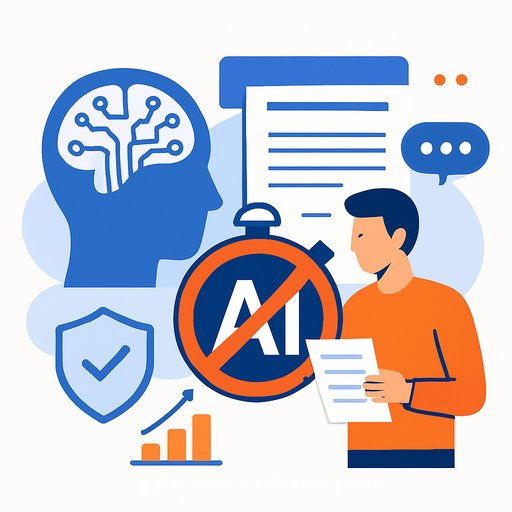
- Classify what's AI-safe, AI-restricted, and AI-prohibited. Document why.
- Update contracts: data rights, output ownership, training permissions, indemnity, publicity releases.
- Stand up monitoring for impersonation, brand misuse, and style cloning across major platforms.
- File what matters: provisional patents, trademark applications, copyright registrations.
- Train teams on prompts, disclosures, and what never goes into public models.
Human-made work is about to get premium status. Treat your ideas, your brand signals, and your voice as assets. Prove their origin, protect their use, and keep AI as the assistant - not the owner.
If your team needs focused AI upskilling by role, explore curated options here: AI courses by job.
Your membership also unlocks: