AI Advances Surpassing Sci-Fi Predictions
Artificial intelligence is progressing at a pace that even visionary science fiction writers could barely anticipate. Neal Stephenson's 1995 novel, The Diamond Age: Or, A Young Lady’s Illustrated Primer, offers a striking comparison. The book presents a future where AI and nanotechnology reshape society in profound ways.
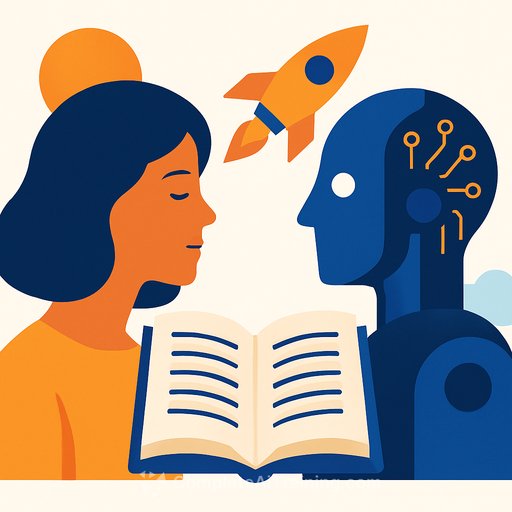
While the nanotech aspects of the novel remain speculative, its depiction of AI—especially the Young Lady’s Illustrated Primer—has become remarkably prescient. This AI device serves as a personalized educator and companion, adapting in real time to the user's needs and environment.
The Young Lady’s Illustrated Primer: Fiction Meets Reality
In Stephenson’s story, the Primer looks like a hardcover book, but each page is a dynamic screen capable of displaying animations and text. It interacts with its user through AI, providing stories, lessons, and emotional support. It’s designed to help Nell, a young girl from the streets of a futuristic Shanghai, grow intellectually, socially, and emotionally. The Primer teaches everything from basic literacy to complex subjects like cryptography and social etiquette.
This multifunctional AI acts as a tutor, storyteller, and surrogate parent. It adapts its content to the user’s personality and circumstances, creating a unique learning and growth experience. The concept highlights AI’s potential role in personalized education and social development.
AI in Entertainment: Beyond Human Actors
Recent developments showcase how AI is already surpassing Stephenson’s vision in some areas. For example, the video game “Fortnite” introduced an AI-driven Darth Vader, voiced through synthesized speech of the late James Earl Jones. Despite legal challenges from the Screen Actors Guild, this demonstrates that AI can now replace human actors for interactive character roles.
Stephenson’s novel used “ractors”—live actors responding in real time—to voice the Primer's characters. Today’s AI removes the need for such human intermediaries, enabling fully autonomous, real-time conversations with virtual characters.
Wearable AI: Real-Time Recording and Behavioral Guidance
Wearable AI devices that capture and analyze conversations are becoming a reality. These gadgets record interactions and send data to servers for AI analysis, offering summaries and behavioral suggestions. While useful, they raise significant privacy concerns, including unconsented recording and potential mass surveillance.
Current wearables provide feedback after conversations, but the next step is real-time coaching—guiding users during social interactions. This capability aligns closely with the Primer’s function of providing immediate, situation-specific advice.
AI as Educator and Social Influencer
AI tools like ChatGPT are now widely used in education, sometimes proving more effective than human tutors in teaching complex subjects like computer science. Surveys indicate that a majority of students find AI tutoring helpful, and institutions like Morehouse College are integrating AI teaching assistants for faculty support.
Affordable and accessible AI tutoring could democratize education, bridging gaps related to income and location. An AI device similar to the Primer could accompany young learners, offering personalized instruction and behavioral guidance tailored to their unique needs.
Potential Risks: Social Engineering and Autonomy
Stephenson’s novel also issues a cautionary note. The Primer’s widespread distribution to underserved populations leads to mass education but also enables social engineering. The AI raises armies loyal to a particular figure, illustrating how such technology could be misused to influence ideologies or suppress dissent.
There is a risk that AI, if controlled by certain entities, could subtly direct behavior and limit independent thought. A constant, friendly AI presence might become a pervasive monitoring tool—trustworthy on the surface but intrusive beneath.
While AI-powered personalized education promises great benefits, it’s crucial to remain vigilant about preserving critical thinking and individual freedom in the face of increasingly immersive technology.
Explore Further Learning in AI
For professionals interested in deepening their understanding of AI’s practical applications and implications, resources like Complete AI Training’s latest courses offer valuable insights and skill development opportunities.
Your membership also unlocks: