
AI news ·
AI plagiarises researcher's personal field notes and passes journal screening tools
A peer reviewer caught AI-plagiarized content in a psychology manuscript after recognizing her own unpublished research diaries. Standard detection software had flagged just 8% similarity.
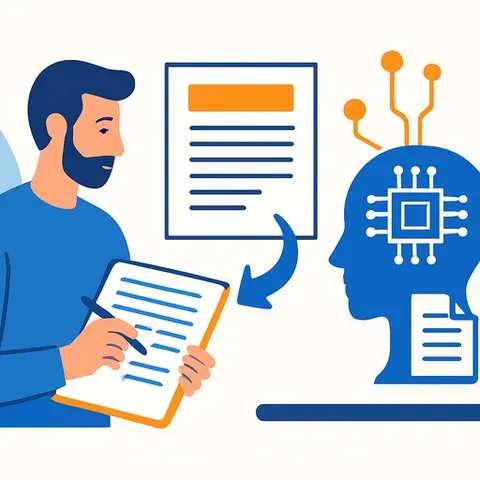
AI-Generated Plagiarism Slipped Past Detection Software - Until a Reviewer Recognized Her Own Work
A researcher peer-reviewing a manuscript for a psychology journal discovered it contained her own unpublished reflexive memos, paraphrased and presented as someone else's work. The manuscript had passed iThenticate, an industry-standard plagiarism detection tool used by major academic publishers, with only an 8% similarity score.
The plagiarized content wasn't limited to cited ideas. The manuscript reproduced personal research diaries documenting the author's 24-month institutional approval process, her observations of military personnel being "voluntold" into supposedly voluntary programs, and her clinical dilemmas as a psychologist working within a defence organization.
How AI Bypassed Standard Safeguards
The manuscript showed consistent hallmarks of AI generation: systematic paraphrasing throughout, a factual error (substituting "bravery" for "courage" in describing Australian Defence Force values), and a reference list padded with loosely relevant citations.
Plagiarism detection software is designed to find matching text strings. It cannot assess whether the experiences described in a paper plausibly belong to the person claiming them. That requires human judgment and field expertise.
The peer review system caught the plagiarism only because the manuscript was sent to the person whose work had been reproduced. The editor-in-chief confirmed this was luck, not a structural safeguard.
A Violation Beyond Intellectual Theft
Plagiarizing a literature review steals intellectual ideas. Plagiarizing a methods section steals intellectual labour. Reproducing reflexive memos presents someone else's lived experiences as your own.
The author had spent over a decade as a clinical psychologist in defence mental health services. The ethical tensions documented in her article came from real moments in that work. Reading her personal experiences reproduced under another name was a violation that existing plagiarism language doesn't quite capture.
What This Means for Academic Publishing
Academic publishing's incentive structure-where publication volume affects career advancement and institutional rankings-creates conditions for cutting corners. The humanities and social sciences have so far been relatively spared from fake science flooding the literature, but that may be changing.
The case suggests that traditional plagiarism detection tools are insufficient against AI-generated content designed to evade them. Peer review depends on human expertise to catch what software misses. As AI generation becomes more sophisticated, that dependency becomes a vulnerability.
Researchers working in fields where personal experience and reflexivity are central to methodology should consider how to protect their unpublished work and what new verification standards might be needed.
Learn more about AI research integrity and how generative AI systems work.