New Centre to Explore AI’s Role in Communicating with Animals
Understanding what our pets think or feel has long been a challenge. Whether your cat is sulking, your dog whining, or your rabbit exhibiting odd behavior, many pet owners wish they could truly “talk” with their animals. A new scientific centre is set to tackle this challenge by studying animal consciousness and how artificial intelligence (AI) might help bridge the communication gap.
The Jeremy Coller Centre for Animal Sentience
Launching on 30 September at the London School of Economics and Political Science (LSE), the Jeremy Coller Centre for Animal Sentience will investigate consciousness across a broad spectrum of species—from insects and crabs to cuttlefish. Backed by £4 million in funding, the centre will combine expertise from neuroscience, philosophy, veterinary science, law, evolutionary biology, psychology, behavioural science, computer science, economics, and AI.
Its research will not only deepen scientific knowledge of non-human sentience but also address the ethical challenges posed by AI applications in animal welfare.
AI and “Speaking” with Pets: Opportunities and Risks
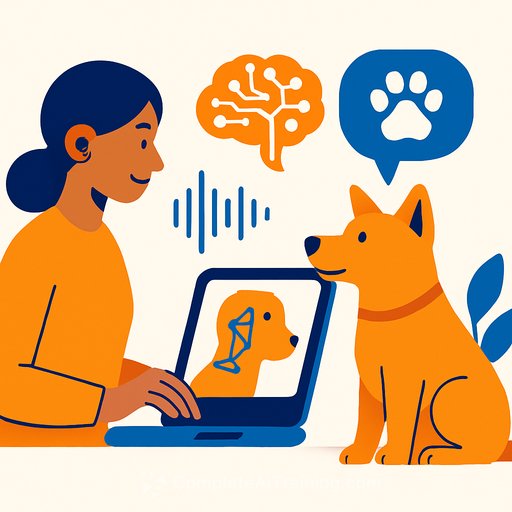
One notable project will examine how AI could help humans communicate with pets. With AI’s ability to generate human-like language, future apps might “translate” animal signals into words. However, this raises concerns. AI models can produce plausible but inaccurate responses, which might mislead owners about their pets’ true needs or feelings.
Professor Jonathan Birch, the centre’s inaugural director, highlights the risk of AI offering comforting but false reassurances. For example, separation anxiety in dogs could be misinterpreted by a translation app, leading owners to underestimate their pet’s distress. Birch stresses the urgent need for ethical frameworks to regulate AI’s role in animal communication and welfare.
Ethical Considerations Beyond Communication
The centre will also explore AI’s impact on animals in other contexts. Driverless vehicles, for instance, are often programmed to avoid hitting humans, but questions remain about how they protect animals like cats and dogs on the road.
In agriculture, AI-driven automation is rapidly changing farming practices. Birch points out the lack of scrutiny or ethical debate regarding how these technologies affect farm animals. The centre aims to address whether farming should maintain caring relationships with animals or simply prioritize efficiency.
Collaborations and Goals
The centre plans to work closely with non-governmental organisations to develop global guidelines, research standards, and codes of practice. Jeff Sebo, director of the Center for Environmental and Animal Protection at New York University, calls attention to how animal sentience and AI’s effects on animals are some of society’s most urgent and overlooked issues.
Broader Scientific and Social Questions
Trustees of the centre bring diverse perspectives. Professor Kristin Andrews sees the centre’s work as key to understanding consciousness itself—both in animals and humans. She notes that studying simpler organisms can reveal insights relevant to human medical conditions like stroke.
Dr Kristof Dhont focuses on the gap between people’s beliefs about animals and their actual behaviour towards them. He aims to use behavioural science to understand why, despite widespread concern for animal welfare, economic and social factors often hinder more compassionate treatment. For example, he studies resistance to cultivated meat even though it could reduce animal suffering.
A Call for Change in How We Treat Animals
Jeremy Coller, whose foundation supports the centre, emphasises changing attitudes in what he calls our “speciesist species.” He compares AI’s potential role in animal communication to the Rosetta Stone’s role in deciphering ancient scripts, hoping it will help us better appreciate animals’ experiences and improve how we treat them.
This initiative is a critical step for researchers and policymakers working at the intersection of AI, ethics, and animal welfare. It highlights the need for careful, evidence-based approaches to new technologies affecting sentient beings.
For those interested in AI’s applications and ethical challenges, exploring relevant courses and certifications can provide practical knowledge. Visit Complete AI Training certifications to learn more.
Your membership also unlocks: