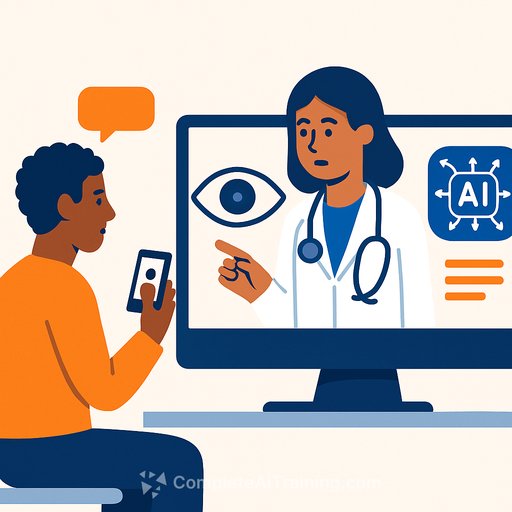
AI-Driven Telehealth Framework for Detecting Nystagmus
Summary
Researchers have developed an AI-based diagnostic tool that uses smartphone video and cloud computing to detect nystagmus, a key symptom of balance and neurological disorders. This deep learning system offers a low-cost, patient-friendly alternative to traditional methods like videonystagmography, which tend to be expensive and cumbersome. The tool maps 468 facial landmarks in real time, analyzes slow-phase velocity, and generates clinician-ready reports. Early tests indicate results comparable to gold-standard equipment, with promising potential to expand access to care through telemedicine.
Key Facts
- Smartphone-Based Diagnosis: Patients can upload eye movement videos from home for remote AI analysis.
- Clinically Reliable: Pilot results showed strong agreement with traditional diagnostic tools.
- Telehealth Integration: Designed for remote consultations, reducing costs and increasing accessibility in underserved areas.
Introduction
Artificial intelligence is increasingly important in medicine, especially for interpreting medical images to assist clinicians in assessing disease severity, guiding treatment, and monitoring progression. Most current AI models rely on static datasets, limiting real-time diagnostic use. To overcome this, researchers from Florida Atlantic University and collaborators have developed a proof-of-concept deep learning model that leverages real-time data to assist in diagnosing nystagmus, characterized by involuntary, rhythmic eye movements linked to vestibular or neurological disorders.
Methodology
Conventional diagnostic tools like videonystagmography (VNG) and electronystagmography are effective but costly and bulky, often exceeding $100,000 in equipment costs and causing patient inconvenience. The AI-driven system from FAU offers a cost-effective and patient-friendly alternative for quick and reliable screening of balance disorders and abnormal eye movements.
The platform enables patients to record eye movement videos using their smartphones, securely upload them to a cloud system, and receive remote diagnostic analysis from vestibular and balance experts—all without leaving home.
Central to the innovation is a deep learning framework that tracks 468 facial landmarks in real time and evaluates slow-phase velocity, a key metric for identifying the intensity, duration, and direction of nystagmus. The system then generates clear graphs and reports that audiologists and clinicians can use easily during virtual consultations.
Results
A pilot study with 20 participants published in Cureus demonstrated that the AI system’s assessments closely matched those from traditional medical devices. This early success highlights the model’s accuracy and potential clinical reliability, even at this stage.
The team trained their algorithm on over 15,000 video frames using a 70:20:10 split for training, testing, and validation. This approach ensured the model’s robustness across diverse patient populations. The AI also includes intelligent filtering to remove artifacts like eye blinks, maintaining accuracy and consistency.
Clinical Workflow Integration
The system is built to streamline clinical workflows. Physicians and audiologists can access AI-generated reports through telehealth platforms, compare results with electronic health records, and develop personalized treatment plans. Patients benefit from reduced travel and lower costs, with the convenience of follow-up assessments by simply uploading new videos from home, enabling clinicians to monitor disorder progression over time.
Future Directions
FAU researchers are also developing a wearable headset equipped with deep learning capabilities to detect nystagmus in real time. Early tests in controlled settings show promise, although improvements are needed to address sensor noise and user variability.
This interdisciplinary effort includes collaboration with various FAU colleges and partners from Advanced Research, Marcus Neuroscience Institute, Loma Linda University Medical Center, and Broward Health North. They aim to improve model accuracy, broaden testing across diverse populations, and pursue FDA approval for wider clinical use.
Conclusion
As telemedicine becomes a larger part of healthcare delivery, AI-powered diagnostic tools like this one have the potential to improve early detection, streamline specialist referrals, and ease the burden on healthcare providers. Ultimately, this innovation promises better patient outcomes regardless of geographic location.
Your membership also unlocks: