UT Health San Antonio and UTSA Leverage AI to Improve Personalized Dental Care
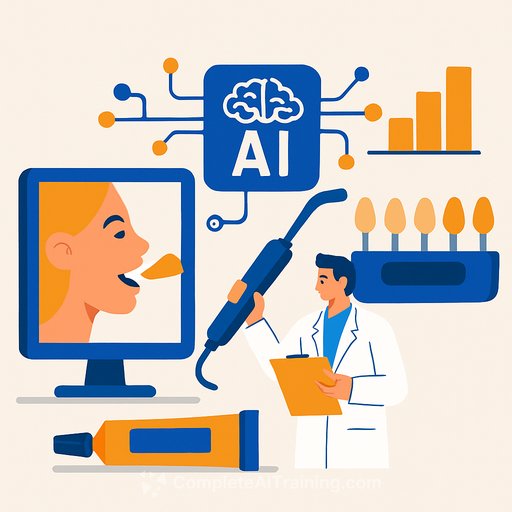
Every patient’s dental needs are unique, and even minor enhancements in dental materials can significantly improve treatment outcomes. However, identifying the optimal materials often requires time-consuming trial and error. Researchers at The University of Texas Health Science Center at San Antonio (UT Health San Antonio) and The University of Texas at San Antonio (UTSA) are exploring how artificial intelligence (AI) can streamline this process. Their recent study, published in the Journal of Dental Research, introduces a novel approach that blends dental science with AI-driven predictions.
Addressing Data Challenges in Dental Composite Research
Dental composites—used in procedures like cavity fillings and sealants—come in thousands of formulations. Yet, a major hurdle is the scarcity of standardized, comparable data across studies. Most existing research focuses on proprietary materials tested under specific lab conditions, limiting broad analysis.
Kyumin Whang, PhD, Barry K. Norling Endowed Professor in Comprehensive Dentistry at UT Health San Antonio, highlights this gap: “Few studies offer the kind of cross-comparable data that machine learning models require to make accurate predictions.” This limitation motivated the team to compile a comprehensive dataset to fuel AI analysis.
Forming a Cross-Disciplinary Team
The project brought together experts from UT Health San Antonio and UTSA. Whang teamed up with Yu Shin Kim, PhD, associate professor in the School of Dentistry at UT Health San Antonio, and Mario Flores, PhD, professor in Electrical and Computer Engineering and Biomedical Engineering at UTSA.
“Our goal was to identify not only the best-performing materials but also to understand which composite properties contribute most to desired clinical outcomes,” Whang explained. The team assembled data on 240 commercially available dental composites drawn from scientific literature.
AI Models Predicting Clinical Performance
Using this dataset, the researchers trained machine learning models to predict key properties such as strength, viscosity, and shrinkage. These properties influence a composite’s durability, flow, and resistance to fracture in real-world dental applications.
Flores emphasized the statistical rigor behind their approach: “By analyzing correlations between composite properties, the model learns patterns that can forecast performance.” While the current dataset size limits predictive accuracy, the results demonstrate AI’s potential with more comprehensive data.
The team envisions creating an open-access platform where researchers and manufacturers can input formulation data to receive AI-driven insights. This could drastically speed up the development of customized dental composites by narrowing thousands of possible combinations to a few optimal candidates.
Whang noted, “With improved models, clinicians could specify the desired properties, and AI would recommend formulation matches, cutting the time from concept to clinical use significantly.”
The Importance of Collaboration
As AI integrates further into biomedical research, collaboration across disciplines becomes essential. UT Health San Antonio and UTSA have a history of joint research, and their upcoming merger is set to deepen these partnerships.
Yu Shin Kim added, “This work requires expertise from engineering, dentistry, and data science. Our collaborative environment is key to advancing these innovations.”
Reference
- Paniagua K, Whang K, Joshi K, Son H, Kim YS, Flores M. Dental Composite Performance Prediction Using Artificial Intelligence. Journal of Dental Research. 2025;104(5):513-521. doi: 10.1177/00220345241311888
Your membership also unlocks: