
AI news ·
AI prompts successful CEOs at Coca-Cola and Walmart to step aside for younger leadership
Two Fortune 500 CEOs resigned in early 2026, both saying they lacked the speed and mindset to lead their companies through AI transformation. Most leadership teams haven't started addressing the same gap.
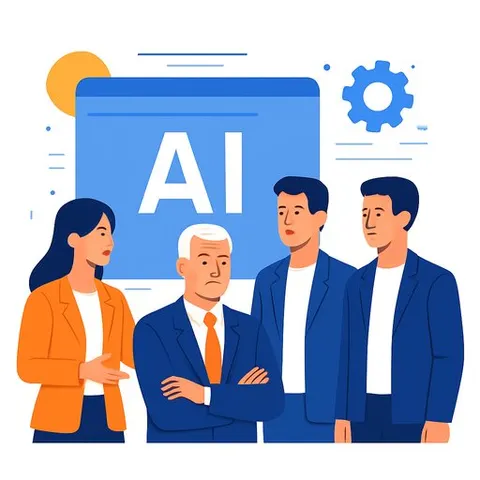
Two Fortune 500 CEOs Step Down, Citing AI Leadership Gap
Coca-Cola CEO James Quincey and Walmart CEO Doug McMillon resigned within months of each other in early 2026, both citing the same reason: they lacked the speed and mindset required to lead their companies through AI transformation.
Quincey told CNBC in March that the company needed "someone with the energy to pursue a completely new transformation of the enterprise." McMillon said he could start Walmart's AI transformation but couldn't finish it-the company needed faster leadership for the AI era.
These were not forced exits. Quincey had added more than ten billion-dollar brands during his tenure. McMillon had delivered over a decade of sustained growth. Both were successful by conventional measures. Both concluded independently that the AI era required leadership capabilities they did not possess.
The Real Problem Most Organizations Face
Quincey and McMillon framed their departures as personal limitations. An organization cannot do the same. It cannot replace itself wholesale. It must develop the leadership it needs, at scale, or it will fail with the leadership it has.
The gap these CEOs identified points to a broader reality: the AI era does not simply demand new technology or new strategy. It demands new approaches to leadership. Leaders need specific skillsets and mindsets that differ fundamentally from those required in previous eras.
Most leadership teams have not begun to confront this requirement.
A 90-Day Starting Point
The first 30 days should focus on assessment. The goal is an honest picture of where the leadership team actually stands-not where they think they stand or what they told the board.
Start by measuring AI fluency across the senior leadership team. Use a structured rubric that covers four areas:
- Foundational understanding of how AI systems work
- Awareness of failure modes and limitations
- Command of cost and risk implications
- Ability to connect AI capability to business strategy
This assessment reveals gaps between perception and reality. Many executives overestimate their AI knowledge or lack the strategic context to apply it.
For executives building AI competency, AI for Executives & Strategy provides structured training on leadership decisions in the AI era. Those in chief executive roles may benefit from a dedicated AI learning path for CEOs.
The work Quincey and McMillon outsourced through resignation is work their organizations must now do through systematic development. The difference between stepping aside and stepping up is the difference between avoiding a problem and solving it.