
AI news ·
AI red teaming requires adversary emulation and multi-step testing, not just prompt refusals, expert says
AI red teaming exposes how adversaries exploit systems through iterative probing and indirect attacks-not just harmful prompts. Traditional security testing misses these risks, leaving production AI vulnerable to behavioral manipulation.
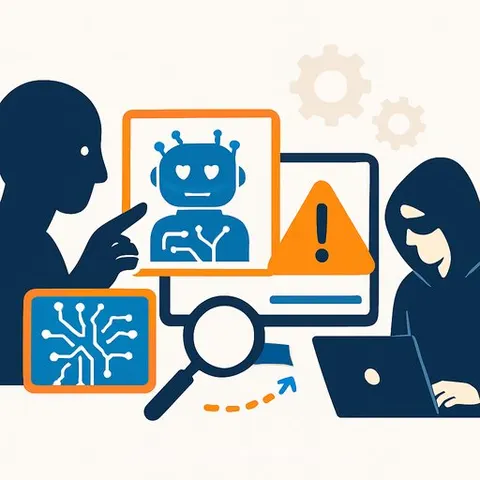
How Organizations Should Test AI Systems Before They Fail in Production
As AI becomes embedded in business operations, organizations face a new class of security risk that traditional testing frameworks don't address. AI systems behave differently than conventional software-they respond to phrasing, context, and data sources in ways that create vulnerabilities across workflows rather than at single points of failure.
Red teaming offers a structured way to expose these risks before they cause operational damage. But AI-specific red teaming requires different methods than conventional security testing.
The gap between traditional red teaming and AI red teaming
Conventional red teams probe strategy, governance, physical security, and technology controls by simulating how real attackers operate. AI-specific red teaming applies that same adversarial discipline to systems whose behavior emerges from data and language patterns.
The distinction matters operationally. Many organizations confuse basic testing-asking a model harmful questions and observing refusals-with red teaming. That approach misses how adversaries actually exploit AI systems through iterative probing, indirect pathways, and multi-step attacks.
Dr. Peter Garraghan, CEO of Mindgard and professor of computer science at Lancaster University, said the gap between AI capability and AI security widened as deep neural networks became production-critical. "Organizations were deploying models into critical workflows without robust ways to test how those systems behaved under adversarial manipulation," he said.
How effective AI red teams operate
Start by modeling real adversary intent and persistence rather than testing edge cases. Because AI systems are interactive, testing should reflect iterative probing and escalation-not single-prompt exchanges.
Scope matters more than most teams assume. The model itself is rarely the sole point of failure. Red teams must assess orchestration layers, data retrieval mechanisms, external data sources, access controls, and downstream actions the AI can take.
Automation can scale adversarial testing across thousands of variants, but human expertise remains critical. Teams need people who can interpret unexpected behavior and design novel attack paths that automation alone won't discover.
Results must be measurable and tied to operational impact. Red teaming should produce evidence that informs governance decisions and remediation priorities, not anecdotal observations.
Why this matters for operations teams
As AI systems gain access to data and take autonomous actions, behavioral manipulation shifts from a content risk to an operational risk. Language becomes a control surface-natural language can directly shape how AI systems behave and what they do.
That requires the same rigor and governance applied to any security-critical system. Operations teams implementing AI need to understand that these systems are probabilistic by design. The goal isn't to eliminate every possible failure, but to keep failures within acceptable bounds.
For operations professionals managing AI deployment, understanding how to implement and manage AI red teaming is essential to governance and risk management. Teams also benefit from understanding how large language models behave under stress, since that knowledge directly informs how to test systems before they operate in production.
AI security is disciplined risk management, not elimination of all failure modes. Organizations that treat red teaming as a one-time assessment rather than an ongoing process will miss how these systems degrade or fail over time as they interact with real workflows and users.