
AI news ·
A.I. reshapes courts, classrooms, workplaces and the papacy
Samsung unions won AI chip bonuses, but other workers say they're left out. Meanwhile, California is drafting an executive order on AI-driven job displacement, and U.S. teachers are urging no AI chatbots for elementary students.
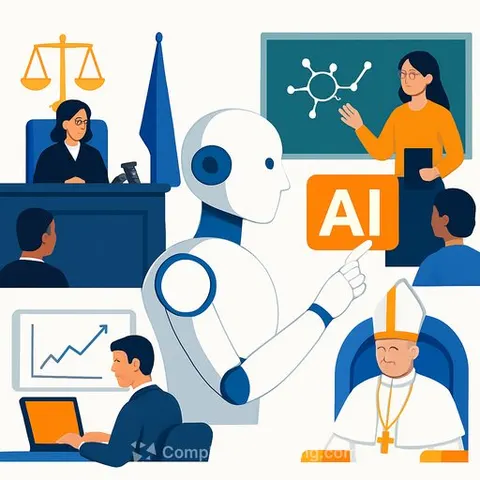
AI Pay Gaps and Policy Shifts Reshape the Workplace
Samsung's unions secured bonuses for workers in the company's top-performing AI chip unit, but the deal has created tension. Other employees say they feel excluded from the gains.
The pay disparity reflects a broader challenge for AI for Human Resources departments: how to manage compensation when AI skills command premium wages while other roles face uncertain futures.
California and the UK Move on AI Labor Risks
California Gov. Gavin Newsom is preparing an executive order to overhaul labor policies in response to potential mass job displacement from AI. The order will explore how existing worker protections can adapt to widespread automation.
Across the Atlantic, the British government's AI Security Institute-staffed by former employees of OpenAI and Google-is emerging as a model for countries assessing AI's emerging risks. The institute's work focuses on safety and security rather than labor policy, but its approach is influencing how other nations structure their own AI governance.
Schools Restrict AI Tools for Young Students
The American Federation of Teachers recommended no screens for children in second grade or younger, and no AI chatbots for elementary school students. The guidance reflects concerns about developmental impact and screen dependency.
Courts Struggle With AI-Generated Filings
Self-represented litigants now have access to AI tools, and the volume of their court filings is straining judicial systems. Courts have traditionally accommodated pro se plaintiffs, but the speed and scale of AI-assisted submissions are creating bandwidth problems.
For managers and HR professionals, these developments signal that AI for Management decisions extend beyond technology adoption. Pay equity, workforce planning, and regulatory compliance all require attention as AI reshapes work.