
AI news ·
AI reshapes fashion marketing through generative content, personalization and predictive trend tools
Fashion brands now build entire marketing operations around AI, not just test it. Mango cut production costs 75% using AI-generated images, while campaigns with personalized content show conversion rates 150% higher than generic ones.
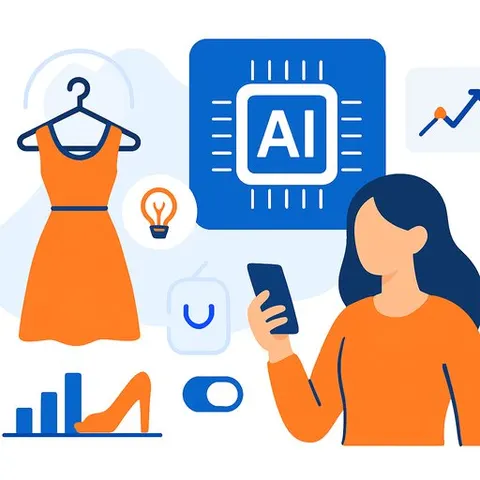
AI Is Now the Standard Tool in Fashion Marketing. Here's What That Means for Creatives
Fashion brands are no longer experimenting with artificial intelligence in their marketing campaigns-they are building entire operations around it. In 2026, AI handles everything from generating photoshoot-free lookbooks to predicting which colors will trend before designers sketch them. For creative professionals, this shift raises a practical question: what does your role become when machines can generate options faster than you can brief them?
Visual Content Without the Photoshoot
Mango reduced production costs by 75% on its Sunset Dream fragrance campaign by using AI-generated images and video instead of traditional photography. Streetwear labels now visualize product variations-colors, patterns, fabrics-in seconds, enabling rapid testing of creative concepts that would have taken weeks in the past.
The catch: AI generates hundreds of options. A creative director still has to choose the few that carry the brand's voice. The work shifted, not disappeared. You're curating at scale now, not building from blank canvas.
Personalization at the Individual Level
Machine learning algorithms analyze browsing history, past purchases, size preferences, and weather data to deliver unique recommendations to each customer. One user sees floral dresses. Another sees minimalist blazers. Same brand, same moment, different creative treatment.
Campaigns using this approach show click-through rates 200% higher and conversion rates 150% higher than generic campaigns. The creative work is no longer one campaign for everyone-it's dozens of variations, each optimized for a specific taste profile.
Trend Forecasting Before the Trend Hits
AI scrapes social media, search queries, and e-commerce data to spot emerging patterns weeks or months before they reach mainstream visibility. When "red leather jackets" spike on TikTok in August, brands can produce a targeted campaign by September and have inventory ready for October.
This compresses the traditional trend forecasting cycle. The marketing calendar is no longer set months in advance-it responds to what consumers are already searching for and discussing.
Interactive Ads That Close the Sale
Virtual try-on technology integrated into social media ads now lets customers see how a product looks on them before purchase. Campaigns using AR try-ons report conversion rates 94% higher and return rates 40% lower.
The ad itself becomes the product experience. A user scrolls Instagram, taps an ad, activates their camera, sees the product on their body, and completes the purchase without leaving the app. Creative teams now design for interaction, not just attention.
Chatbots as Campaign Assets
Conversational AI guides customers through purchase decisions within ads and landing pages. A user might see a campaign for wedding guest dresses and interact with a chatbot that asks about venue, dress code, body shape, and budget-then recommends specific products.
This format shows 3x higher engagement than static ads. The creative work includes writing dialogue flows and designing conversational experiences, not just static copy and images.
Influencer Selection by Algorithm
AI platforms now predict which influencers will drive the highest return for a specific campaign by analyzing engagement authenticity, audience demographics, and historical performance. A brand launching sustainable activewear can identify micro-influencers whose followers overlap most strongly with eco-conscious consumers.
The guesswork is gone. So is some of the creative autonomy-but the precision is real.
Where Humans Still Win
The brands capturing attention in 2026 are not those run entirely by algorithms. They're the ones where AI handles optimization and scaling while humans provide story, emotion, and ethics.
AI can predict that pastel colors will trend. It cannot explain why pastel represents hope in a post-pandemic world. It can generate 500 product images. It cannot choose which five actually feel authentic to your brand. It can personalize an email. It cannot write the line that makes someone feel seen.
Over-reliance on AI leads to homogeneous creative output-every brand optimizing for the same trends, resulting in uninspired work. The competitive advantage belongs to teams that use AI as a tool to amplify human creativity, not replace it.
The Practical Shift for Creatives
Your skill set is evolving, not obsolete. You need to understand how generative art tools work so you can brief them effectively. You need to see AI design courses as essential professional development, not optional curiosity.
The creative directors winning now are those who think like art directors and data analysts simultaneously. They understand which variations perform with which audiences. They can run 50 campaign tests in a week instead of one campaign in two months.
The work is faster, more testable, and more measurable. It is also more collaborative with machines and less collaborative with traditional production teams. That's the real change happening behind the scenes in fashion marketing.