Lockheed Martin shows AI can manage UAV contingencies in real time
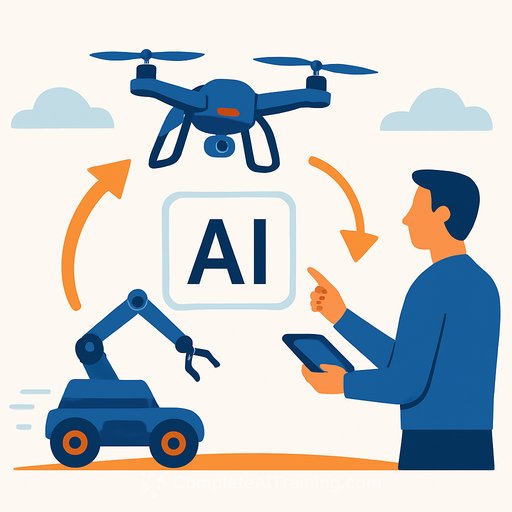
Lockheed Martin Skunk Works ran a live test of AI-driven mission contingency management using a Stalker XE Block 25 UAV and a modified Alta X 2.0 from Drone Amplified. The AI, embedded in the ground command-and-control system, detected a simulated fuel issue, generated alternative plans within seconds, and presented them to the operator. The operator picked the preferred option, the AI reassigned the mission to the Alta X, and the Stalker returned to base. Date of test: December 5, 2025.
Why this matters for leaders
AI can act as a reliable co-pilot for operations: it spots issues, proposes options, and keeps humans in control. That means fewer aborted missions, faster recovery from surprises, and better use of assets already in the field. For teams, it reduces cognitive load so operators can supervise more vehicles without drowning in decisions.
- Continuity under stress: Seconds-level replanning keeps objectives on track when equipment or environment shifts.
- Lean staffing: One operator can manage more assets with AI proposing viable next steps.
- Cost control: Smarter reassignment reduces wasted flight time and extends platform life.
- Governance: Human-on-the-loop decisions create a clear audit trail and accountability.
- Interoperability as a must-have: Mixed fleets only work if your C2 software speaks the same language across vendors.
What was new in the trial
- Chat-driven retasking: Lockheed Martin integrated its STAR.SDK to connect the AI contingency engine to a user interface that lets operators retask drones through chat-style prompts.
- Modular AI services: STAR.SDK runs within the STAR.OS ecosystem to speed up development and deployment of AI services across uncrewed platforms.
- Single-node control, many vehicles: A unified C2 node fused mission data from the UAVs, directed an unmanned ground vehicle in Kansas, and coordinated additional UAVs from Fulcrum-showing one mobile command point can supervise multiple air and ground assets across dispersed locations.
Executive takeaway
"This demonstration proves AI can move from the lab to the battlefield, delivering a multitude of capabilities ranging from autonomous decision-making to rapid data flow between unmanned vehicles across air, ground and synthetic environments. By fusing AI-enabled UAV replanning with UGV capabilities, we give warfighters the safety, speed and confidence they need to act first in contested environments."
Applications beyond defense
Any operation that relies on uncrewed systems benefits: utilities inspections, oil and gas monitoring, disaster response, public safety, and large-scale logistics. The pattern is the same-detect an issue, replan in seconds, and keep the mission moving without overloading the operator.
Questions to ask your vendors
- What's the end-to-end latency from anomaly detection to a vetted plan in the UI?
- How does the system enforce human override, approvals, and role-based permissions?
- Which interoperability standards and message formats are supported across air and ground platforms?
- What logs exist for decisions, models, prompts, and operator inputs for audit and after-action review?
- How is the AI tested against edge cases (sensor dropouts, GPS denial, conflicting objectives)?
- What are the cybersecurity controls for the C2 node and data links?
Next steps for managers
- Run a tabletop exercise: define triggers, guardrails, and escalation paths for AI-suggested actions.
- Pilot with clear KPIs: time to replan, mission completion rate under stress, operator workload (tasks per hour), and incident rate.
- Adopt a chat-based retasking UI to reduce training time and standardize operator inputs.
- Stand up governance: model versioning, approval workflows, red-teaming, and safety cases for deployment.
- Invest in upskilling so supervisors can interpret AI outputs and make confident calls.
Learn more
Explore Lockheed Martin's public material on open-architecture autonomy and software toolchains for uncrewed systems: Lockheed Martin Autonomy. For managers building internal capability, see focused training paths: AI Automation Certification.
Your membership also unlocks: