AI's Silent Takeover: Redefining the Sales Game in 2026
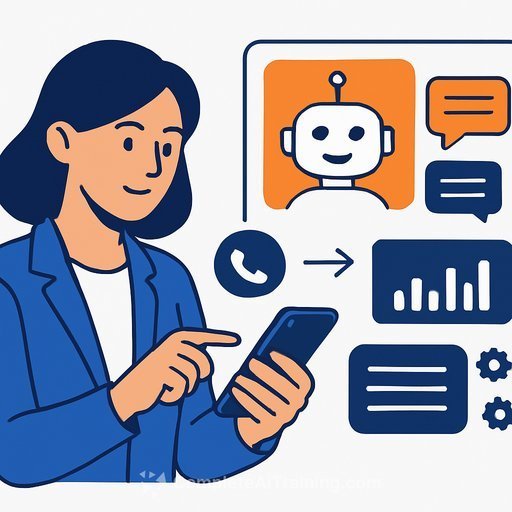
AI isn't a sidekick anymore. It's driving prospecting, qualification, and early negotiations while humans focus on strategy and closing. Deals still rely on trust, but the route to trust is getting leaner, faster, and far more personal.
Leaders are reporting strong results from hybrid teams: a few AI agents handling volume and context, with a small bench of closers stepping in at the right moment. Analysts are urging revenue teams to update playbooks now, not next quarter.
What Your New Sales Stack Looks Like
Agentic systems generate leads, run outbound, qualify, and move buyers through first to third touchpoints. Humans handle intent discovery, commercial terms, and final sign-off. It's a clean split: machines do repetition and research; people carry the weight of judgment, timing, and relationships.
Real examples back it up. Public posts highlight how some firms have kept revenue steady while cutting rep headcount by replacing most early-stage work with AI agents. Analysts at firms like Gartner and EY are pushing leaders to rewrite their approach to get full value from this shift.
Negotiation, But Quicker
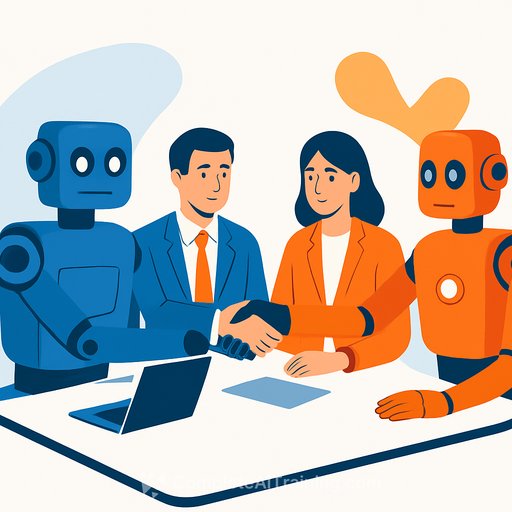
By 2026, many predict a sizable chunk of B2B deals will see AI talking to AI, with reps stepping in for nuance and final stakes. Walmart's supplier negotiations show how far this has gone, automating a majority of first-pass talks. McKinsey data shared widely notes that close to half of sales tasks are automated already.
The pattern: lean teams. A few agents, a few closers, fewer meetings, shorter cycles. The speed advantage isn't hype-it's compounding. AI parses signals and drafts responses in seconds, not hours.
Marketing Tie-In: Less Noise, More Relevance
Venture voices point to a shift from browsing to efficient, personalized buying. Interfaces anticipate needs instead of dumping options. This isn't about blasting more messages; it's about sending the right one, right now.
Bain expects generative and agentic systems to give reps more time for selling and lift conversion by stripping out admin and research. Teams that once wasted hours formatting decks and chasing data now respond in real time to buyer cues.
CRM Gets Smarter
CRMs are turning into action hubs. Generative features enrich records, predict fit, draft next steps, and surface deal risks. Reporting moves from stale summaries to live guidance on what to do next.
As one example, industry stats show better forecasting and cleaner pipelines when AI fills gaps and flags inconsistencies. Less guessing. More clarity.
The Practicals: How This Changes Your Day
- Prospecting: AI mines ICP lookalikes, prioritizes accounts, and drafts first outreach.
- Qualification: Agents run discovery, summarize pain, and route to the right play.
- Negotiation: Bots handle initial terms and objections; humans step in for tradeoffs and risk.
- Enablement: Content is retrieved and adapted on the fly for buyer context.
- Forecasting: Deal health scores are recalculated continuously off engagement and intent data.
Guardrails You Can't Skip
Transparency matters. Customers want to know when they're talking to AI, and hiding it backfires. Research shared by firms like Capgemini points to trust and clarity as top loyalty drivers, outpacing price in many cases.
Avoid bloated, generic tools. Vertical agents that solve a specific job-market research, pricing intelligence, enterprise outreach-tend to win on results and adoption. And keep humans in the loop for high-stakes moments where context, risk, and relationships matter most.
Market Research Just Got Cheaper (and Closer to Reality)
Generative systems can create "synthetic personas" and "digital twins" that predict how buyers react before you run a campaign. That means faster testing, smarter messaging, and fewer wasted cycles.
There's also a new channel: B2A-business to AI. Buyers are asking tools like ChatGPT and Perplexity for shortlists and comparisons. Your brand needs to show up accurately in those answers. Expect new KPIs around how often AI recommends you, where you're misrepresented, and what content fixes it.
Outbound Is Becoming AI-First
Expect AI agents to become a primary channel for high-volume sellers. Discovery shifts from search boxes to conversational prompts. If your product isn't easy for AI to understand and recommend, you'll feel the drop-off.
Winning orgs create an omnipresent narrative: consistent claims across search, AI chats, and peer channels. Same story, different surfaces.
What Leaders Should Do Now
- Map your funnel and assign owners: which stages are agent-run vs. human-run.
- Start small: pilot one agent per stage (outbound, research, meeting prep, renewal).
- Measure real outcomes: time-to-first-touch, SQL quality, cycle length, win rate, renewal rate.
- Upskill the team: prompt fluency, data hygiene, and judgment around when to escalate.
- Standardize disclosure: make it clear when AI is involved and document approvals.
- Favor vertical tools that integrate cleanly with your CRM and data warehouse.
Playbook: A 60-Day Plan
- Week 1-2: Clean your data. Define ICP, buying triggers, objection libraries, and approved language.
- Week 3-4: Launch an outbound agent for one segment. Add an agent for meeting prep and follow-up.
- Week 5-6: Add a negotiation bot with guardrails for low-risk terms. Set escalation rules.
- Week 7-8: Review metrics. Keep what works, kill what doesn't, then expand to a second segment.
Ethics, Risk, and the Human Edge
Bias, fairness, and consent aren't box-check items-they affect revenue. Set review loops, audit prompts and outputs, and log changes. As agents take on more negotiation, keep policies current and outcomes monitored.
And don't forget the obvious: trust still closes deals. AI gets you to the table faster with the right context. Your job is to read the room, set terms both sides can live with, and protect the relationship after the signature.
Where This Is Heading
Expect demos that remix content in real time, and virtual showrooms customized to the buyer's history. Also expect every employee to have an assistant for research, prep, and follow-up. Career growth will favor reps who can direct these tools and think strategically.
The sellers who win won't fight AI. They'll run it like a team: agents for speed and coverage, humans for judgment and trust.
Helpful Resources
- McKinsey: The economic potential of generative AI
- Complete AI Training: Courses by Job (Sales)
- Complete AI Training: AI Automation Certification
Bottom Line
AI runs the repetitive work. You run the strategy and the close. Set up the system, keep it honest, and your team will sell more with fewer steps.
Your membership also unlocks: