AI Screening Flags Transthyretin Cardiac Amyloidosis Earlier-and More Often
A new AI-driven screening approach improved detection of transthyretin cardiac amyloidosis (ATTR-CM) across a large health system. Targeted outreach based on model scores led to more confirmed cases and faster access to therapy.
Why earlier recognition matters
ATTR-CM is still underdiagnosed. It often hides behind subtle cardiac findings and orthopaedic clues like carpal tunnel syndrome or spinal stenosis, delaying referral and treatment.
With aging populations, prevalence is rising. Finding cases sooner can change trajectories-especially when disease-modifying therapies are available.
Inside the AI trial
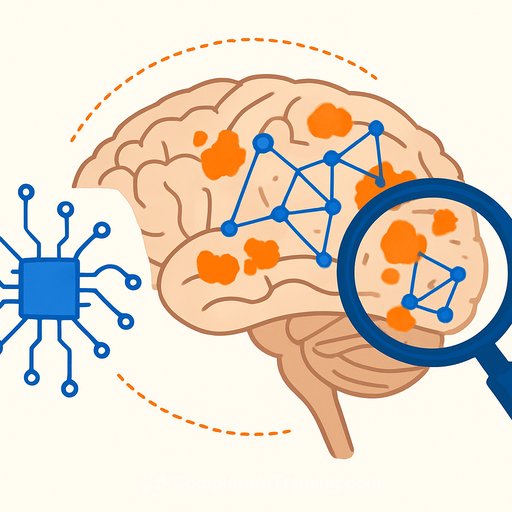
The nonrandomized clinical trial tested ATTRACTnet, an AI model that blends electrocardiogram waveforms, echocardiographic measures, demographics, and diagnosis codes linked to orthopaedic manifestations of amyloidosis.
- Discrimination: AUC 0.85 with 5-fold cross-validation in an internal test set (n=799); AUC 0.82 (95% CI, 0.81-0.83) in an external test set (n=422).
- Screening results: 1,471 patients had AI scores ≥0.5; 256 met inclusion criteria; 50 completed further diagnostic testing.
- Yield: 24 patients were confirmed to have ATTR-CM; 21 (88%) started treatment within three months.
- Compared with usual care: positivity rate 15.3% (95% CI, 13.1%-17.9%; P < .001), more than 2.8 times higher than historical controls, with an 18% relative increase in new diagnoses versus the prior year.
What this means for clinicians and health systems
AI-assisted screening can close gaps by surfacing high-risk patients who might otherwise be missed. Practical use cases include automated flags for cardiology referral, streamlined imaging (e.g., bone scintigraphy) or CMR confirmation, and faster therapy initiation.
Implementation guidance:
- Start with data you already trust: ECGs, echocardiography, and EHR diagnosis codes.
- Set clear thresholds and outreach workflows; measure time-to-diagnosis and treatment starts.
- Keep clinicians in the loop for interpretation and shared decision-making.
- Continuously audit model performance, false positives/negatives, and equity across demographics.
Caveats and next steps
The study wasn't randomized. Higher detection is encouraging, but it doesn't guarantee better long-term outcomes. Prospective randomized trials and cost-effectiveness analyses are still needed.
Generalizability matters. External validation across diverse sites, periodic recalibration, and attention to bias will determine durability. Guardrails-data governance, transparent communication with patients, and clinician oversight-should come standard.
For patients and the public
Talk to your clinician if you have persistent heart failure symptoms (especially with preserved ejection fraction) plus signs like carpal tunnel syndrome, biceps tendon rupture, or spinal stenosis-particularly in older age. Awareness speeds the right tests and treatment pathways.
For a plain-language overview of cardiac amyloidosis, see the NIH resource on amyloidosis and heart conditions: NHLBI: Cardiac Amyloidosis.
Building AI capability inside care teams
If you're standing up clinical AI pilots or educating staff on safe, effective use, a structured learning path helps. You can explore role-based AI course options here: Complete AI Training: Courses by Job.
Reference
Jain SS et al. Detecting transthyretin cardiac amyloidosis with artificial intelligence: a nonrandomized clinical trial. JAMA Cardiol. 2025; DOI: 10.1001/jamacardio.2025.4591.
Your membership also unlocks: