Three-Quarters of Resumes Never Reach a Human Recruiter
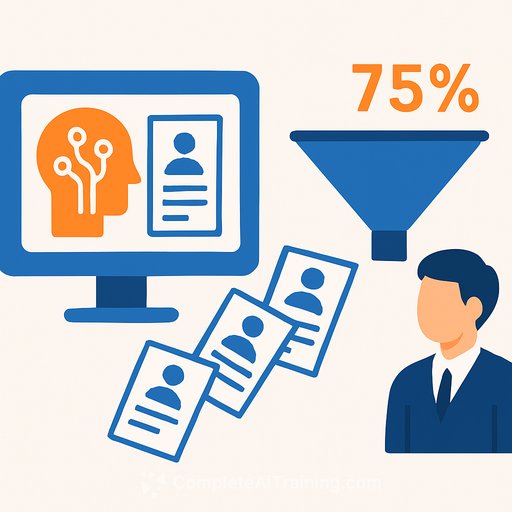
Applicant Tracking Systems now reject 75% of resumes before they reach hiring staff. The shift signals a fundamental restructuring of how companies screen candidates - and what job seekers must do to compete.
The U.S. labor market shed 1.17 million jobs in 2025, the steepest cuts since the pandemic. Now, companies are rebuilding their workforces using AI-powered hiring systems that operate under different rules than the old model.
AI Expectations Are Reshaping Hiring Before Results Prove Out
Corporate leaders are redesigning hiring workflows based on what they expect AI to accomplish, not what it has proven it can do. Gartner reports that only one in 50 AI investments delivers transformational value, yet organizations are restructuring teams anyway.
This expectation gap matters for job seekers. Companies are already demanding skills that didn't exist two years ago. McKinsey found a sevenfold rise in AI fluency requirements among job applicants over the last two years.
HR teams should prepare for this shift. Candidates will increasingly need to demonstrate AI literacy, prompting skills, and documented examples of AI use in their work - not just familiarity with the tools themselves.
Digital Twins Will Screen Candidates Before Humans Do
Some recruiters are already creating AI profiles of job candidates by scanning LinkedIn histories, portfolios, certifications and broader digital traces. Engineer Charlie Cheng has gone further, building a digital twin that recruiters can interview directly.
This automated screening surfaces both strengths and vulnerabilities. The same systems that highlight certifications and use cases also surface negative digital traces - social media posts, reviews, and reputational risks that recruiters will consider.
HR professionals should advise candidates to audit their digital presence now. What appears online will be evaluated by algorithmic screening before human review.
AI Proficiency Certifications Are Becoming Standard
By 2027, most hiring processes are expected to include assessments measuring workplace AI proficiency. These won't just test whether candidates can use generative AI tools - they'll measure critical thinking, creativity, communication and subject-matter expertise.
Certification programs already exist. AWS Certified AI Practitioner and MIT's Professional Certificate Program in Machine Learning and Artificial Intelligence are examples that strengthen candidate profiles.
But there's a deeper concern. As workers offload writing, analysis, summarization and ideation to AI, they risk eroding memory, problem-solving endurance and creative thinking - the cognitive advantages that differentiate humans from machines. HR departments should consider building cognitive skill development into annual professional education, not just technical AI training.
Career Copilots Will Guide Job Searches and Salary Negotiations
The next phase is hyper-personalized AI career assistants that track skills, recommend learning paths, flag market opportunities and guide decisions from job searches to career pivots. Some can help build data-based scenarios for salary negotiations, showing realistic expectations and potential objections.
These tools will shift career management from reactive guesswork to continuous, AI-guided strategy. For HR teams, this means candidates will arrive more informed about market rates, skill gaps and career trajectories.
The Human Advantage Remains Irreplaceable
As hiring systems automate resume screening and AI handles routine applications, the candidates who survive this transition will be those who balance automation with human judgment, efficiency with authenticity, and speed with depth.
Meaning, responsibility and trust cannot be coded. For HR professionals, the construction site of today's labor market is not just disruption - it's an opportunity to build hiring systems that use AI for efficiency while preserving the human evaluation that matters most.
Those willing to keep learning, observing and adjusting to these changes will remain valuable regardless of how the tools evolve. The same applies to the candidates your teams recruit.
Learn more about AI for Human Resources or explore the AI Learning Path for CHROs to stay ahead of these shifts.
Your membership also unlocks: