AI shopping assistants push US Black Friday 2025 online sales: what sales teams should do now
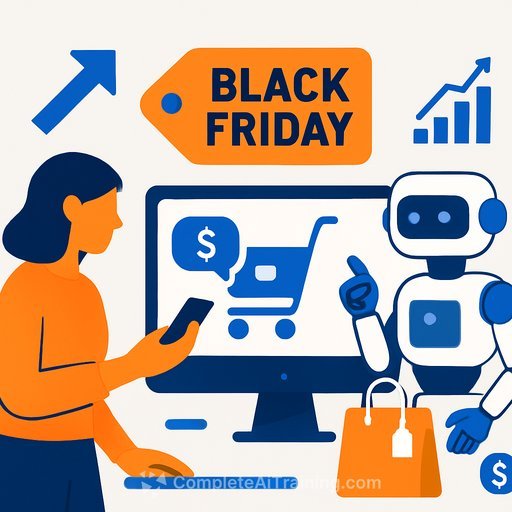
Black Friday 2025 in the US set a new high for online sales. According to Adobe Analytics, shoppers spent $11.8bn online, up 9.1% from 2024, with AI tools playing a clear role in discovery, comparison, and conversion.
Mastercard SpendingPulse reported a similar tilt to digital. E-commerce sales rose 10.4% on Black Friday, while in-store growth hovered near low single digits last year, signaling buyer comfort with online checkout and fast fulfillment.
Adobe's tracking, based on a massive sample of retail site visits, also shows traffic sent by AI assistants to US retail sites surged 805% year over year. Tools like Walmart's Sparky and Amazon's Rufus weren't widely available last year-this season, they were.
What moved: categories and products
Toys, collectibles, and consumer electronics led the charge. LEGO sets and Pokémon cards sold through quickly, alongside consoles like the Nintendo Switch and PlayStation 5.
High-velocity accessories did well too: Apple AirPods and KitchenAid mixers were consistent cart add-ons that helped lift AOV.
What's next: Cyber Monday setup
Adobe forecasts Cyber Monday online sales at $14.2bn, up 6.3% year over year. Expect the deepest deals in electronics-up to 30% off list prices-plus meaningful markdowns in clothing and computers.
Stores saw softer traffic compared with digital channels, and some consumers remain cautious given inflation, tariff uncertainty, and a weaker labor market. That means clear value props, flexible payment options, and reliable delivery promises will matter.
Sales playbook: how to convert AI-driven demand
- Plug your product catalog into your AI assistant with clean titles, attributes, and inventory signals. Make sure it can answer compatibility, delivery, and bundle questions without handoffs.
- Prioritize high-intent queries. Train responses around top sellers (LEGO, Pokémon, Switch/PS5, AirPods, KitchenAid) with comparison prompts and "good-better-best" bundles.
- Use AI chat transcripts to spot friction: missing specs, unclear return terms, out-of-stock loops. Fix the page, then the model.
- Spin up targeted landing pages tailored to AI queries (e.g., "best PS5 bundle under $500"). Keep pricing, availability, and delivery dates synced.
- Retarget abandoned chats with cart-ready offers and clear delivery timelines. Time-sensitive shipping copy beats generic discounts.
- Set discount floors by category and enforce them in your AI assistant so it won't over-offer on items already selling through.
- Route high-value chats to live agents with context. Equip agents with pre-approved offers, swap options, and warranty upsells.
- Measure AI contribution. Track sessions initiated by AI, assisted revenue, conversion uplift vs. site average, and time-to-purchase.
Day-of execution checklist
- Confirm electronics promos align with the "up to 30% off" narrative; avoid mixed messages across ads, PDPs, and chat.
- Lock shipping cutoffs and display them in chat answers and on product pages.
- Push bundles on high-demand SKUs to protect margin and reduce stockouts.
- Monitor inventory alerts in real time; auto-substitute with nearest-spec alternatives.
Key metrics to watch
- AI-driven sessions, conversion rate, and AOV vs. non-AI traffic.
- First-response time in chat and assisted checkout completion rate.
- Attach rates on add-ons (controllers, cases, warranties) for consoles and electronics.
- Return intent signals from chat ("does this fit," "how to cancel," "warranty").
Useful sources
For broader context on holiday shopping trends and methodology, see:
Skill up your team
If your sales org is building AI-assisted shopping flows and needs practical, role-focused training, explore Complete AI Training - Courses by Job. Keep the team current on prompt patterns, product feed structure, and on-the-fly offer logic.
Your membership also unlocks: