
AI news ·
AI should support thinking, not replace it, says Haileybury Astana school head on Kazakhstan's education future
AI will reshape Kazakhstani classrooms over the next decade, but only if teachers use it to sharpen critical thinking, not replace it, says Haileybury Astana's junior school head.
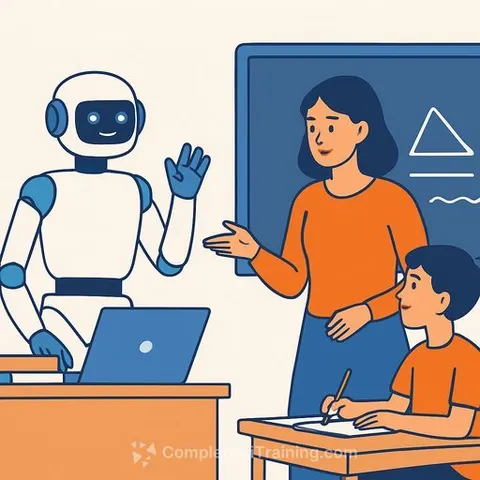
AI should strengthen thinking, not replace it, education leader says
Artificial intelligence will reshape how Kazakhstani schools teach over the next five to ten years, but only if educators use it to enhance critical thinking rather than automate instruction, according to Liam Stewart, head of junior school at Haileybury Astana.
The most immediate change will come from better data use in classrooms. Teachers will gain precise insights into student progress, identify misconceptions earlier, and respond with greater accuracy, Stewart said.
Skills that matter most
Technical fluency will become expected but not defining. The capabilities that distinguish students will remain fundamentally human: clear communication, the ability to express ideas with precision across different contexts, and capacity to work across disciplines.
Students who can interpret complexity, connect knowledge, and collaborate effectively will be best positioned to succeed in Kazakhstan's evolving economy, Stewart said.
Teachers need support to change
Teaching itself will become more analytical and strategic. This requires stronger professional development for educators to use AI tools effectively while maintaining sound pedagogical standards.
The strongest international models integrate AI thoughtfully from an early stage, allowing both students and teachers to build skills gradually rather than through isolated initiatives. This approach is especially relevant for Kazakhstan, where education reform is increasingly tied to long-term technological development goals.
Regulation and safeguarding
International experience shows clear risks if AI is not properly regulated in schools. Safeguarding challenges include deepfakes, data protection concerns, and ethical questions about how student information is used.
The key challenge is defining the role of the learner in an environment where automated tools are increasingly accessible. This requires more than policy-it requires a clear educational philosophy that staff live every day, Stewart said.
On academic integrity, schools should focus on education and transparency rather than restriction alone. Students should understand how AI systems work, what their limitations are, and how to use them responsibly in academic work.
This includes understanding the difference between using AI as a support tool and relying on it as a substitute for independent thought.
National context
Kazakhstan's government has emphasized technology and innovation as part of the country's long-term competitiveness strategy. This national focus creates conditions for schools to innovate more confidently and at scale, Stewart said.
The country has made significant progress in modernizing its education system and now has an opportunity to move beyond standardized learning models toward ones that are more adaptive and responsive to individual learner needs across different regions.
For educators navigating these changes, professional development in AI for teachers can help build the skills needed to use these tools effectively. More broadly, resources on AI for education cover classroom tools and learning optimization strategies.