
AI news ·
AI shows promise in early outbreak detection but cannot replace human expertise, experts say
AI tools like EPIWATCH and HealthMap can spot disease clusters in hours by scanning news, social media, and environmental data. But experts warn the systems are only as good as their data, and human judgment stays essential.
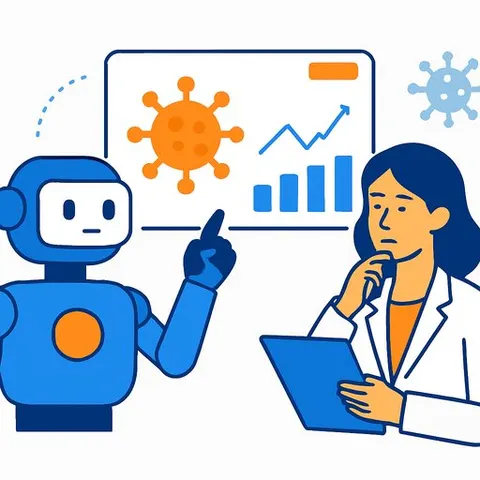
AI Systems Track Disease Patterns Earlier, But Human Judgment Remains Essential
Artificial intelligence tools are being deployed to detect disease outbreaks before they spread widely, filling gaps in global surveillance that Covid-19 exposed. Systems like EPIWATCH, HealthMap and ProMED now monitor news reports, health bulletins, environmental data and social media to identify unusual infection patterns faster than traditional reporting methods.
The advantage is speed. Traditional surveillance depends on hospitals and laboratories reporting confirmed cases-a process that takes time. AI analyzes large volumes of real-time data in hours rather than days, potentially catching clusters while they're still small.
What AI Can Monitor
- Unusual disease clusters and patterns in animal-to-human transmission
- Wastewater and environmental samples for pathogen signals
- Climate, travel and population movement data
- Genomic analysis of viral mutations that could increase transmissibility
Researchers increasingly combine AI with the "One Health" approach, which integrates human, animal and environmental health data. This matters because Ebola, bird flu and Covid-19 all originated in animals before jumping to humans.
AI may help identify geographic hotspots where new infections are more likely to emerge. Deforestation, intensive farming, urban crowding and increased contact with wildlife all raise spillover risk. By analyzing multiple datasets together, public health authorities could strengthen surveillance in vulnerable regions before outbreaks grow.
The Limits of Prediction
AI cannot replace human expertise. Epidemiologists, virologists and public health officials must interpret AI findings and confirm outbreak signals through laboratory work and field investigation.
Data quality is a major constraint. AI systems only work as well as the data they receive. Incomplete reporting, misinformation or poor surveillance infrastructure can reduce accuracy. AI may also trigger false alarms by flagging normal events as outbreaks, or miss genuine signals and delay response.
Infectious diseases are influenced by unpredictable biological, environmental and social factors. AI is unlikely to predict pandemics with certainty, but it may help health systems recognize warning signs earlier and respond faster.
Practical Applications in Healthcare Systems
For countries with large populations and high travel connectivity, AI for Healthcare applications could include monitoring seasonal outbreaks, strengthening rural surveillance and tracking vector-borne diseases like dengue and malaria.
However, AI Data Analysis tools cannot substitute for investments in healthcare infrastructure, trained staff, laboratory capacity and community-level surveillance. These remain foundational.
Ethical and Governance Questions
As AI becomes more powerful in healthcare, concerns about privacy, data sharing and unequal access to digital tools grow. Responsible governance and transparent data practices are essential to ensure AI benefits public health globally rather than concentrating benefits in wealthy regions.
Advanced AI tools could potentially be misused in biological research, but most scientists emphasize that stronger safeguards and ethical oversight matter more than restricting the technology itself.
The future of pandemic preparedness depends on combining AI tools with strong public health systems, international cooperation and timely human decision-making.