
AI news ·
AI shows promise in mental health care but raises accuracy, privacy and ethical concerns
AI tools show promise in mental health care for early screening and expanding access, but accuracy gaps, privacy risks, and bias in training data remain serious concerns. Experts say AI should support clinicians, not replace them.
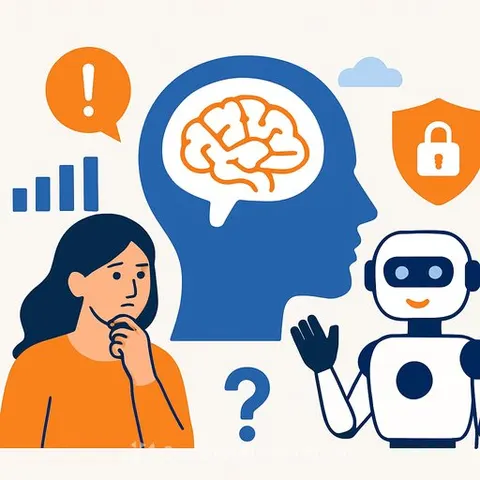
AI Tools in Mental Health Show Promise, But Raise Accuracy and Privacy Questions
Artificial intelligence is expanding its role in mental health care, offering chatbots for emotional support, early warning systems for depression and anxiety, and personalized therapy recommendations. The technology promises to increase access to care in underserved areas and speed up diagnosis. But mental health professionals warn that accuracy gaps, data privacy risks, and over-reliance on automation could undermine treatment quality.
AI systems can analyze behavior patterns, speech, and digital activity to flag early signs of mental distress. They provide immediate support to people without access to therapists. For healthcare workers managing patient loads, these tools offer screening assistance and reduce administrative burden.
Where AI Falls Short
AI systems trained on incomplete or limited datasets produce inaccurate diagnoses. More fundamentally, they cannot replicate empathy-a core element of mental health treatment. Patients who rely too heavily on AI tools interact less with qualified clinicians, degrading care quality.
Data security poses another risk. Mental health records contain highly sensitive information. Digital storage creates exposure to breaches and unauthorized access.
Ethical Issues Demand Clear Rules
Patient confidentiality requires robust safeguards. Healthcare organizations must be transparent about how AI systems collect and use psychological data, and patients need genuine informed consent-not buried terms of service.
Bias in training data produces skewed or unfair outcomes. If algorithms learn from unbalanced datasets, they may misdiagnose certain populations. Accountability remains unclear: when AI gives harmful advice, who bears responsibility-the developer, the clinician, the organization?
The World Health Organization calls for AI in healthcare to be guided by transparency, accountability, and privacy protection.
The Hybrid Model Works Best
AI should support clinicians, not replace them. The most effective approach combines machine efficiency with human judgment.
In this model, AI handles screening, monitoring, and pattern detection. Clinicians provide diagnosis, treatment decisions, and the trust-based relationship patients need. Dr. Rohit Khurana notes: "AI has the potential to improve access to support systems and assist in identifying patterns that may otherwise be missed, but it cannot replace empathy, trust, and human judgment."
This separation of labor strengthens rather than weakens care. Professionals ensure ethical treatment and emotional support. Technology expands capacity.
What Comes Next
Future AI systems will likely improve at detecting subtle behavioral shifts and offering more precise insights. Better algorithms may understand human behavior more fully. None of this matters without regulation.
Strict rules must govern development and deployment, with clear requirements for transparency, accountability, and data protection. Proper oversight makes AI safer and more reliable-a tool that enhances rather than undermines the clinician-patient relationship.
For healthcare professionals implementing these systems, the path forward requires balancing access gains against accuracy risks and maintaining human oversight at every stage. AI for Healthcare tools like ChatGPT demonstrate both the potential and the limits of current technology in clinical settings.
The Bottom Line
AI can expand mental health access and catch early warning signs. It cannot replace clinical judgment or emotional intelligence. Success depends on treating AI as a tool within a human-centered system, not as a substitute for it. Ethical guardrails-around data, consent, and accountability-are not optional. They determine whether AI improves mental health care or erodes it.