
AI news ·
AI speeds up drug discovery by processing large biological datasets and shortening research cycles
AI is cutting drug discovery timelines by automating target identification, virtual screening, and compound optimization. The gains are real but uneven-models trained on one dataset often fail elsewhere, and human oversight remains essential.
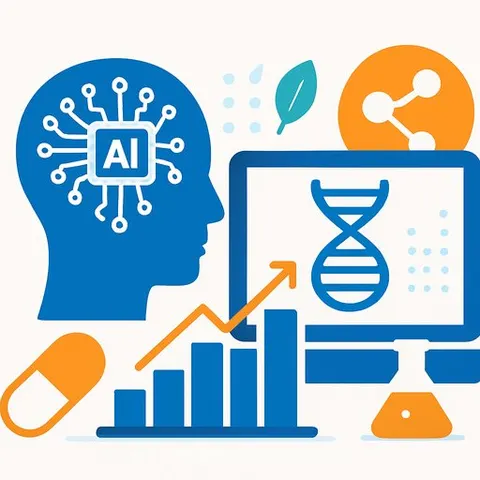
AI Accelerates Drug Discovery by Months or Years
Artificial intelligence is shortening timelines for drug development by automating tasks that once took months to complete. Researchers now use machine learning algorithms paired with large biological datasets to identify promising drug candidates, validate targets, and predict which compounds will succeed in early testing.
The shift reflects a practical reality: AI works best on measurable problems with clear outcomes. Virtual screening of chemical libraries, hit discovery, and compound property prediction show concrete time and cost savings. These gains help research departments justify continued investment and allocate funding more effectively.
Data Abundance and Computing Power Enable the Change
Three factors have converged to make AI viable in biomedical research. Lower-cost DNA sequencing, digitized health records, and data-sharing initiatives have created datasets containing millions of observations. Cloud computing and specialized hardware now make it feasible to train large neural networks within research timelines.
Researchers can access genomic, proteomic, and clinical data simultaneously. AI models detect patterns across these datasets that humans working with spreadsheets would miss. This allows teams to move beyond hypothesis-driven experiments toward data-driven exploration of broader biological questions.
Where AI Fits in the Drug Discovery Pipeline
AI enters drug discovery at multiple stages, each with different requirements and constraints.
Target identification: AI mines scientific literature and multi-omics databases to extract knowledge about disease-relevant proteins and pathways. By combining genomics, transcriptomics, and proteomics data, models generate hypotheses about which targets are worth pursuing.
Hit discovery: Generative models predict which molecules might be bioactive, then screen them virtually against targets. This reduces the need for expensive physical screening campaigns.
Lead optimization: Deep learning systems predict potency, selectivity, and how difficult a compound will be to synthesize. Graph neural networks have proven practical for this work because chemical structures map naturally onto node-and-edge graphs.
Throughout these stages, AI functions as a tool for expert researchers, not a replacement. Collaborative workflows between automation and human judgment produce stronger results than either approach alone.
Integration With Laboratory Automation
The most efficient implementations connect AI predictions directly to wet-lab experiments. Robots conduct experiments based on AI recommendations, then feed results back into models for retraining. This feedback loop shortens the cycle for optimizing lead compounds and helps teams avoid spending resources on unlikely candidates.
Deep learning has also improved analysis of biomedical images and screening data, enabling rapid identification of cellular behavior in high-throughput experiments. Foundation models pre-trained on protein sequences or chemical libraries provide embeddings that improve downstream tasks like predicting protein-ligand binding.
Broader Applications in Clinical Research
AI extends beyond molecular design into clinical workflows. Decision support tools assist pathologists and radiologists by providing rapid image interpretations. In patient stratification and trial design, AI-driven analytics segment populations and improve study design by identifying which patients are most likely to respond to a treatment.
These applications help research teams direct resources toward the most promising therapeutic areas and generate hypotheses faster than traditional methods allow.
Validation and Reproducibility Remain Obstacles
The field faces significant challenges in ensuring AI models perform consistently across different settings. Biology's complexity makes external benchmarking difficult. Models trained on one institution's data often perform poorly when deployed elsewhere-a problem known as dataset shift.
Data leakage, where models accidentally learn information they shouldn't have access to, can inflate performance estimates. Noisy biological data compounds these issues. Researchers address these problems through careful documentation, standardized reporting, and federated learning approaches that preserve patient privacy while enabling broader model training.
As AI-driven methods move into mainstream research pipelines, the distinction between genuine efficiency gains and theoretical promise matters. The field advances fastest when teams measure concrete outcomes: time saved, resources preserved, and success rates improved.
For researchers building AI skills, AI Research Courses and AI Data Analysis Courses provide foundations in the methods and tools used across drug discovery and biomedical research.