
AI news ·
AI speeds up hotel venue sales but human judgment still closes repeat business
Over 80% of hotel operators expect meetings and events business to grow in 2025, putting pressure on sales teams to handle more volume. AI helps with speed and follow-up, but fails when it replaces human judgment.
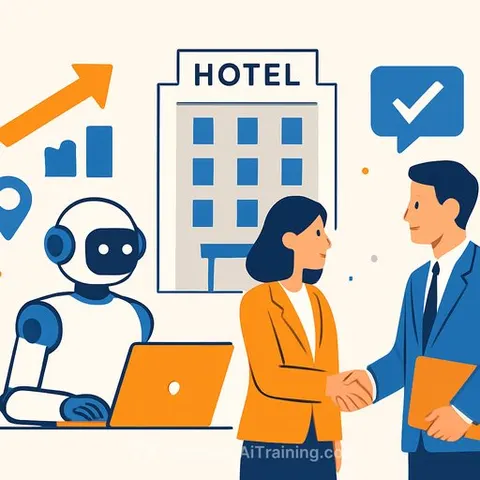
AI in hotel venue sales: where it works, where it doesn't
Hotel operators expect meetings and events business to grow in 2025. Over 80% surveyed by JLL anticipate expansion. That means sales teams face volume pressure, and the question of whether AI can help has moved from theoretical to practical.
The answer is yes-but only in specific places, for specific reasons. AI works best where it replaces repetitive work that was slowing decisions. It fails when it replaces judgment that was doing important work.
Where AI delivers measurable results
Response speed drives conversion in venue sales. The first three respondents to an RFP win 90% of the business. A planner comparing venues in real time doesn't wait for a callback.
AI-assisted tools can generate a personalized draft proposal the moment an enquiry arrives. The sales team reviews and sends it rather than building from scratch. That speed matters.
Mid-funnel follow-up is the second area where AI adds value. The leads most likely to go cold are the ones that received a proposal but got no consistent follow-through. AI tools that monitor lead activity and surface timely follow-up prompts address a real operational leak. Hotels using these tools have reported conversion rate increases of 11%.
Where implementation creates problems
The implementations that backfire share a pattern: AI applied at the point where a human was previously reading the situation and making a judgment call.
An automated follow-up sent mid-negotiation, when a client is waiting on a decision, signals that nobody's paying attention. A proposal that ignores what came up in a phone call that morning misses the point. These are small failures individually, but repeat MICE business is built on people trusting that someone is across their event.
An event manager who books the same property year after year isn't loyal to a CRM workflow. They trust the people they deal with. AI agents and automation can ensure preferences are recorded and enquiries get fast responses. The relationship itself is still built by the team, and that part has no workaround.
The question before implementation
Revenue and sales management accounts for 30.7% of AI application in hospitality-the largest single share. Most hotels are already moving in this direction.
The ones seeing real return know exactly what they're protecting when they automate, and where the tools should stop. That distinction separates effective implementation from the kind that creates friction with clients.
For teams in AI for hospitality and events, the lesson is straightforward: automate the work that was slowing you down, not the work that was building trust.