
AI news ·
AI system outperforms biopsy in detecting bile duct cancer during live procedures, trial finds
An AI system diagnosed bile duct cancer with 87.8% accuracy in a clinical trial, outperforming standard biopsy at 67.4%. The SMART-AI trial enrolled 41 patients at UMass Chan Medical School.
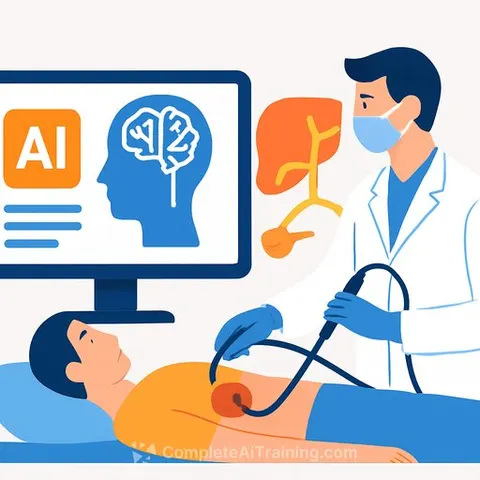
AI System Outperforms Biopsy in Detecting Bile Duct Cancer
A real-time artificial intelligence system diagnosed bile duct cancer more accurately than traditional biopsy methods in a clinical trial, according to research published in Clinical Gastroenterology and Hepatology. The system achieved 87.8 percent accuracy compared to 67.4 percent for standard sampling and 63.1 percent for visual assessment by experienced doctors.
Researchers at UMass Chan Medical School led the SMART-AI trial, which enrolled 41 patients with narrowed bile ducts. The AI analyzed video from a cholangioscope-a tiny camera inserted to view the biliary system-during live procedures to determine whether strictures were benign or cancerous.
Neil Marya, MD, assistant professor of medicine and director of the Program in Digital Medicine at UMass Chan, developed the AI system. "During live patient cases, the AI showed that it's better than a biopsy," Marya said. "It's telling somebody if they have cancer or not."
The team trained the system on cholangioscopy videos from previous procedures at UMass Memorial Health and the Mayo Clinic. The approach mimics how physicians visually assess images to identify cancer, then converts that visual judgment into a quantitative measure of cancer likelihood.
Most AI for Healthcare applications in gastroenterology have focused on colon polyp detection. This marks the first AI system designed specifically to distinguish benign from malignant bile duct narrowings.
The trial received funding from the UMass Memorial Medical Group Prize for Academic Collaboration and Excellence, the Mayo Clinic MAX Innovation award in Gastroenterology and Hepatology, and MassVentures' Acorn Innovation Award.
The results suggest AI could change how clinicians approach cancer diagnosis in the digestive system, though the technology requires validation in larger studies before broader clinical adoption.