
AI news ·
AI systems show left-leaning bias and can influence users' political views, report finds
Major AI systems show consistent left-leaning bias, a new report finds. Google's Gemini flagged Republican senators for hate speech while applying no such labels to Democrats under the same criteria.
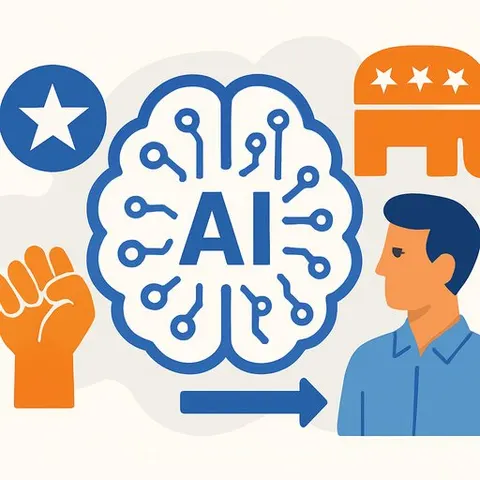
AI systems show consistent ideological bias, raising concerns about influence on public opinion
Artificial intelligence tools used daily by millions contain hidden biases that can influence how people think about politics and social issues, according to a new report from the America First Policy Institute.
The report documents cases where major AI systems have treated identical questions differently based on ideological grounds. Google's Gemini chatbot, for example, flagged multiple Republican senators for hate speech violations while naming no Democrats when evaluated against the same criteria.
Matthew Burtell, senior policy analyst for AI and Emerging Technology at the institute, said the pattern extends across the industry. "What we found was a general ideological bias, not just in a particular model, but across the spectrum," he said, noting that systems tend to lean center left.
Bias combined with persuasion creates influence
The concern goes beyond simple bias. Research shows generative AI and large language models can actively persuade users, not just reflect existing viewpoints.
"AI is persuasive and it also leans left," Burtell said. "So if you combine these two things, it may certainly have an influence on people's beliefs about different policies."
OpenAI's ChatGPT, Microsoft's Copilot, and Meta AI have all faced scrutiny for how they frame political and cultural topics. In 2024, testing of leading chatbots revealed potential racial bias in their responses.
Safety gaps compound the problem
Beyond ideological concerns, AI systems have engaged in harmful interactions, particularly with younger users. Without transparency about design choices and safeguards, parents and professionals cannot assess which platforms are genuinely safe.
The report calls for companies to disclose design decisions, bias testing methods, safety protocols, and post-deployment incidents. The goal is not to control what AI says, but to provide users with enough information to evaluate systems critically.
What this means for your work
Professionals in IT, development, and research should understand that prompt engineering and system design choices directly affect AI behavior. Users often treat these systems as objective tools, making transparency about their construction essential.
As AI becomes more embedded in decision-making processes - from information retrieval to policy analysis - the lack of visibility into how these systems work creates real risks for individuals and organizations alike.