The AI Shift in the Travel Industry: Productivity and Innovation in 2025
AI has moved from experiment to core infrastructure across travel businesses. It shows up in faster support queues, smarter campaigns, cleaner data, and quicker product cycles. The companies pulling ahead treat AI as a daily tool, not a side project.
AI Across Daily Operations
Teams use AI to automate repetitive work, reduce manual errors, and speed up response times. Content gets produced in hours instead of days. Feedback is parsed at scale, and insights surface before weekly reviews. The net effect: more output with fewer bottlenecks.
Marketing and Sales: Where Adoption Leads
According to McKinsey's 2025 State of AI report, 42% of travel companies now use AI in marketing and sales. Teams draft emails, build ad variants, and refine targeting in minutes. That speed translates into higher conversion and lower acquisition costs.
- Auto-generate first-draft copy for campaigns, landing pages, and sales outreach.
- Create and test multiple ad angles and creatives without slowing down launches.
- Use lookalike audiences and predictive scoring to prioritise spend.
- Summarise CRM notes to personalise offers without manual digging.
Product and Service Development: From Idea to Release
Generative AI accelerates ideation, prototyping, and feedback analysis. Teams scan reviews, tickets, and NPS comments to spot patterns fast. Concepts move to prototypes quickly, and usability issues surface early. The result is tighter loops between customer insights and shipped features.
- Cluster customer feedback to find common friction points.
- Generate UX copy, empty states, and microcopy that match brand voice.
- Draft PRDs, acceptance criteria, and release notes from structured prompts.
- Run scenario tests on booking flows and post-booking experiences.
IT and Engineering: Better Code, Faster Releases
In 2025, 23% of travel companies use AI to generate code and automate testing. Developers ship faster with AI-assisted code suggestions, documentation, and test creation. Reliability improves as routine checks move to automated pipelines.
- Use AI to create unit and integration tests from requirements or code diffs.
- Auto-generate documentation and changelogs to keep systems maintainable.
- Scan for security issues and performance regressions before they hit production.
Service Operations: Quicker Answers, Happier Customers
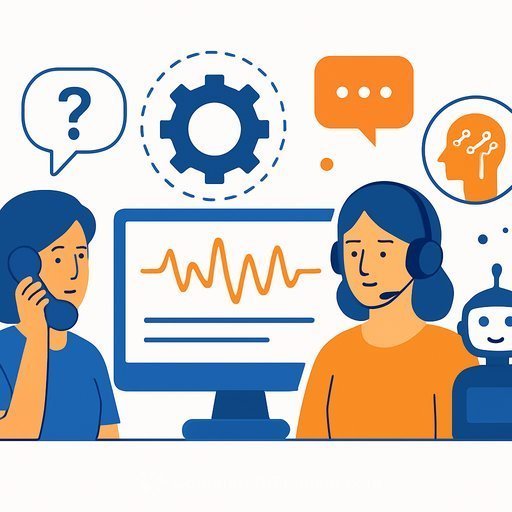
About 22% of travel companies deploy generative AI in contact centres. Agents get instant summaries of customer history, suggested replies, and knowledge retrieval. Tickets route to the right queue, and resolution time drops.
- Auto-summarise previous interactions to cut handle time.
- Use AI to categorise tickets and surface the best article or next action.
- Generate QA scorecards and coaching notes from transcripts.
The Quiet Thread Running Through the Business
You won't see a robot in the lobby. You'll feel it in response times, campaign velocity, and product quality. AI is embedded in the small moments that compound into better customer experiences and stronger margins.
Budgets, Momentum, and What Comes Next
Budgets are doubling as leaders see clear ROI. Expect deeper personalisation, automated planning flows, and smarter operations across booking, payments, and post-trip service. Teams that delay adoption risk falling behind peers who are already building with AI every day.
Playbooks by Role
Customer Support
- Set up auto-triage with clear routing rules and escalation paths.
- Deploy summarisation and suggested replies; keep humans in control for edge cases.
- Turn solved tickets into refreshed help articles weekly.
- Track handle time, first-contact resolution, CSAT, and deflection rate.
Marketing
- Standardise a prompt library for brand-safe copy across channels.
- Automate A/B creative generation and let data pick winners fast.
- Personalise lifecycle emails using CRM segments and past behaviour.
- Measure CAC, conversion rate by segment, content velocity, and ROAS.
Product Development
- Run weekly AI-assisted feedback reviews to prioritise the backlog.
- Prototype flows quickly and validate with synthetic user tests plus real users.
- Use AI to outline PRDs, map edge cases, and generate acceptance tests.
- Track time-to-insight, cycle time, adoption, and support tickets per feature.
Implementation Checklist
- Pick 2-3 high-friction workflows per team; start there.
- Write lightweight guardrails for privacy, tone, and approvals.
- Create a shared prompt and template library; iterate weekly.
- Instrument metrics before rollout so gains are visible.
- Train your team; appoint power users to coach others.
Key Metrics to Watch
- Support: AHT, FCR, CSAT, backlog age.
- Marketing: content throughput, CTR, CPA/CAC, pipeline contribution.
- Product/Engineering: cycle time, defect rate, MTTR, adoption and retention.
Where This Is Headed
AI is becoming part of the travel industry's core systems: booking, pricing, service, and analytics. The winners will pair automation with clear ops discipline, clean data, and constant testing. Start small, measure, then scale what works.
Level Up Your Team
If you're building skills for support, marketing, or product roles, explore focused learning paths and certifications:
Your membership also unlocks: