
AI news ·
AI takes on a quiet authority role in Bangladesh's classrooms
Teachers in Bangladesh are increasingly using AI to build lessons, but many treat its outputs as ready-made answers rather than material to question. When AI functions as unquestioned authority, student learning suffers.
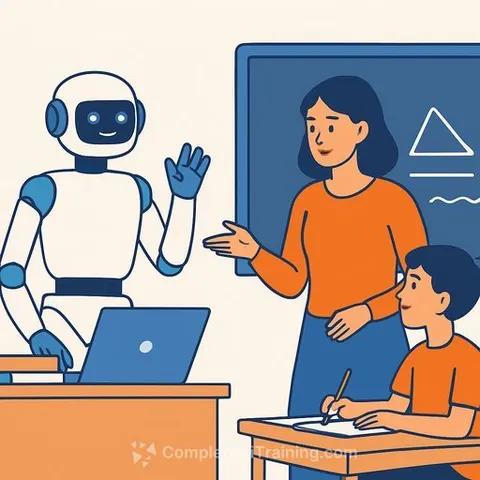
AI is becoming an authority in classrooms. That's the problem.
In Bangladesh, teachers are using AI to prepare lessons and generate materials at an accelerating pace. The tools work. But a pattern is emerging that extends beyond efficiency: AI is beginning to function as an unquestioned source of authority rather than a tool that requires critical judgment.
The shift happened quietly. Some educators adapt AI outputs, question its suggestions, and reshape content for their students' needs. Others generate material with minimal reflection, treating it as ready-made answers instead of something to examine. The difference between these approaches will shape how students learn.
How AI creates the illusion of certainty
AI presents information in ways that feel immediate and complete. Responses sound fluent and convincing, even when they are partial or contextually limited. This creates a subtle psychological effect: readers begin by assuming accuracy rather than questioning it.
Teachers report that AI is increasingly framed as a "magic solution" within their institutions. This language matters. When a tool is positioned as providing answers, professional judgment recedes into the background.
Without critical engagement, AI use can reduce rather than strengthen teaching. Lessons become less responsive to local contexts. Students learn to accept answers without understanding how they were generated.
The readiness gap
Access to AI tools is not the same as readiness to use them well. Educators need opportunities to build skills for working with these systems thoughtfully-asking where responses come from, what they omit, and how they apply to specific classrooms.
This responsibility extends beyond individual teachers. Institutions must create space for reflection, not just adoption. Policy conversations need to move beyond whether AI should be used toward how it shapes thinking and learning.
Avoiding AI is not realistic. It is already embedded in how information is accessed and shared. The challenge is determining how it gets used.
What critical use looks like
AI can reduce administrative burdens and provide new resources for teaching. It can open avenues for exploring ideas. But this potential depends on maintaining the habit of questioning, even when answers are readily available.
Educators who engage thoughtfully with AI treat it as a starting point for thinking, not an endpoint. They examine outputs before using them. They adapt content to their students' needs.
This approach requires different skills than simply accepting what a system produces. Teachers need training in how to evaluate AI outputs, identify gaps, and reshape content for their classrooms.
Learn more about building these skills through structured professional development, or explore resources on AI for education to understand how other educators are approaching these tools.
The real question
AI is already speaking in classrooms across Bangladesh and beyond. Students listen to it. Teachers use it. The question is not whether it will be present, but whether educators and institutions will maintain independent thinking.
That requires seeing AI as something to be engaged with critically, not deferred to. It requires asking questions about where answers come from and what they leave out. Without this, a tool designed to support learning risks becoming a substitute for it.