
AI news ·
AI threatens to break the long link between education and economic opportunity
Generative AI may break the century-old pattern where automation created demand for more-educated workers. A recent study found AI sharply narrowed the performance gap between educated and less-educated workers on job tasks.
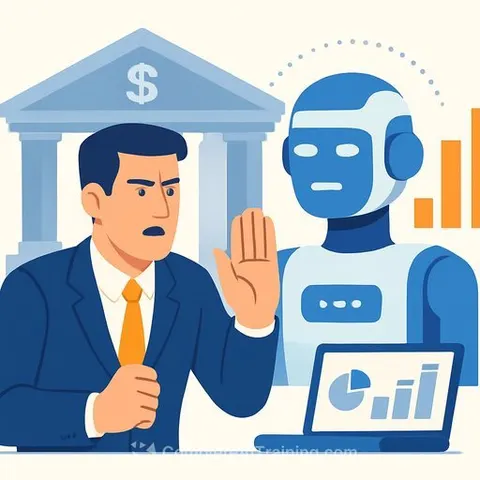
AI Threatens a Century-Old Education Model. Schools Are Unprepared.
For over 100 years, American education has followed a predictable script: as technology eliminates jobs, the economy demands more educated workers, so schools expand access and students stay in school longer. Generative AI may break that script entirely.
The historical pattern is clear. Farm mechanization and factory automation wiped out millions of blue-collar jobs. In response, demand grew for white-collar workers with college degrees. High school became standard in the early 1900s. College enrollment surged in later decades. The U.S. pulled ahead of other nations by making education broadly accessible, which fueled economic growth.
By the 1990s, President Bill Clinton summarized the new reality: "What you earn depends on what you learn." Politicians responded by overhauling schools around college preparation. Kindergarten shifted away from play toward academic content. High schools expanded college prep programs. Colleges recruited students who wouldn't have considered higher education before.
This strategy worked. College-educated workers commanded higher wages throughout the early 2000s. But the economy became polarized: well-paid jobs now almost always require a degree, while lower-wage work like retail or warehouse jobs needs only high school education. Income inequality grew.
The AI Disruption
Generative AI operates differently than past technologies. It doesn't just eliminate certain jobs and create demand for more education. It can perform research, writing, and analysis once assumed to require highly educated workers.
A recent study tested both educated and less-educated people on workplace problem-solving. Without AI, the educated group performed significantly better. With AI assistance, that advantage shrank substantially. Some economists predict a "deskilling" effect: AI replaces many well-paid white-collar jobs rather than creating demand for more education.
If that happens, the economic value of a college degree erodes. Enrollment would likely decline. Higher education has assumed a growing customer base for generations. That assumption could collapse.
What We Don't Know
No one can predict how AI will actually reshape the job market. Educated workers might be best positioned to use AI effectively. The technology might eliminate some jobs while creating others. It could supplement office work rather than replace it. Or it might prove less useful than current hype suggests.
Current data doesn't support claims that AI has already destroyed job prospects for college graduates. But the uncertainty remains real.
Students and educators now face an unprecedented problem: preparing for an economic future that feels genuinely unknowable. The education system built around the "race between education and technology" may need to become something else entirely. Schools don't yet know what that should be.
AI for Education resources can help educators understand how the technology works, but understanding the technology is only the first step. The harder question-how to prepare students when the economy's rules appear to be changing-remains unanswered.