AI will improve 6G telecom customer services - what support teams need to prep for now
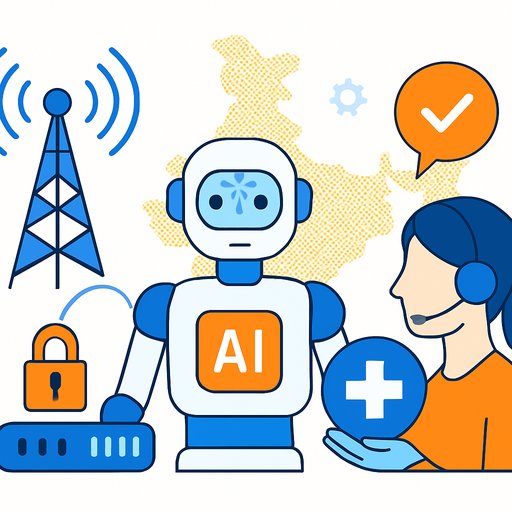
India is gearing up for 6G, and the Department of Telecom expects AI to sit at the core of network operations and customer experience. Telecom secretary Neeraj Mittal says AI can make networks self-healing and push customer service quality forward, while warning that misuse of AI is already creating new fraud risks.
Timeline and policy context
Industry players expect 6G trials to begin in 2028, with commercial rollout taking longer. The government is working with the International Telecommunication Union to set standards and policy that enable AI-driven services without opening the door to abuse.
For reference, see ITU's work on AI standardization here and WTSA-24 priorities here.
What AI + 6G means for customer support
- Self-healing networks: Fewer outages and faster recovery. Expect proactive tickets and real-time status updates pushed to customers before they ask.
- Agentic AI in the stack: AI will triage issues, run diagnostics, and fix known faults across channels. Human agents handle edge cases and empathy-heavy conversations.
- Ultra-low latency service: Instant verification, live device health checks, and on-call network tuning during a session.
- Personalized QoS: Dynamic prioritization for critical users or use cases (payments, telemedicine), with clear SLAs exposed to support tools.
- Closed-loop operations: Support, network ops, and field teams share telemetry and feedback, automating common fixes end-to-end.
Fraud risks you must plan for
AI abuse is rising: deepfakes, voice cloning to bypass voice signatures, and false identities that enable financial fraud. The DoT's AI-based fraud risk indicator has already helped payment apps prevent fraud worth ₹200 crore and block more than 48 lakh suspicious transactions.
- Stronger verification: Add step-up verification for high-risk actions (SIM swaps, KYC changes, payment limits). Use device binding and one-time live challenges.
- Voice fraud defenses: Don't rely on static voice biometrics alone. Use challenge-response phrases, call-history context, and known-device checks.
- Channel consistency: Apply the same risk checks across IVR, chat, email, and retail to stop cross-channel spoofing.
- Agent guardrails: Force AI agents to require human approval for payouts, escalations, and account ownership changes.
- Real-time risk scoring: Combine call metadata, user behavior, and network signals to trigger extra checks or safe fallbacks.
12-month action plan for support leaders
- Map critical failure modes: Identify top network and account events that create tickets. Define which ones AI can auto-resolve vs. escalate.
- Integrate live telemetry: Pipe network status and device diagnostics into your CRM so agents get instant context and resolution paths.
- Write AI agent policies: List allowed actions, required confirmations, and escalation criteria. Log everything with audit trails.
- Pilot fraud controls: Test voice deepfake detection, device-binding flows, and dynamic KYC checks on a narrow segment first.
- Update playbooks: Build scripts for AI-first support, including handoff cues, empathy inserts, and clear confirmation language.
- Metrics to track: First-contact resolution, mean-time-to-recover, containment rate for AI agents, fraud loss per 1,000 interactions, and customer effort score.
- Train the team: Customer-facing staff should learn AI-assisted troubleshooting, data privacy basics, and fraud pattern recognition.
Skills to build in your team
- AI workflow design for triage, verification, and resolution.
- Conversation design for AI + human handoffs.
- Data literacy around telemetry, risk signals, and cohort analysis.
- Compliance and incident response for AI-assisted processes.
If you need structured upskilling paths for support roles, explore curated programs by job function here.
Questions to ask your telecom partners
- Which self-healing capabilities will be exposed to our support tools, and on what timeline?
- What fraud APIs and alerts can we consume in real time? How are deepfake risks handled across voice and video?
- What are the AI agent guardrails, audit logs, and rollback options?
- How are data boundaries enforced between our customer data and network analytics?
- Which ITU/WTSA-24 standards are you aligning to, and how will changes be communicated?
The bottom line
6G plus AI points to fewer outages, faster resolutions, and smarter, proactive service. The upside is real, and so are the fraud risks. Teams that update verification, rework playbooks for AI collaboration, and train on fraud patterns will be ready when trials begin in 2028.
India is backing this shift with a USD 1.25 billion India AI mission focused on research, startups, and scale. For customer support, that means better tools, clearer standards, and higher expectations from users.
Your membership also unlocks: