AI Speeds Work But Erases Breaks, Creating Silent Workload Creep
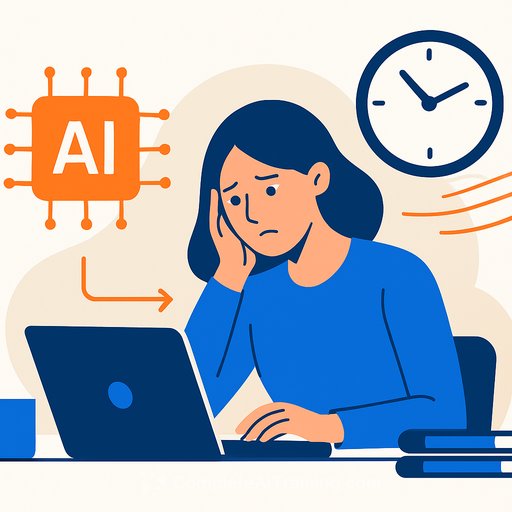
A developer at a SaaS company discovered that artificial intelligence reduced his workload while quietly eliminating his breaks. He filled gaps between meetings, file loads, and lunch with AI-assisted tasks. Over months, the breaks that had relieved the strain of prolonged sitting simply vanished.
The pattern reflects what researchers call "workload creep"-when productivity gains from automation don't translate into reduced hours or lighter loads, but instead into higher targets, tighter deadlines, and greater cognitive demands.
HR executives and consultants say early signs of this shift are appearing as generative AI moves from pilot projects into daily work across organizations.
The Cognitive Load Problem
At healthcare technology firm Innovaccer, leadership deliberately chose to shift cognitive load upward rather than simply speed up existing tasks. The strategy backfired in unexpected ways.
Once AI tools were embedded in workflows, work pace accelerated rapidly. Innovaccer had to actively reinforce prioritization and manager check-ins to prevent the speed gains from quietly becoming higher expectations, said Satyajit Menon, the company's global head of people experience.
The transition created friction. Some workers resisted AI adoption while teams faced tighter objectives and faster turnaround targets. "Productivity gains often make us a bit greedier, because we want more," Menon said. He cautioned that efficiency gains do not automatically improve employee experience.
Managers Face the Pressure
Mid-level managers have emerged as a key pressure point. Adoption patterns across organizations show a U-shaped curve, with senior leaders and junior employees using AI more frequently than managers in the middle, said Amit Khanna, partner at Grant Thornton Bharat.
For engineering and technology teams, the productivity impact is already measurable. Where AI is effectively integrated into workflows-faster code drafting, test creation, documentation, and triage-organizations are seeing 20-30% productivity improvements, said Dhirendra Nath, chief human resources officer at digital business enabler Altimetrik.
"The biggest shift is faster time-to-first-usable output and quicker iteration loops, rather than an immediate reduction in total workload," Nath said.
Throughput Per Employee Is Rising
These efficiency gains are reshaping how organizations structure their workforce. "AI is materially increasing throughput per employee," said Anurag Malik, partner at EY India.
The challenge for HR leaders is managing the gap between what AI enables and what employees can sustain. AI for CHROs covers how to navigate these adoption patterns while protecting employee well-being. For deeper understanding of productivity impacts, AI Productivity Courses address how organizations can capture efficiency gains without erasing recovery time.
Your membership also unlocks: