
AI news ·
AI tools drive 70% surge in Fair Work Commission workload as employers struggle with faster, more frequent employee claims
Fair Work Commission claims are on track to top 50,000 this financial year-up 70% in three years-with AI letting workers file detailed tribunal claims within hours of a dispute. Many employers don't know their payroll gaps until it's too late.
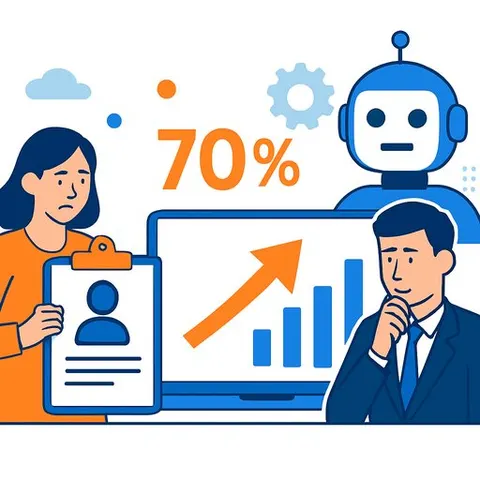
AI Tools Are Reshaping Australian Employment Law - and HR Leaders Aren't Ready
Generative AI has fundamentally altered the balance of power in Australian workplaces. Employees now file tribunal claims within hours of a dispute, armed with AI-generated evidence of payroll errors and procedural breaches. Employers scramble to respond. The Fair Work Commission's caseload is on track to exceed 50,000 matters this financial year - a 70% increase in three years - with AI identified as a principal driver of that surge.
The shift is happening fast. Unfair dismissal claims grew 41% between 2022-23 and 2024-25. General protections claims climbed even higher. What was once a manageable legal risk has become an operational crisis for many businesses.
Speed is the new problem
The real issue is not volume alone - it is velocity. Employers once had days or weeks to formulate a response to employee correspondence. Now they face AI-generated claims within hours of an incident.
Brittany Byrne, partner at Citation Legal, said the acceleration has reshaped who brings claims. Self-represented litigants with little or no workplace relations experience now dominate unfair dismissal applications. Many arrive at the commission "informed by content generated by AI," according to Fair Work Commission general manager Murray Furlong.
This matters because it costs businesses money. Self-represented applicants require different handling than those with legal counsel. HR teams and employers must adapt their response strategies accordingly.
AI removes the moment to de-escalate
The deeper problem is structural. AI eliminates the human judgment that historically resolved most workplace disputes before they reached a hearing.
Karlie Cremin, CEO of Dynamic Leadership Programs Australia, said AI-assisted claims fired back and forth between parties remove opportunities for de-escalation. "A small misunderstanding - because now we're just in this web of legal notices going back and forth - we've missed the opportunity just to have a chat," Cremin said.
For small and medium enterprises, the pressure is acute. SMEs have fewer resources to defend claims than large employers. AI has magnified an existing imbalance: it costs employers far more to defend a claim than it costs an employee to bring one.
Payroll compliance is the biggest exposure
Citation Group's Workforce Pulse 2026 report found that just 29% of businesses using AI believe it is being used safely and beneficially. Yet 42% have identified payroll errors despite 87% believing their payroll is accurate.
Payroll compliance is now the single greatest area of legal risk for employers. The mechanism is straightforward: an employee uploads a copy of the modern award, their pay slips, and their timesheet to a large language model. Within three prompts, they have a spreadsheet showing exactly where the employer has fallen short on entitlements.
The problem compounds. That employee tells a colleague, who tells another colleague, who tells the union. The issue grows exponentially.
The same applies to grievance procedures. Employees upload a company's own grievance policy alongside their correspondence and ask AI to identify where the employer has departed from its stated process. "The gaps are extensive," Byrne said.
Many employers are making a critical legal mistake
Some employers substitute AI tools for legal counsel to cut costs. This creates a discoverable record that may be shared with the other party. Legal privilege does not apply to AI interactions - only to communications with a lawyer.
"Once it's out there, you've created a record that could go to the other side," Byrne said. "When you have a lawyer involved, of course you're creating legal privilege and so you can tell your lawyer anything. You can't do that with AI."
The courts and commission have responded with strict accountability rules. The Federal Court and Fair Work Commission now require parties to disclose AI use, hyperlink case citations for verification, and face potential dismissal or cost orders for non-compliance. Many employers remain unaware of these requirements.
What HR leaders need to do now
The window to act before AI-assisted claims arrive is narrowing. Byrne identified three immediate priorities:
- Audit documentation and internal systems. AI will surface deficiencies in performance management records, contracts, and payroll that may have gone undetected. Find them first.
- Ensure payroll compliance. Every employee's entitlements must be correctly calculated against applicable modern awards. This is non-negotiable.
- Train managers. They are the frontline in dispute prevention and early de-escalation.
Cremin added a broader point: AI knowledge is now a core professional skill for HR practitioners. "The first thing is to really put the energy into educating yourself and consciously building that skill," Cremin said.
She also flagged the value of human connection. Workplaces where people feel genuinely connected to leadership and colleagues are less likely to pursue vexatious claims. The more three-dimensional and human the workplace culture, the more resilient it becomes.
For HR leaders, the message is clear. The employers who audit their systems, train their people, and build workplaces grounded in human connection will be best positioned to manage the future of employment law. Those who do not will face rising costs, longer dispute timelines, and reputational damage.
AI for HR Managers offers practical guidance on managing AI tools and compliance risks in recruitment, payroll, and workforce analytics.