AI Traffic Cameras Roll Out Across Oman: What Operations Leaders Need to Do
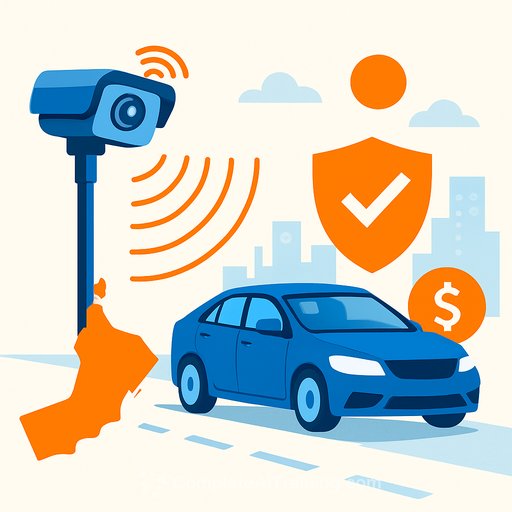
The Royal Oman Police is expanding a network of smart cameras across Muscat's highways and key intersections. These systems use Artificial Intelligence and 4D radar to detect multiple violations at once-speeding, seat belt use, mobile phone use, and tailgating-even in low light and without human oversight.
Activation will be incremental. Authorities plan to share a public demo video before full go-live, but detailed deployment plans will remain confidential. Expect real-time fine notifications and backend checks that can flag expired insurance and other compliance issues.
What the cameras will detect
- Speeding (with a standard 20 km/h buffer before enforcement)
- Seat belt violations for drivers and passengers
- Mobile phone use while driving
- Tailgating and unsafe following distance
- Insurance status verification tied to the vehicle
Why this matters for operations and logistics
Your exposure to fines will increase, and small lapses can stack up quickly across a fleet. Driver behavior will shift, delivery ETAs may need recalibration, and safety performance will become more visible to insurers and regulators.
Handled well, this can reduce incident rates and downtime. Handled poorly, it erodes margins through penalties, lost time, and insurance hikes.
Immediate actions (next 30 days)
- Audit routes and risk hotspots: Map high-exposure corridors and signalized intersections where cameras are likely active.
- Update your driver policy: Zero tolerance on phone use; mandatory seat belts for all occupants. Don't rely on the 20 km/h buffer-enforce the posted limit.
- Verify contact details: Ensure vehicle owner and fleet manager contact info is current so real-time notifications reach the right team. Consider training administrative staff to manage notifications and reporting (AI Learning Path for Administrative Assistants).
- Telematics basics: Enable speed, harsh braking, and seat belt alerts. Set geofences for monitored zones and after-hours movement.
- Brief your teams: Short toolbox talks beat long lectures. Show examples of what will trigger a fine.
Build momentum (60-90 days)
- In-cab solutions: Consider seat belt interlocks, phone-lock apps, or camera-based driver monitoring for coaching and evidence.
- Speed management: Calibrate speed governors or soft-limit alerts to keep vehicles at or under limits.
- Insurance strategy: Use telematics reports to negotiate better rates tied to verified compliance and incident reduction.
- Vendor alignment: Shortlist ADAS, telematics, and cybersecurity partners that integrate cleanly with your fleet systems-coordinate with process teams to map data flows (AI Learning Path for Process Engineers).
Fines and enforcement basics
Authorities indicate a 20 km/h speed buffer before enforcement. Penalties for speeding start at RO 20, with fines of RO 35 to RO 50 for exceeding the speed limit by 50 to 80 km/h. Expect broader enforcement across seat belts, phone use, and tailgating, with automated evidence capture.
Data, privacy, and IT coordination
- Data workflows: Decide who receives alerts, how disputes are handled, and how long to retain evidence.
- Privacy notices: Inform employees about monitoring, what's collected, and how it's used.
- Security posture: Vet vendors for encryption, access controls, and incident response. Align with company policy and local regulations.
- System integration: Connect fines and alerts to your fleet, ERP, or ticketing platform for tracking and accountability.
KPIs to track
- Fines per 10,000 km and per vehicle
- Seat belt compliance rate
- Phone-use alerts per 1,000 km
- Speed compliance by route and time of day
- Near-miss/incident rate and downtime
- Insurance premium changes vs. safety metrics
Opportunities for tech and cybersecurity providers
- Fleet integrations: APIs that sync camera evidence with telematics and compliance dashboards.
- Driver coaching: Real-time nudges and post-trip summaries tied to risk scores.
- Policy automation: Automated workflows for violations, appeals, and payroll deductions where compliant.
- Security services: Data protection, access governance, and vendor risk assessments for surveillance pipelines.
Manager's checklist
- Confirm leadership stance on compliance and communicate it company-wide
- Set alert thresholds below posted limits, not at the buffer
- Run a one-week pilot on high-risk routes and review the data
- Close the loop: coaching for first offense, disciplinary action for repeat offenders
- Revisit SLAs and ETAs to reflect safer driving speeds
Helpful resources
- WHO: Global status report on road safety
- AI Automation Certification - build internal tools that support compliance
Bottom line: treat this rollout as a safety and cost initiative, not just a policing change. Tight policies, simple tech, and consistent coaching will keep your fleet compliant and your operations steady.
Your membership also unlocks: