The Future of Parking Management: How AI is Reshaping the Industry
AI is increasingly present in many industries, making tasks smoother and more efficient. Parking management is no exception. Managing parking facilities effectively has long been a challenge for city councils, facility managers, and private operators who must balance efficiency, customer satisfaction, and cost control.
Artificial intelligence offers practical solutions that improve revenue, customer experience, and operational insights. Let’s explore the key AI technologies transforming parking management and how management professionals can implement them successfully.
The Core AI Technologies Powering Smart Parking
Three AI technologies form the backbone of intelligent parking systems:
- Machine Learning: By analyzing live and historical parking data, machine learning models identify patterns like peak usage times and overstays. These insights enable dynamic pricing adjustments and fraud detection, with accuracy improving over time as more data is collected.
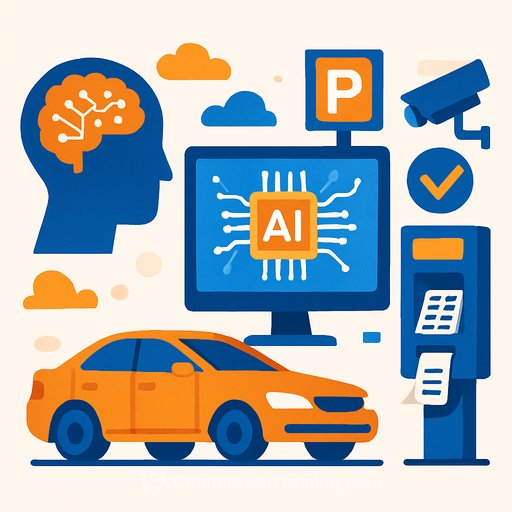
- Computer Vision: AI-powered image and video analysis support automatic number plate recognition (ANPR), making entry and exit seamless without paper tickets. This technology also detects free and occupied spaces, illegal parking, and vehicle types.
- Predictive Analysis: This forecasts future parking demand using trends, weather, events, and traffic data. Predictive models optimize staffing, maintenance schedules, pricing, and long-term infrastructure investments like EV charging bays.
Investment Ideas
Many AI-powered parking solutions are already in use. Dynamic space allocation adjusts parking zones like EV bays or delivery spots based on real-time or predicted demand, improving space utilization.
Automated license plate recognition (ALPR) reduces congestion by eliminating the need for ticket machines. It also supports enforcement with accurate time stamps and improves accessibility for disabled drivers. Integration with payment platforms further simplifies the user experience.
Demand forecasting allows operators to adjust prices based on expected traffic, lowering rates during off-peak hours to boost occupancy.
Key Benefits for Operators and Facility Managers
AI solutions bring benefits across operations, finance, and customer satisfaction. Automation reduces manual monitoring and enforcement costs, while predictive maintenance helps avoid downtime. Dynamic pricing and real-time analytics increase revenue and reveal underused assets for monetization.
For users, AI creates stress-free parking through barrier-less access, real-time space availability updates, and easy navigation. Smarter parking also means less vehicle idling, reducing emissions and supporting sustainability goals.
Calculating ROI: A Simple Framework
To evaluate the ROI of AI parking systems, consider metrics such as occupancy rates, revenue per parking space, enforcement success, and manual patrol savings. Typically, ROI is realized within 12 to 18 months, depending on the scale and complexity of the deployment.
3-Step Roadmap to Pilot an AI Parking Solution
Step 1: Identify Pilot Site(s)
- Choose locations with high traffic or frequent parking conflicts
- Ensure data collection infrastructure is in place, such as cameras and sensors
- Set baseline KPIs: occupancy, revenue, dispute rates, and user feedback
Step 2: Select a Technology Partner
- Choose vendors with industry experience and modular, integrable systems
- Confirm compliance with data protection regulations like GDPR
- Request pilot frameworks and case studies to assess suitability
Step 3: Deploy, Evaluate, Scale
- Run a 60–90 day pilot with defined KPIs
- Monitor performance regularly and collect user feedback
- Adjust pricing and system settings based on insights
- Present results to stakeholders and plan for wider rollout
AI-powered parking management is already solving practical challenges by boosting revenue, reducing congestion, and improving user experience. For management professionals, adopting these technologies offers measurable benefits that enhance operational performance and customer satisfaction.
Your membership also unlocks: